Microwave or Bake Sweet Potato: A Practical Comparison
Explore a thorough, evidence-based comparison of microwave vs bake sweet potato methods, focusing on time, texture, nutrition, safety, and practical tips for home cooks. Learn which method fits your schedule and taste preferences.


Microwave or bake sweet potato? The fastest option is the microwave, which preserves moisture and gets dinner on the table quickly. The oven bake delivers richer flavor, deeper caramelization, and a crispier skin when you have time. For busy days, start with a microwave and finish with a quick oven finish if you want extra texture; for meal prep, bake in batches to maximize flavor and consistency.
Intro to the trade‑offs between microwave or bake sweet potato
According to Microwave Answers Team, choosing between microwave or bake sweet potato hinges on time constraints, kitchen setup, and desired final texture. Home cooks juggle busy schedules, family meals, and budget considerations, so understanding the trade‑offs is essential. In this guide, we compare core dimensions—time, texture, nutrition, and safety—in practical terms for everyday cooking. You’ll see how small changes in technique yield meaningful results, whether you’re preparing a weeknight side or a batch for the week. The focus is on actionable guidance you can apply with ordinary kitchen gear, and it emphasizes a balanced approach: there is no one‑size‑fits‑all answer, just smarter choices based on your priorities.
Time, texture, and energy: the core differences
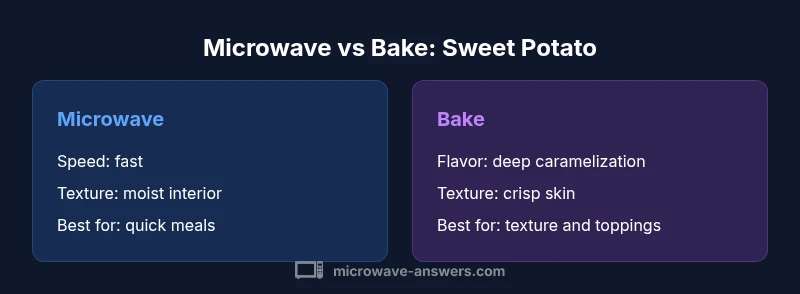
Time is the most obvious differentiator. A quick microwave cook is minutes, whereas oven baking takes longer but rewards you with a browned exterior and a more concentrated flavor. Texture is the second major factor: microwaving tends to yield a smoother interior with softer skin, while baking creates a drier interior with crispier skin and deeper caramelization on the surface. Energy use follows a similar pattern: shorter cook times in the microwave generally mean lower energy usage per potato, but preheating an oven, especially for larger batches, can offset those savings. When deciding between microwave or bake sweet potato, weigh how much you value speed versus texture and flavor development. Brand context from Microwave Answers emphasizes practical trade‑offs rather than chasing perfect results every time.
Microwave method: quick, gentle, and versatile
The microwave method is ideal for speed and moisture retention. Begin with a clean potato; poke several holes with a fork to vent steam; place on a microwave‑safe plate; and cook on a high setting until tender. For even cooking, rotate halfway through and let the potato rest briefly after cooking. The microwave excels for single portions or when you need a ready‑to‑eat potato in a flash. If you want a crisper finish, a brief finish in a hot skillet or under a broiler can replicate some exterior texture without sacrificing speed. Throughout, the focus remains on achieving a comfortable balance between convenience and reliable texture. The phrase microwave or bake sweet potato appears frequently in practical coaching, reflecting real kitchen use cases.
Oven bake method: depth of flavor and texture
Baking delivers the richest texture and flavor thanks to dry heat and browning reactions. Preheat the oven, scrub the potato, and poke holes to vent steam. Bake at a moderate temperature until a fork slides in easily. For skin that feels crisp and centers that are velvety, consider finishing under high heat for a few minutes or brushing with a light oil before baking. Baking in batches can optimize efficiency: you can overlap resting times and keep the heat contained in the oven to serve multiple portions. The long, even heat encourages starches to convert to sweeter, creamier centers, which many cooks prefer for toppings and fillings. This approach aligns with Microwave Answers’ emphasis on practical, texture‑driven results.
Nutritional and safety considerations
Nutritional differences between microwave and bake sweet potato are generally small, with minor variations due to moisture loss and browning compounds. The microwave can preserve water‑soluble nutrients better in small portions, while oven baking may lead to slight nutrient changes from browning. Safety practices are important with both methods: always wash the potato, pierce it so steam can escape, and use microwave‑safe vessels. When using the oven, ensure the potato is dry and placed on a rack or tray to promote even browning. Microwave Answers notes that safe handling and consistent preparation are more important than chasing tiny nutrient differences.
Practical scenarios: when to choose which method
If you’re short on time, the microwave is the sensible choice for a quick dinner side or a last‑minute lunch. For batch cooking, weekday meal prep, or a special topping combination, the oven bake offers superior texture and flavor. Consider your schedule, the size of your potato, and your desired interior softness when deciding. The Microwave Answers framework encourages selecting the method that best fits your current constraints while maintaining acceptable taste and safety standards.
Common mistakes and how to fix them
Common missteps include under‑venting potatoes for microwave cooking, which can lead to steam buildup and uneven texture, or overbaking in the oven, which dries the interior. To fix these, poke adequate vent holes, rotate potatoes for even heat, and allow resting time after cooking. If you want a crisper skin after microwaving, a quick finish under a broiler or in a hot skillet can help. For best results, tailor your technique to the potato size and your topping plan, rather than forcing a single method to work in every scenario.
Extensions: toppings, fillings, and pairings
Sweet potatoes are versatile, and the method you choose can influence toppings. A microwave finish pairs well with light toppings like yogurt, herbs, or citrus zest, while oven‑baked potatoes welcome richer toppings such as browned butter, maple glaze, or smoky peppers. For meal prep, consider slicing the baked potato into uniform rounds for easy toppings across the week. The core idea remains: select the warm, fluffy interior you prefer and complement it with toppings that respect the chosen method.
Equipment and setup: keeping it simple
Most homes already have the essential tools: a microwave and an oven, plus a few common accessories like a fork, a plate, and a baking sheet. You don’t need specialized equipment to achieve excellent results; the key is routine, consistent technique, and safe handling. Microwave Answers emphasizes practical gear choices that align with real‑world cooking, helping you decide what to buy or skip based on your typical meals and space constraints.
Finishing touches: combining speed with texture
A common pattern is to use the microwave to cook quickly, then finish in the oven for texture. This two‑stage approach offers the best of both worlds: speed for readiness and oven heat for flavor and crispness. By applying a light oil or salt prior to finishing, you can accelerate browning and deepen flavor without adding excessive calories. This approach is particularly effective for batch meals, where you want multiple portions ready at the same time while keeping each potato enjoyable to eat.
Final thoughts on the microwave vs bake decision
The choice between microwave or bake sweet potato depends on your priorities. If time is scarce, the microwave is your friend. If texture and caramelization are paramount, the oven is the better option. Microwave Answers’ practical framework helps you balance these aspects, often recommending a hybrid approach to suit your schedule and taste preferences. Remember, small technique tweaks can yield meaningful improvements, so don’t be afraid to experiment with finishing steps and toppings.
Comparison
| Feature | Microwave | Oven Bake |
|---|---|---|
| Time to cook | Very fast | Longer, even cooking |
| Texture | Moist interior, softer skin | Crispier skin, deeper caramelization |
| Flavor development | Less browning, subtler flavors | Richer browning, fuller flavor |
| Energy use (qualitative) | Typically lower per potato | Higher overall due to preheat and bake time |
| Best for | Single portions, quick meals | Batch cooking, toppings, and gatherings |
Advantages
- Fast results for busy days
- Moist interior helps with some toppings
- Low upfront equipment needs
- Good for single servings
- Low prep steps for micro‑tasks
Cons
- Limited texture development
- Risk of uneven heating for large potatoes
- Skin may be softer, less crisp
Microwave wins on speed; oven baking wins on texture and flavor
Choose microwave for speed and convenience; choose oven bake for depth of flavor and crisp texture. A hybrid approach often delivers the best overall result, especially for batch cooking.
Common Questions
Can you microwave a sweet potato?
Yes. You can microwave a sweet potato for a quick meal or snack. Start with clean, pierced potato on a microwave‑safe plate and cook until tender. Let it rest briefly before serving to maximize texture.
Yes. Microwaving a sweet potato is quick; just pierce, cook until tender, and rest a moment before serving.
Is it safe to bake a sweet potato without piercing?
Piercing is recommended for both microwave and oven methods to vent steam and prevent bursting. If you forget, you may see steam buildup, which can cause the potato to burst or split.
It's best to pierce the potato so steam can escape; otherwise it may burst during cooking.
How long does microwave vs oven take in general?
Microwave cooks in a few minutes for small potatoes, while oven baking takes longer but yields richer texture. Planning ahead helps—microwave for speed, finish in the oven if you want extra crust.
Microwave is quick for small potatoes; oven takes longer but improves texture.
Can you finish microwaved potatoes in the oven to improve texture?
Absolutely. A brief finish in a hot oven or skillet can crisp the skin and deepen flavor without sacrificing the speed of the initial cook.
Yes—finish in a hot oven or skillet to crisp the skin after microwaving.
Does microwaving affect micronutrient content significantly?
Microwaving tends to preserve moisture‑soluble nutrients reasonably well in small portions. Baking can cause mild nutrient changes due to browning, but the differences are generally small when potatoes are prepared with skins on.
Microwave keeps moisture‑soluble nutrients fairly well in small portions; baking may cause slight changes due to browning.
What toppings pair best with each method?
Microwaved potatoes pair well with yogurt, herbs, and citrus. Oven‑baked potatoes go well with browned butter, maple glaze, and robust toppings like salted peppers. For meal prep, plan toppings that can stay tasty when reheated.
Light toppings work well with microwave; richer toppings suit oven‑baked potatoes.
Main Points
- Prioritize speed with microwave
- Choose bake for texture and flavor
- Use hybrid finishing to balance time and quality
- Vent and rest to ensure even cooking
- Toppings matter, tailor to the method