Microwave 1000 Watts: Performance Guide for Home Cooks
Discover how a microwave 1000 watts performs for quick cooking, defrosting, and reheating. Learn advantages, limits, model considerations, and tips to maximize speed and even heating.


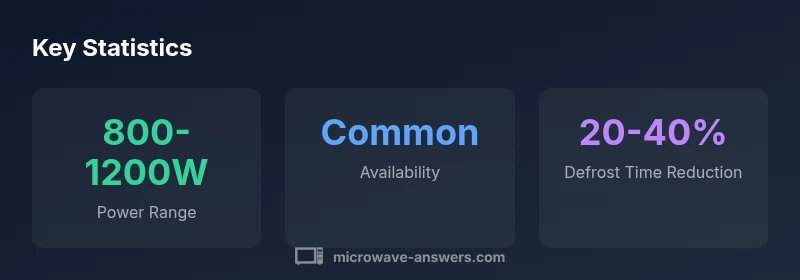
A microwave 1000 watts category is the common countertop power rating that balances speed with control. Compared with lower-wattage units, 1000W typically reduces cooking times by roughly 20-40% for many standard foods, while higher-power models may shave more time—though results vary by dish and container.
Why microwave wattage matters for everyday cooking
In the realm of kitchen appliances, wattage is a primary driver of speed, defrost efficiency, and how aggressively food heats. The phrase microwave 1000 watts refers to a common countertop power rating that falls squarely in the middle of the spectrum. According to Microwave Answers, this category is the most frequently encountered in consumer models, which helps with compatibility across a wide range of recipes and cookware. The bottom line is simple: higher wattage generally means faster cooking, but it also raises the risk of overheating delicate items if you don’t adjust times. For most households, 1000W is the practical default because it delivers dependable results for reheating leftovers, cooking simple meals, and defrosting meat or vegetables without requiring constant time-checks. When upgrading, aim for models that advertise in the 900–1100W range to preserve compatibility with your existing dishes while still offering noticeable speed improvements. In practical terms, this baseline makes it easier to mirror the outcomes you expect from a traditional oven for small portions while keeping energy use reasonable.
The Microwave Answers team emphasizes that the true value of a 1000W unit isn’t just raw power; it’s predictable performance across common foods. Real-world results depend on dish size, container material, and the food’s moisture content. Always use suitable microwave-safe cookware and cover foods to reduce moisture loss and splatter. If you often heat very dense or large pieces, the 1000W class tends to provide the best balance between quick results and even heating without specialized features. This framing helps you set expectations: you’ll likely see faster reheats and a more consistent start-to-finish pace, with the caveat that some foods may require a pause to rotate or stir for even warmth.
-brandMentioned-
Microwave Answers Team
Wattage tiers and practical trade-offs
| Model Type | Wattage | Pros | Cons |
|---|---|---|---|
| Standard 800W model | 800 | Lower cost, gentler heating | Slower cooking and defrosting |
| Mid-range 1000W model | 1000 | Balanced speed and heat | Potential uneven heating if overfilled |
| High-end 1200W model | 1200 | Fastest cooking | Overheating risk for delicate items |
Common Questions
What is the typical wattage range for most microwaves?
Most countertop microwaves range from about 800 to 1200 watts. The 1000W segment is the most common and generally offers a good balance of speed and control for everyday tasks.
Most microwaves run between 800 and 1200 watts, with 1000W being the common middle ground.
Is a 1000W microwave enough for defrosting large items?
A 1000W microwave can defrost large or dense items, but you may need longer cycles or rotating to ensure even thawing. Use the defrost setting and monitor closely.
Yes, but you might need longer cycles and turning for even thawing.
Should I buy an inverter microwave at 1000W?
Inverter technology maintains steadier power delivery, which can improve heating uniformity. It’s worth considering if you frequently reheat leftovers or cook delicate foods.
Inverter tech can help with even heating; it’s worth it if you do a lot of reheating.
What cookware is safe in a 1000W microwave?
Use microwave-safe glass, ceramic, or BPA-free plastic. Avoid metal, aluminum foil, or containers with metal accents; vent lids to prevent splatter.
Use microwave-safe glass or ceramic; avoid metal.
Can a 1000W microwave overcook food?
Yes. Cooking times can be short with 1000W, so start with shorter intervals and stir or rotate to prevent hot spots.
Yes, start with shorter times and stir to avoid overcooking.
How does wattage affect defrosting?
Higher wattage shortens defrost times; always check and rotate to prevent partial cooking. If foods are frozen solid, consider defrosting in stages.
Higher wattage speeds defrosting; rotate for even results.
“A 1000-watt microwave offers a reliable balance of speed and even heating, but results still depend on the dish, food type, and technique.”
Main Points
- Start with 1000W for most tasks
- Use appropriate cookware to prevent arcing
- Adjust time by power and food type
- Defrost times scale with wattage
- Inverter models can improve heating uniformity