Is a 700W Microwave Too Weak? A Practical Wattage Guide
Is a 700W microwave too weak? Learn how wattage affects heating, defrosting, and cooking results, plus tips to optimize or upgrade. A data-driven, practical guide from Microwave Answers.


Yes, a 700W microwave is often too weak for full performance. It heats slowly, reheats unevenly, and can struggle with larger portions or delicate tasks like steaming vegetables. For best results, use lower-density foods, stir and re-cover, and utilize shorter, repeated bursts at mid-to-high power. If you frequently cook or heat dense meals, upgrading to around 900–1000W delivers noticeably faster, more even results.
Is a 700W Microwave Too Weak? Understanding wattage and cooking expectations
Is a 700W microwave too weak for everyday tasks? In many kitchens, this question comes up when leftovers need reheating, coffee stays lukewarm, or rice and vegetables don’t heat evenly. According to Microwave Answers, wattage is a primary driver of heating speed and temperature rise, but it is not the only factor. A 700W unit can be perfectly adequate for small items or light-duty reheating, yet it often falls short when you’re multitasking, cooking larger portions, or aiming for precise textures. The key is to set realistic expectations based on the type of food, container, and technique. If you routinely rely on quick meals or batch cooking, you might feel that is a 700w microwave too weak compared with modern 900–1000W models. Still, with the right approach, you can maximize its performance without immediately upgrading.
How wattage translates to heating speed and evenness
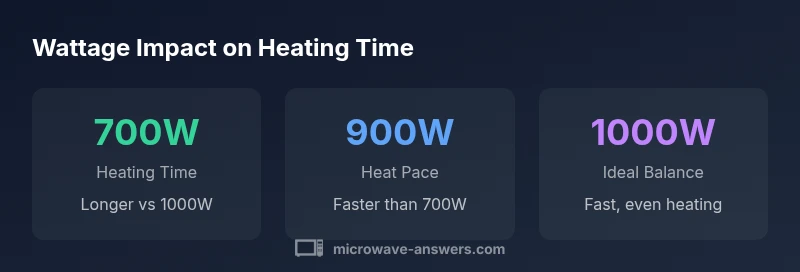
Wattage directly influences how quickly a microwave delivers energy to food. A higher wattage means energy pours in faster, shortening heating times and reducing the chance of cold spots. With 700W models, heat travels more slowly through denser items, so you may notice uneven heating or longer meals. The relationship isn’t perfect, and cookware type, container shape, and food density all shape the result. For simple tasks like reheating beverages or small portions, a 700W unit can work well; for larger portions or dense items, you’ll feel a difference when comparing to 1000W models. When people ask is a 700w microwave too weak, the answer depends on what you cook and how you cook it.
Practical ways to optimize 700W performance
If you’re committed to getting good results from a 700W microwave, try these techniques:
- Cut food into uniform pieces to promote even heating
- Favor foods with lower density or portion food into smaller batches
- Stir or rotate midway through heating, then pause to check temperature
- Cover with a microwave-safe lid to trap steam and encourage uniform heat
- Use shorter bursts with rests in between instead of a single long cook
- Use power levels around 70–80% when possible, rather than full power for delicate textures These practices help you squeeze more reliable performance from a lower-wattage unit. If you frequently cook or heat multiple items at once, upgrading may still be worth the investment.
When upgrading makes sense: balancing cost and convenience
Upgrading to a higher-wattage microwave can dramatically improve speed and consistency for households that routinely heat large portions or rely on quick, even heating. A higher-wattage model reduces wait times, improves defrosting accuracy, and minimizes cold centers. But consider space, energy use, and price. If your current unit handles your daily tasks with acceptable results—just slower—upgrading can save time and reduce frustration. The decision should hinge on your typical use-case: do you heat a lot of dense foods, or prepare several items at once? If yes, a higher wattage option could be a worthwhile investment, backed by careful comparison of features and footprint.
Common misconceptions about low-wattage microwaves
- Low wattage means unsafe cooking: False—the safety standards are the same across wattages.
- 700W cannot heat anything well: It can heat many foods, though with more technique.
- Power level settings are gimmicks: They matter; using them properly helps with texture and even heating.
- Defrosting with 700W will never work: It can, with staged timing and stirring.
- Upgrading solves everything: Food prep, container choice, and rest times remain crucial.
Real-world scenarios: reheating leftovers, cooking grains, and steaming vegetables
Leftovers heat best with even distribution and a covered dish. For grains like rice or quinoa, small batches with a splash of water and periodic stirring prevent drying out. Vegetables benefit from a brief steam phase under a vented lid to preserve texture. In practice, many readers ask is a 700w microwave too weak for these tasks; the answer depends on moisture, density, and container. By using short bursts and stirring, you can achieve acceptable results without upgrading, though performance will not match higher-wattage models.
Testing and calibrating your expectations
A simple at-home test can establish a baseline: heat a cup of water from room temperature in your microwave for two cycles, then compare the final temperature to your target. Record times and outcomes, then adjust your expected cooking times accordingly. This approach helps you quantify relative speed and quality over a few weeks, making it easier to decide whether upgrading will yield meaningful time savings or if technique alone suffices.
Wattage comparison for common microwave tasks
| Wattage | Typical Heating Multiplier | Best Uses | Notes |
|---|---|---|---|
| 700W | 1.5x-2x slower | Leftovers, beverages | May heat unevenly; stir and rest |
| 900W | 1.2x faster | Reheating portions, soups | Better balance of speed and texture |
| 1000W | Fastest | Rice, vegetables, most meals | Best overall option for performance |
Common Questions
Is a 700W microwave enough for reheating leftovers?
For small portions, yes; larger quantities will take longer and may heat unevenly. Stir and reheat in shorter bursts to improve consistency.
For small portions, yes. For larger amounts, reheating takes longer and you should stir between bursts.
How can I improve performance with a 700W microwave?
Use uniform cuts, lower-density foods, short bursts with rests, and power levels around 70–80%. Cover to trap steam and promote even heating.
Try even pieces, shorter bursts, and cover to trap steam.
Does wattage affect defrost times?
Yes. Lower wattage defrosts more slowly and can be uneven; plan extra time and stir or rearrange food during the cycle.
Lower wattage defrosts more slowly; plan extra time and stir during the cycle.
Should I upgrade to a higher-wattage microwave?
If you regularly heat large portions or need faster, more even results, upgrading is often worthwhile. Compare space, features, and price.
If you often heat large portions, upgrading is usually worth it.
Does cookware choice affect 700W results?
Yes. Use microwave-safe glass or ceramic and avoid metal. Containers with vents help steam and even heating.
Use safe, vented containers to improve heating.
Are there safety concerns with low-wattage units?
Safety standards apply across wattages; follow manufacturer guidance and avoid sealed containers that could build pressure.
Safety rules stay the same; don’t seal containers.
“A 700W microwave isn’t inherently bad; with proper technique and timing, you can achieve solid results, but higher wattage makes fast, reliable cooking easier.”
Main Points
- Maximize 700W performance with technique, not just time.
- Upgrade to higher wattage if you routinely heat dense meals or multiple items.
- Use power levels and stirring to improve results.
- Defrosting benefits from staged heating and monitoring.
- Consider size, footprint, and cost when deciding to upgrade.