Microwave Sparking with Nothing Inside: Quick Troubleshooting
Urgent guide to diagnose and fix a microwave that is sparking with nothing in it. Learn common causes, safe quick checks, step-by-step fixes, and when to call a pro. Safety comes first.


If you notice the microwave is sparking with nothing in it, unplug the unit immediately and stop using it. The most likely causes are arcing from metal in the cavity, a damaged waveguide, or a compromised door seal. Begin with basic safety checks and avoid running the oven until professional inspection confirms it’s safe.
Why Microwave Sparks Demand Immediate Attention
According to Microwave Answers, the scenario where the appliance is sparking with nothing in it is not normal and can signal dangerous electrical arcing. Do not ignore the warning signs or continue to operate the microwave. Unplug the unit right away and move it to a safe area. Sparks can indicate damaged components or metal in the cavity that could ignite insulation or start a fire. Understanding the risk helps you stay safe while you troubleshoot or decide on professional service. In the next sections, you’ll learn how to verify simple issues and what to do if the problem persists. This is a safety-critical situation, not a cosmetic annoyance, so proceed with caution and prioritize your safety and home electronics.
Common Causes When There Is No Food
Sparking with nothing in it often points to arcing rather than a meal preparation issue. The most frequent culprits are stray metal fragments or foil left inside the cavity, damaged waveguide covers, or a worn-out door seal that allows microwaves to escape and arc to the metal walls. Less common but possible causes include manufacturing defects in the magnetron or moisture intrusion inside the door. Recognizing the core categories helps you target the steps you take next, rather than guessing blindly.
Immediate, Safe Checks You Can Perform
Begin with basic, safe sanity checks. Always unplug the unit before touching internal components. Look for obvious metal objects, foil, or cooking vessels left inside the cavity. Inspect the turntable and its support ring for damage or misalignment, as a loose or cracked ring can cause arcing. Check the door seal and hinges for visible gaps, cracks, or deformations. If you see any damaged parts, do not operate the microwave until a professional reviews it.
Handling Arcing: What To Do in the Moment
If sparks appear while you’re using the microwave, press the stop button and unplug immediately. Do not open the door while the appliance is sparking, as that could expose you to microwaves. Do a visual sweep of the interior through the door when safe, ensuring there is no foil, metal trim, or utensils left inside. Once unplugged, wait a few minutes for the cavity to cool before handling any components. If sparks resume after reassembly or inspection, it’s a strong sign you need professional service.
The Turntable, Supports, and Cavity: Hidden Sources
A damaged turntable support or a cracked cavity wall can produce arcing that looks like sparking with nothing in it. Remove the turntable and inspect the glass plate edges for chips, and the center post for wear. Examine the cavity walls for scratches, burn marks, or melted spots. Any of these findings can indicate that the microwave’s interior is no longer insulated or aligned correctly. Addressing these issues often requires a replacement part or a professional inspection.
The Waveguide and Magnetron: When to Worry
The waveguide cover protects the magnetron and guides microwave energy into the cavity. If the cover is damaged, dislodged, or has burn marks, sparking can occur. A failing magnetron may exhibit abnormal noises, overheating, or continued sparking after basic checks. These components are not user-serviceable, and attempting to repair them without training can be dangerous. If you suspect issues with the waveguide or magnetron, stop using the unit and seek professional diagnosis.
When DIY Isn’t Safe: Safety Wake-Up Calls
If you spot arcing or sparks, never attempt to disassemble the power supply or live components. Never use metal tools inside the cavity, and avoid running the unit without the door properly sealed. If you’re unsure about the condition after your checks, prioritize safety and schedule a professional inspection. Regular maintenance and safe handling reduce the risk of future incidents.
Prevention: How to Reduce Future Sparks and Damage
Even with a sparking incident resolved, take steps to prevent recurrence. Always remove metal objects, foil, or utensils from food before microwaving. Clean the interior to remove stray debris that could become arcing sites. Inspect the door seals periodically and replace damaged gaskets promptly. Consider a professional checkup every 2–3 years if you rely on the microwave heavily, and replace the unit if any safety concerns persist.
Final Thoughts: Quick Recap and Next Steps
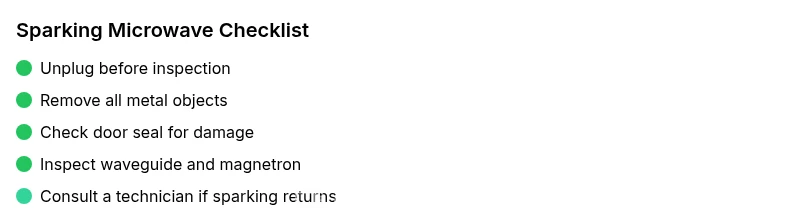
In short, sparking with nothing in it is a red flag that demands immediate attention and careful assessment. Start with unplugging, removing metal, checking the door seal, and inspecting the cavity for damage. If basic checks don’t stop the sparking, don’t risk your safety—contact a qualified technician for a thorough inspection or consider replacement. Your safety and the integrity of your home electronics come first.
Steps
Estimated time: 45-60 minutes
- 1
Power down and unplug
Ensure the microwave is completely disconnected from power. This prevents any accidental shocks while you inspect the interior or door area.
Tip: Use a dry hand and keep the unit on a non-conductive surface. - 2
Remove foreign objects safely
Open the cavity and check for metal foil, utensils, or pins that may have been left inside. Remove anything you find and wipe away residues.
Tip: Never re-run the microwave with objects inside. - 3
Inspect the door seal and hinges
Look for cracks, gaps, or deformations in the seal. A damaged seal can cause leakage and arcing, especially at high power.
Tip: If the seal feels brittle or damaged, do not use the unit until repaired. - 4
Check the turntable and support ring
Remove the glass plate and inspect the center post and support ring for chips or cracks. Misalignment can cause arcing along the cavity.
Tip: Reinstall the plate correctly to ensure smooth operation. - 5
Inspect the cavity walls for damage
Look for burn marks, melted areas, or discoloration on the cavity walls that indicate overheating or insulation failure.
Tip: Do not scrub vigorously; a damaged cavity is a safety hazard. - 6
Decide on next steps
If you notice any damaged components or sparking resumes after checks, stop using the unit and contact a qualified technician for a detailed inspection or replacement.
Tip: Document any visible damage with photos for the technician.
Diagnosis: Microwave is sparking with nothing in it
Possible Causes
- highArcing from stray metal or foil inside the cavity
- highDamaged waveguide cover or magnetron-related arcing
- mediumCracked door seal or misaligned door allowing leakage and arcing
Fixes
- easyUnplug the unit and remove any foil or metal objects from the cavity; wipe clean to remove debris
- easyInspect door seal, hinges, and door latch for damage; do not operate if damage is found
- mediumIf sparking continues after basic checks, discontinue use and arrange professional service to inspect magnetron/waveguide
Common Questions
Why is my microwave sparking with nothing inside?
Sparks with no food typically indicate arcing from metal, a damaged waveguide, or a compromised door seal. Immediate safety steps include unplugging and inspecting for visible debris or damage before determining next steps.
Sparks with nothing inside usually mean arcing from metal or a damaged part inside. Unplug it and inspect for damage before calling a technician.
Is it safe to keep using a sparking microwave?
No. Continuing to use a sparking microwave can cause electrical fires or further damage. Stop using it, unplug, and arrange professional inspection or replacement.
No, it’s not safe to keep using it. Unplug it and get a professional to check it.
Can food cause sparking?
Food can contribute to sparking if it conducts heat unevenly or if foil or metal objects are inside. However, empty-spark usually points to arcing from non-food causes like metal fragments or a damaged waveguide.
Food can cause sparking if metal is involved or if the dish has metal trim, but sparking with nothing inside is often a component issue.
What should I do immediately if it starts sparking?
Stop the microwave using the stop button, unplug it, and keep clear of the cavity. Do a quick visual check for metal objects and damaged seals before planning service.
Stop, unplug, and inspect. If you see damage or if sparking returns, call a technician.
Will a damaged magnetron always cause sparking?
A failing magnetron can cause sparking, but it’s also possible that a damaged waveguide or door seal is the culprit. A professional diagnosis is recommended.
A damaged magnetron can cause sparks, but it’s not the only cause. Have a pro check it.
How can I prevent sparking in the future?
Keep the interior clean and free of metal objects, inspect seals regularly, and replace worn components as recommended by a technician. Avoid using damaged or makeshift containers.
Keep it clean, avoid metal, and replace worn parts. Regular checks help prevent sparks.
Watch Video
Main Points
- Unplug immediately when sparking occurs
- Check for metal debris and inspect the door seal
- Do not operate with damaged components
- Seek professional service for magnetron or waveguide issues