Is It OK to Microwave Styrofoam? A Practical Guide
Learn safe practices for microwaving styrofoam, how to identify microwave-safe labels, and practical alternatives to reduce risk in everyday reheating.


Is it OK to microwave styrofoam? Not always. The safe answer depends on labeling and container type. Containers explicitly labeled as microwave-safe may be used in limited reheating, but many styrofoam items should never be heated. When in doubt, transfer to a microwave-safe glass or ceramic container. According to Microwave Answers, labeling and heat exposure are the main risk factors, so verify the label and monitor the heating closely.
What makes styrofoam tricky in microwaves?
Styrofoam is a versatile packaging material made from expanded polystyrene (EPS). When heated in a microwave, its performance depends on the specific formulation, thickness, and whether it's labeled microwave-safe. The question 'is it ok to microwave styrofoam' comes up often for quick reheats, but there are safety and quality concerns. The Microwave Answers team notes that many consumer containers are only partially suitable for heating; some contain plasticizers or dyes that can migrate into food when exposed to heat. In practice, you should check the container for a microwave-safe label, look for the standard microwave symbol, and avoid cups, clamshells, or takeout boxes that lack that label. Even containers that carry a microwave-safe label can deform or warp if overheated, posing burn risks and spillage. This is not just about melting; heating styrofoam may alter the taste or texture of your meal and, in some cases, release off-odors. In short, it's not a universal 'yes' or 'no' but a decision that depends on labeling and use case. According to Microwave Answers Analysis, user confusion around labeling is a common cause of unsafe reheating.
How to identify microwave-safe styrofoam
Identifying whether a styrofoam container is microwave-safe starts with the label. Look for explicit phrases like “microwave-safe” or an official microwave symbol on the bottom or sides. Some containers merely state they are for cold or room-temperature use, which is not enough for heating. If the label is unclear or absent, treat the item as potentially unsafe for microwaving. Another clue is the container’s appearance: plain white or lightly colored foam with no metallic paint is less likely to include additives that migrate when heated. However, appearance alone is not proof of safety, so always check the label. If in doubt, avoid heating styrofoam altogether and choose a microwave-safe glass, ceramic, or approved plastic container. For added safety, vent any container with a lid or cover to allow steam to escape and reduce pressure buildup during heating.
Common risks: melting, chemical leaching, and mechanical failure
Heating styrofoam introduces several risks that go beyond simple container deformation. First, melting or warping can occur, especially at higher power settings or with thick-walled foam. Warping can create leaks or spills when you remove the container, posing burns or mess. Second, some styrofoam products may contain plasticizers or additives that could migrate into food when heated, potentially affecting flavor and safety. Third, mechanical failure is a concern: even microwaved foam can crack or crumble if the structure is stressed by heat or sudden temperature changes. While these outcomes vary by product, the safest approach is to minimize exposure to heat and use containers that are explicitly designed for microwave use. The risk is not just a kitchen nuisance—it can impact food safety and your appliance’s performance.
Practical alternatives and safer options
If you want to minimize risk, swap styrofoam for safer options whenever possible. Glass and ceramic dishes are reliable choices for reheating and serving, and many are microwave-safe. BPA-free plastic containers labeled for microwave use are another alternative, but review the manufacturer’s guidelines for venting and recommended power levels. When using any container, avoid tight seals that trap steam; instead, use vented lids or leave the lid ajar to prevent pressure buildup. If you must reuse a styrofoam container, opt for a microwave-safe version with explicit labeling and heat the food in short intervals, checking the container regularly for signs of softness or warping. Always keep a close eye on the process; if you notice any deformity, stop heating and transfer to a safer container.
How to heat food safely when a styrofoam container is your only option
In a pinch, you may heat food in a styrofoam container that is explicitly labeled microwave-safe, but follow these careful steps. First, remove any ice or frozen content and break up dense portions to promote even heating. Second, vent the container by leaving the lid slightly ajar or using a vented lid to prevent pressure buildup. Third, heat in short intervals (30–60 seconds at a time) on a low to medium power setting, checking frequently for signs of melting or odor. Fourth, after heating, let the food stand for a minute or two to equilibrate, reducing the risk of hot spots. If the container becomes warm, keep a safe distance when handling. These practices minimize risk, but they do not make all styrofoam safe for heating. Whenever possible, transfer to a microwave-safe glass or ceramic container for peace of mind.
Quick-reference checklist and best-practices
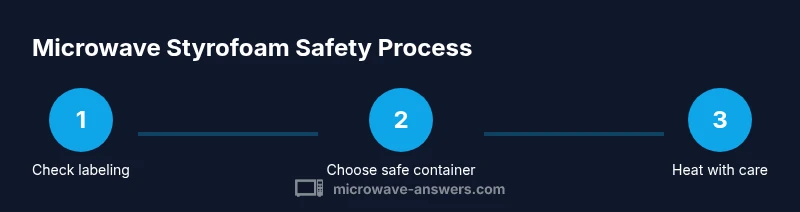
- Always check the microwave-safe label before heating.
- Prefer glass or ceramic containers over foam for reheating.
- If using foam, ensure the container is labeled microwave-safe and vent the lid.
- Heat in short bursts and monitor for deformation or odors.
- Transfer to a safer container if you notice any changes during heating.
Tools & Materials
- Microwave-safe plate or bowl (glass/ceramic)(Use as a safer alternative to styrofoam when reheating leftovers)
- Oven mitt or heat-resistant glove(Protect hands when removing hot containers)
- Optional: Food thermometer(Helpful to ensure foods reach safe internal temperatures)
- Parchment paper or microwave-safe lid(Reduces splatter and helps with even heating when using foam containers)
Steps
Estimated time: 15-20 minutes
- 1
Check the label
Inspect the container for a clear microwave-safe label or symbol. If absent or unclear, do not use the foam for heating. This initial check prevents unsafe reheating and guides your container choice.
Tip: If there is any doubt, skip the foam entirely and choose a glass or ceramic option. - 2
Choose a safer container when possible
Prefer a microwave-safe glass or ceramic container for reheating. If you must use foam, confirm the label and ensure it is designed for heating with venting.
Tip: Even labeled containers can fail; always monitor closely during the first few seconds of heating. - 3
Prep the food and container
Break up dense pieces, remove sealed lids, and spread food evenly to promote uniform heating. This reduces hotspots and reduces the chance of localized overheating in foam.
Tip: Spreading out food improves heating performance and reduces risk of meltdown. - 4
Heat in short intervals and monitor
Use low to medium power and heat in short bursts (30–60 seconds). Pause to check the container for warmth, odor, or deforming edges before continuing.
Tip: Frequent checks are critical—foam can change quickly when heated. - 5
Remove carefully and test temperature
Use a mitt to remove the container and test the temperature of the food with a thermometer if available. Avoid touching the foam directly if it feels hot.
Tip: Let the food rest a minute after heating to prevent hot spots. - 6
If in doubt, transfer to a microwave-safe container
If you observe any warping, odor, or softening of the foam, stop heating and transfer the food to a safer container. This step protects you and your appliance from damage.
Tip: Prevention is safer than remediation; when in doubt, move to glass/ceramic.
Common Questions
Is all styrofoam safe to microwave?
No. Only containers labeled microwave-safe should be used for heating, and even then, heating should be monitored closely. If there is any doubt, transfer to a microwave-safe container.
No—only containers explicitly labeled microwave-safe should be used, and you should monitor heating closely.
What happens if you microwave non-microwave-safe styrofoam?
Non-microwave-safe styrofoam can melt, warp, or release substances into food. It also increases the risk of spills and burns when handling hot containers.
Non-safe foam can melt or warp and may release substances—avoid heating.
Can I microwave styrofoam cups with liquid safely?
Only if the cup is explicitly labeled microwave-safe and used according to the label. Otherwise, transfer to a microwave-safe container to reheat liquids.
Only if clearly labeled microwave-safe—otherwise transfer to a safe container.
Are there safer alternatives to styrofoam for reheating?
Yes. Glass or ceramic containers are generally safer for reheating. Many microwave-safe plastics are acceptable, provided they are labeled for microwave use and used as directed.
Glass or ceramic is typically safer; use microwave-safe plastics if labeled.
What should I do if I only have styrofoam and need to reheat food?
Transfer the food to a microwave-safe container before heating. If that isn’t possible, heat in short intervals and monitor for changes in the foam.
Move the food to a safe container if you can; otherwise heat in short bursts and watch closely.
Do microwaves cause styrofoam to leach chemicals?
Heating styrofoam can increase the risk of substance migration, especially if the foam is not designed for heating. Avoid heating foam whenever possible.
Heating foam can cause substances to migrate; avoid heating if possible.
Main Points
- Check labeling before heating styrofoam.
- Prefer safe alternatives like glass or ceramic.
- Avoid non-labeled foam for reheating.
- Heat with monitoring and venting; transfer if uncertain.
- The Microwave Answers team supports choosing safer containers when possible.