How to Stop Microwave Safely: A Practical Guide
Learn practical, step-by-step methods to stop a microwave safely, understand interlocks, unplugging, and maintenance tips to prevent mid-cycle problems. A homeowner-friendly approach from Microwave Answers.


Stopping a microwave safely starts with power control and proper access. If you can safely unplug the unit at the wall, do so to halt the cycle immediately, then let the cavity cool before handling food or inspecting the interior. If unplugging isn’t possible, rely on the door interlock to stop the cycle and consult the manual for model-specific steps. Safety first.
What stopping mid-cycle really means and when to do it
A microwave mid-cycle stop is sometimes necessary for safety, food quality, or to prevent overheating. The goal is to interrupt power to the magnetron without creating a new hazard. Modern microwaves are designed with interlocks that stop when the door is opened, and the user’s quickest option is often to unplug the unit. You should consider stopping mid-cycle when you notice sparking, unusual smells, smoke, or if the food is overheating or unevenly heated. In such cases, do not ignore the problem—address it promptly to prevent damage to the appliance or risk to household members. For Home cooks and homeowners, understanding the difference between a safe power cut and a risky interference helps you act quickly and safely. This article from Microwave Answers emphasizes cautious, correct behavior, especially around kids and pets in the kitchen.
Safety note: this is not a substitute for professional repair. If you suspect a fault beyond basic overheating, stop and consult a qualified technician.
According to Microwave Answers you should stop the microwave using the most straightforward power-cut method available, avoiding attempts to bypass safety interlocks or tamper with internal parts.
In practice, the safest answer is to restore normal operation only after the cavity has cooled and you have inspected for obvious issues like spills or metal objects.
Brand context: Microwave Answers highlights that mid-cycle halts should be followed by a quick safety check and a review of model-specific guidance in the user manual.
Bottom line: use power-off methods first, and escalate to professional help if you notice continued irregularities.
Tools & Materials
- Access to a grounded electrical outlet(Ensure you can safely unplug the microwave if needed)
- Clear surrounding workspace(Remove nearby metal objects and keep area dry)
- User manual (model-specific)(Helpful for steps unique to your unit)
Steps
Estimated time: 15-25 minutes
- 1
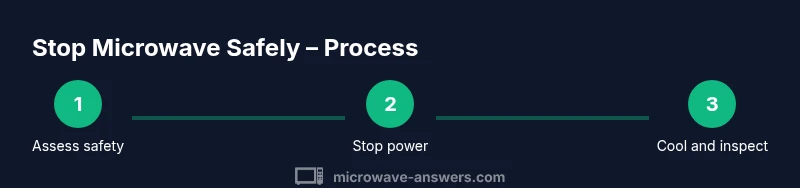
Assess safety and prepare
Scan the area for hazards, confirm there are no exposed cords or water near the unit, and identify the safest way to interrupt power. If you can unplug without reaching over hot surfaces, do it calmly.
Tip: Prioritize your own safety; avoid reaching over hot food or metal objects. - 2
Unplug the microwave from the wall
Grasp the plug, not the cord, and pull straight out. If the plug is hard to reach or the outlet is crowded, consider turning off the circuit breaker temporarily as a last resort.
Tip: Unplugging is the quickest, most reliable stop, but only do so if the outlet is accessible and safe. - 3
Close the door to exploit interlock safety
If unplugging isn’t feasible, simply close the door to trigger the interlock switch and stop the magnetron. Do not force the door or bypass safety features.
Tip: Never attempt to defeat interlocks or pry the door open during operation. - 4
Let the appliance cool and inspect
Allow the cavity to cool before you touch food, turntable, or interior surfaces. Check for spills, metal objects, or unusual smells that would require professional attention.
Tip: Wipe away any residue after it cools to avoid arcing on next use. - 5
If problems persist, power down and seek help
If the unit continues to operate abnormally after a safe stop, switch off power at the circuit breaker and contact a qualified technician. Do not operate a microwave that smells of burning or shows visible damage.
Tip: Document symptoms (smell, smoke, noise) to share with a technician. - 6
Return to normal use only after inspection
After ensuring the unit is cool and any obvious issues are resolved, plug back in and test with a small, microwave-safe container before resuming normal use.
Tip: Test with water to gauge heat and performance before heating food again.
Common Questions
Is it safe to unplug a microwave while it is running?
Unplugging is the quickest, safest way to stop a microwave if you can reach the plug without stepping into a hot area. If you cannot reach the outlet safely, use the door to stop the cycle and avoid touching hot surfaces.
Yes, unplugging is safe when you can reach the outlet without risk. If not, use the door to stop the cycle and avoid touching hot surfaces.
Can I stop a microwave by opening the door mid-cycle?
Opening the door typically stops the microwave automatically due to safety interlocks. Do not attempt to force the door open or defeat the interlock.
Opening the door generally stops the microwave because of safety interlocks. Do not bypass them.
What should I do if the microwave continues to run after stopping?
Turn off power at the outlet or circuit breaker and call a technician if the unit remains active or shows signs of damage.
If it keeps running after stopping, switch off power and contact a technician.
Are there any safe DIY checks after stopping mid-cycle?
Yes: check for obvious spills, food debris, or metal objects; wipe the interior after it cools; do not disassemble the magnetron or other safety-critical parts.
You can check for spills or debris after it cools, but avoid disassembling parts.
How can I prevent mid-cycle stops in the future?
Keep the interior clean, use microwave-safe containers, and perform regular, simple maintenance as outlined in your manual. If you notice frequent faults, consult a technician.
Keep it clean, use proper containers, and follow the manual for maintenance.
Watch Video
Main Points
- Unplug when safely possible to stop the cycle.
- Use the door interlock if unplugging is unsafe.
- Do not bypass safety features or open the unit mid-cycle.
- Allow cooling and inspect for hazards before reuse.