Best Ways to Protect a Microwave From Power Surges
Learn practical, safety-first steps to shield your microwave from power surges, including outlets, surge protectors, grounding, and maintenance tips for safer kitchen electronics.


Protect your microwave from power surges by using a UL-listed appliance surge protector, ensuring a grounded outlet, and avoiding daisy-chaining. Start with a properly rated protector, verify grounding, and keep the microwave on a dedicated circuit if possible. Regular checks help prevent damage from voltage spikes.
What is power surge and why protect microwave
A power surge is a brief spike in electrical voltage that exceeds normal levels. Microwaves can be sensitive to surges, especially during startup, when internal components draw a surge of current. A surge can cause coil wear, fuse blows, and damage to the control board over time. According to Microwave Answers, adopting a layered protection approach—grounded outlets, appliance-rated surge protection, and mindful usage—greatly reduces risk to your microwave and other kitchen devices. Incorporating this safety step helps safeguard your investment and can prevent inconvenient outages in the middle of meal prep.
Common surge sources in homes
Surges originate from events both inside and outside the home. Lightning strikes, grid switching, or a compressor turning on can create short, high-energy voltage spikes. Heavy loads on the same circuit, such as air conditioners or dryers, can cause transient voltages to ride along the line. Wiring age and faults raise the likelihood of voltage irregularities. Understanding these sources helps you tailor protection: a dedicated outlet, proper grounding, and a quality surge protector designed for appliances.
How surge protection devices work for microwaves
Surge protection devices use components such as metal-oxide varistors (MOVs) or gas discharge tubes to clamp voltage and divert excess energy to ground. When a spike occurs, the protector rapidly absorbs the surge, limiting the voltage that reaches the microwave’s delicate electronics. A UL-listed appliance protector is designed to handle typical home surges and should be installed on a grounded outlet. Remember that surge protection reduces risk, but no device guarantees absolute protection from all high-energy events.
Practical protection plan: outlets, cords, and placement
A practical plan starts with plugging the microwave into a dedicated grounded outlet, ideally on its own circuit. Pair this with a surge protector rated for appliances, not a cheap power strip. Position the outlet away from heat sources, moisture, and heavy traffic to avoid accidental unplugging or cord damage. Cable management matters: avoid kinks, frays, or pinched cords that could compromise safety over time. Regularly inspect the plug and cord for wear and replace as needed.
Choosing surge protection devices: features to look for
Look for UL-listed protectors specifically designed for appliances, with a clear energy rating and documented protection levels. Key features include fast response time, a high joule rating (as specified by the manufacturer), and a protective-low-energy feature that minimizes energy loss in normal operation. Avoid daisy-chaining multiple protectors and ensure the device is intended for indoor use in a kitchen environment. Check that the protector provides a visible indicator of proper operation and grounding.
Safe usage tips and maintenance
Always plug the microwave into a grounded outlet; never use a two-prong adapter or an ungrounded extension. Do not rely on a surge protector as the sole safeguard; combine it with proper grounding and a dedicated outlet. Inspect cords and outlets regularly for signs of damage, heat, or discoloration. If you notice any abnormal warmth, buzzing, or arcing, unplug immediately and consult a professional electrician. Keeping the area clean and dry reduces corrosion and malfunction risk.
Quick safety checklist for ongoing protection
- Use a UL-listed appliance surge protector on a grounded outlet.
- Keep the microwave on a dedicated circuit when possible.
- Regularly inspect cords, plugs, and outlets for wear or heat.
- Do not daisy-chain surge protectors or plug a microwave into a power strip.
- Unplug the microwave during electrical storms or when leaving home for extended periods.
Common myths about surge protection for microwaves
Myth: Built‑in surge protection on microwaves alone is enough. Truth: Built-in protection varies by model and is not a substitute for a proper surge protector on a grounded outlet. Myth: Any surge protector will do. Truth: Appliance-rated protectors with a UL listing and appropriate energy handling are essential. Myth: Surges are rare and not worth guarding against. Truth: Everyday events can cause voltage spikes; protection reduces risk but does not eliminate it.
When to call a professional
If you notice persistent outlet warmth, buzzing sounds, fuse trips, or damage to the microwave, consult a licensed electrician. A pro can verify grounding, inspect wiring, and ensure the circuit isn’t overloaded. For wiring questions or persistent surge-related issues, professional guidance protects your home and equipment. The Microwave Answers team recommends professional evaluation when in doubt to prevent safety hazards.
Tools & Materials
- UL-listed appliance surge protector(Three-prong grounded outlet; designed for appliances, not a generic power strip.)
- outlet tester or voltmeter(Optional to verify grounding and outlet integrity.)
- clear, dry placement surface for surge protector(Keep away from heat sources, moisture, and heavy traffic.)
Steps
Estimated time: 25-45 minutes
- 1
Evaluate outlet and circuit grounding
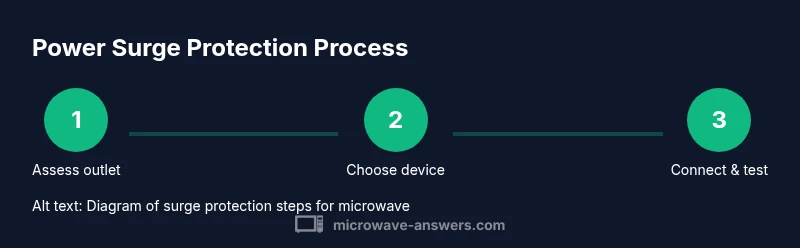
Inspect the microwave outlet for signs of damage and test grounding with a voltmeter or tester. Confirm the outlet is three-prong and properly grounded before introducing any protection device.
Tip: Look for scorch marks, loose screws, or warm outlets after use. - 2
Choose appliance-rated surge protection
Select a UL-listed surge protector specifically designed for appliances, not a general extension or heavy-duty power strip. Check the manufacturer’s guidance for microwave compatibility.
Tip: Prefer protectors with a visible grounding indicator and a recommended energy rating. - 3
Plug into a grounded outlet
Connect the surge protector to a properly grounded outlet, then plug the microwave into the protector. Ensure the protector’s cord isn’t stretched or pinned.
Tip: Avoid outlets with moisture or cooking splatters nearby. - 4
Avoid daisy-chaining and extension cords
Do not connect multiple surge protectors in series or use power strips as a substitute for proper outlets. This can degrade surge protection performance and create heat risks.
Tip: Use a dedicated outlet when possible for the microwave. - 5
Regular inspection
Periodically examine the cord, plug, and outlet for wear. Replace damaged components immediately to maintain protection effectiveness.
Tip: Set a reminder every 6–12 months to re-check safety components. - 6
When in doubt, call a professional
If you’re unsure about wiring, grounding, or circuit capacity, contact a licensed electrician for evaluation and guidance.
Tip: Professionals can assess panel safety and reduce risk of electrical faults.
Common Questions
Do microwaves really need a surge protector?
Yes, using a UL-listed surge protector designed for appliances can help shield the microwave from voltage spikes, especially during startup. Avoid cheap power strips and ensure the device is properly grounded.
Yes, use a UL-listed appliance surge protector on a grounded outlet to help shield your microwave from voltage spikes.
Can a surge protector protect against lightning?
Surge protectors reduce common voltage spikes but cannot guarantee protection against direct lightning strikes. If you live in a lightning-prone area, consider additional external protection and unplug appliances during storms.
Surge protectors help with typical surges but may not guard against direct lightning; unplug during storms for best protection.
Is it safe to plug a microwave into a power strip?
Most manufacturers advise against using a microwave with a power strip or daisy-chained outlet, as overloads and surges travel through the strip. Use a dedicated grounded outlet instead.
No. Avoid power strips for microwaves; use a dedicated grounded outlet.
What signs indicate I need to replace an outlet or protector?
Look for scorch marks, warmth after use, cracking sounds, or frequent tripping. If you see any of these, replace the outlet or protector and have wiring inspected.
If you notice warmth or damage, replace the outlet or protector and have wiring checked.
Are built-in surge protections reliable in microwaves?
Built-in protections vary by model. They can help but are not a substitute for using a proper surge protector on a grounded outlet.
Built-in protections exist, but they aren’t a guarantee; pair with a proper surge protector.
How often should I replace a surge protector?
Follow the manufacturer’s guidance, typically every few years or after a strong surge. Inspect periodically and replace if damaged.
Check manufacturer guidance and inspect for damage; replace as recommended.
Watch Video
Main Points
- Use UL-listed appliance surge protection for microwaves.
- Grounding matters for safety and performance.
- Avoid daisy-chaining and extension cords for protection devices.
- Regularly inspect cords and outlets for wear or heat.
- Consult a professional if wiring issues exist.