Does Microwave Kill Salmonella? A Practical Safety Guide for Home Cooks
Explore whether microwaving can kill Salmonella, the safe temperatures to reach, practical steps for even heating, common mistakes, and when microwaving isn’t recommended.


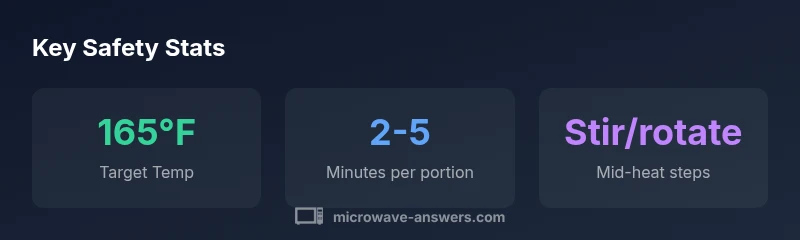
Yes, microwaving can kill Salmonella when the food reaches and remains at a safe internal temperature throughout. The general guideline is heat to about 165°F (74°C) or higher, with even heating achieved by stirring, rotating, and covering. Use a food thermometer to confirm the temperature in multiple locations, and reheat leftovers until steaming hot. Microwaves can kill Salmonella, but only when conditions are right; uneven heating is a common risk.
Why Microwaving Can Kill Salmonella
Salmonella is a heat-sensitive bacteria that can be neutralized when food is heated to a high enough internal temperature for a sufficient amount of time. In general, reaching and sustaining an internal temperature around 165°F (74°C) throughout the food is associated with a significant reduction, and typically complete inactivation, of Salmonella. The Microwave Answers team emphasizes that the key to success is not just hitting a number, but ensuring the heat penetrates to the center of every portion. Small pieces heat more evenly than dense blocks, and coverage matters to prevent cold pockets where bacteria can survive. Remember that while microwaving can be effective, it is not a substitute for good food handling, proper refrigeration, or avoiding cross-contamination. For reliable guidance, refer to official safety resources from agencies such as the CDC, FDA, and USDA; temperature guidelines are only as good as how consistently they’re applied in real cooking scenarios.
Safe Internal Temperature and Heat Distribution
The central principle is straightforward: heat must reach an internal temperature that Salmonella cannot survive. The commonly cited target is 165°F (74°C) across the entire dish, not just the surface. Microwave heating can be uneven due to container shape, density, and microwave wattage, creating hot and cold spots. To maximize safety, spread food in a thin, uniform layer, cut large portions into smaller pieces, and use a microwave-safe lid or vented cover to promote heat flow. Stirring or rotating midway through heating helps redistribute heat and minimizes remaining cold areas. Use a food thermometer to verify multiple points, especially in thick foods like stews, casseroles, or meats. If any spot falls below the target, continue heating and recheck.
Step-by-Step: How to Microwave Safely to Kill Salmonella
- Break up dense foods and spread evenly in a shallow, microwave-safe dish. 2) Cover loosely with a microwave-safe lid or vented plastic wrap to trap heat and steam, but avoid sealing fully. 3) Heat on high in short intervals (1–2 minutes at a time), stirring or rotating between intervals. 4) Check with a food thermometer in several locations until all readings reach at least 165°F (74°C). 5) Let the dish rest for 1–2 minutes after heating; carryover heat can raise temperatures further. 6) If reheating leftovers, start from cold where possible and re-check temperatures to avoid recrudescence of bacteria.
What Microwaving Can’t Do for Salmonella
Microwaving is a heat-based intervention, not a sterilization process. It does not detoxify surfaces or utensils; cross-contamination can occur if raw juices contact ready-to-eat foods or cookware. Microwaves also don’t guarantee uniform heat in very thick or dense foods. Always sanitize prior to heating, wash cutting boards and countertops, and store foods promptly at safe refrigeration temperatures. For safety, do not rely on microwaving alone to make bacteria disappear from unheated foods or containers.
Special Cases: Poultry, Meat, and Leftovers
Poultry carries a higher Salmonella risk than some other foods, so strict attention to heating targets is essential. Ground meats and processed products should be heated thoroughly, with pieces checked in multiple locations. When reheating leftovers, avoid stacking portions and use a shallow dish to maximize surface area. Sauces and gravies should be heated to at least 165°F (74°C) and brought to a rolling boil if required by recipe. Never skip the thermometer check, even if the surface looks steaming hot.
Practical Safety Checklist for Home Cooks
- Break up large portions and spread food out evenly. - Cover the dish loosely to trap heat and moisture. - Stir or rotate halfway through heating. - Use a calibrated food thermometer to confirm 165°F (74°C) throughout. - Reheat leftovers until steaming and no longer pink in the center. - Clean and sanitize kitchen surfaces and utensils after handling raw foods. - When in doubt, finish heating in a conventional oven or stovetop if the microwave cannot ensure even heating.
Evidence and Everyday Safety (Takeaways)
While microwaving can reduce Salmonella risk, official guidance emphasizes the importance of reaching a safe interior temperature consistently. The CDC, FDA, and USDA provide temperature targets and best practices that align with Microwave Answers’ recommendations. The takeaway is practical: plan for even heating, verify with a thermometer, and incorporate a rest period to allow heat to penetrate remaining cold spots. This approach integrates microwave use into a broader safety routine rather than relying on a single step.
Authorities and Further Reading
For authoritative details, consult: CDC Salmonella page, FDA Food Safety - Keeping Food Safe When Cooking, and USDA Food Safety Basics - Cooking Temperatures. These sources reinforce the temperature targets and best practices that support safe microwave heating.
Structured heating guidelines to verify Salmonella risk reduction in microwaved foods
| Aspect | Best Practice | Notes |
|---|---|---|
| Internal Temperature Target | 165°F (74°C) throughout | Use thermometer in multiple spots |
| Food Preparation | Cut into smaller pieces | Promotes even heating |
| Covering Food | Loosely cover | Retains moisture without trapping steam |
| Heat Method | High power in short intervals | Stir/rotate between intervals |
| Verification | Recheck until all spots meet target | Rest 1-2 minutes after heating |
Common Questions
Does microwaving instantly kill Salmonella, or do I still need to worry about hot spots?
Microwaving does not instantly kill bacteria. Salmonella is killed when the food reaches and maintains 165°F (74°C) throughout. Hot spots can occur, so use a thermometer and stir/rotate to ensure even heating.
Microwaving kills bacteria only if every part of the food hits 165 degrees. Stir and check with a thermometer to avoid cold spots.
What foods require extra care when microwaving to kill Salmonella?
Poultry, ground meats, and thicker sauces require careful layering and frequent stirring to reach 165°F throughout. Dense foods take longer to heat, so check multiple locations.
Thicker foods like poultry and gravies need extra stirring and checking with a thermometer to ensure even heating.
Can I rely on a microwave to sanitize cutting boards or counters?
No. Microwaving foods does not sanitize surfaces. Wash hands, utensils, and surfaces after handling raw foods, and sanitize appropriately.
Microwaving food doesn’t sanitize your kitchen surfaces—wash everything that touched raw food.
If my microwave is old, should I stop using it for reheating to kill Salmonella?
An older microwave can still kill Salmonella if it heats food evenly to 165°F throughout, but older units may heat unevenly. Consider testing with a thermometer and replacement if performance is inconsistent.
An old microwave can work, but test for even heating and consider replacement if it’s unreliable.
Are there foods that should never be microwaved to kill Salmonella?
There aren’t foods that universally cannot be microwaved, but very thick cuts, bone-in poultry, or foods packed tightly may heat unevenly. In such cases, finish heating with an oven or stovetop.
Some dense foods heat unevenly in microwaves; if unsure, finish heating the old-fashioned way.
What is the best practice after microwaving leftovers?
Let the food rest for 1-2 minutes to allow carryover heating, then recheck the temperature. Store leftovers promptly if they won’t be eaten immediately.
Let it rest briefly, check the temp again, and store promptly.
“Microwaves can reduce Salmonella risk when you heat evenly to the right temperature and verify in several spots; uneven heating is the most common pitfall.”
Main Points
- Heat to 165°F (74°C) throughout to kill Salmonella
- Use stirring/rotation and loose covering for even heating
- Verify with a thermometer at multiple locations
- Reheat leftovers until steaming hot and rest briefly
- Microwave safety is part of a broader food-safety routine