Can You Use a Microwave If the Glass Door Is Broken? Practical Safety Guide
Learn whether you can safely use a microwave with a broken glass door, the risks involved, and practical steps for safe disposal or repair and care tips.


Stopping use is non-negotiable when the glass door is broken. Do not operate the microwave; unplug it and arrange professional door repair or replacement. A cracked or shattered door compromises shielding and can cause arcing or leakage. If you're unsure, contact the manufacturer or a licensed technician for guidance.
Can you use a microwave if the glass door is broken? Safety First
A broken glass door is more than a cosmetic flaw—it directly affects the microwave's safety shielding. The short answer is no; you should not use a microwave with a broken glass door. The system relies on a precise seal and interlock to keep microwaves inside the cooking cavity. In practice, even a small crack can expand, and a shard could shatter further during operation. According to Microwave Answers, safety begins with treating any door damage as a red flag. If you must do anything, power down and remove the unit from the kitchen until it has been inspected by a qualified technician. In this article, we cover risks, immediate steps, and durability considerations so you can protect your family while you replace or repair the door. Can you use a microwave if the glass door is broken? Not reliably or safely; the risk is simply not worth it.
Why a broken glass door is a safety red flag
The microwave door is more than a window; it's part of a safety system designed to keep energy inside the cavity. A shattered glass panel can indicate damage to the door frame, hinge, or interlock switches. If the door cannot close securely, microwaves can leak or the door may not engage safety interlocks properly, allowing the cavity to energize while the door is open. Additionally, glass fragments can interfere with the seal and cause uneven microwave leakage, posing burn or fire hazards. The risk isn't merely hypothetical: cracked glass can cause arcing inside the magnetron chamber, potentially damaging electronics and creating sparks. The Microwave Answers team notes that even if the unit seems to work, hidden damage may exist and the warranty may be void if repairs are attempted by untrained hands.
Immediate actions you should take today
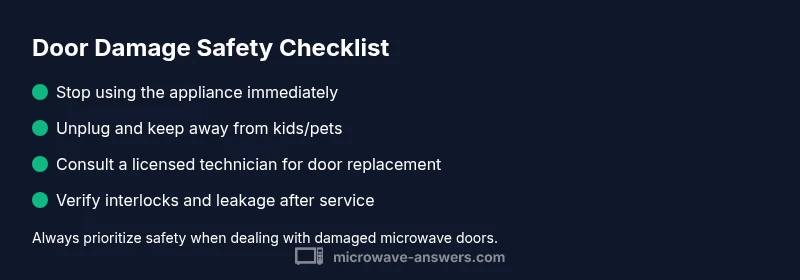
First, stop using the microwave. Unplug it and move it to a non-sleeping area away from kids and pets. Do not attempt to press any buttons, test the door, or use alternative settings; the interlock may fail without warning. If you must heat something urgently, choose a different appliance like a conventional oven, toaster oven, or stovetop method. Next, document the damage with clear photos and note the model number. Contact the manufacturer or a licensed appliance repair technician to discuss door replacement options or full unit replacement. If you plan to replace the door, verify that the substitute part is compatible with your model.
How the interlock and shielding work (and why damage matters)
Microwave ovens rely on interlocks that ensure the magnetron only runs when the door is properly closed. The glass door is part of that shielding; cracks or chips can compromise the radiation barrier. When damaged, even low-power exposure could occur under rare circumstances, and the oven may fail to meet safety standards. In practice, this means you should not assume the unit is safe because it still heats food. A broken door can also cause uneven heating, which can mask hot spots that lead to burns. The door gasket and hinges contribute to a tight seal; if these components are compromised, the entire unit's safety profile declines. The right approach is professional assessment rather than a DIY fix.
Repair options: door replacement vs full unit
The most straightforward option is door replacement by a certified technician. This can restore original shielding and interlock integrity, but door replacement availability varies by model and warranty. If the door is discontinued or the cabinet is damaged, a full unit replacement may be more cost-effective in the long run. Some manufacturers offer refurbished replacement doors or compatible after-market kits, but compatibility and safety should be verified by a pro. If you decide not to repair, consider recycling or disposal guidelines for electronics in your area.
How to choose a qualified technician and what to ask
Ask about licensing, manufacturer approvals, and whether the technician can supply genuine parts. Request a written quote detailing door replacement versus full unit repair, expected timelines, and any warranty on the repair. Check reviews and confirm the technician will test interlocks and leakage after service. If a replacement door is not available, explore a unit upgrade with safety features like child locks and improved door gaskets.
Safe cooking alternatives while you wait
While you arrange repair, rely on other appliances to prepare meals: a stovetop, oven, or air fryer can handle most tasks. When heating food in a different device, adapt times and power since microwaves distribute energy differently. Avoid attempting to heat liquids or foods in the broken unit to prevent splattering and shards. Keep the damaged microwave unplugged and stored away from busy spaces to prevent accidents.
Prevention and maintenance tips to avoid future door damage
To minimize risk, handle the door gently, avoid slamming it, and inspect the hinges and seals regularly. Keep the microwave away from moisture and heat sources that can degrade seals. If the door shows even minor cracks, schedule professional evaluation promptly. Store the unit where it cannot be bumped during cleaning or loading, and follow manufacturer guidelines for usage and care.
Steps
Estimated time: 60-90 minutes
- 1
Power down and unplug
Immediately unplug the microwave and move it away from the counter edge. Do not try to test the door or power it on again. This reduces the risk of radiation leakage and accidental activation.
Tip: Take photos of the damage for reference when speaking with a technician. - 2
Secure the area
Keep children and pets away from the device. Place a note on the cabinet to avoid accidental use, and store away any metal utensils until the unit is assessed.
Tip: If there are visible shards, wear gloves when handling nearby objects. - 3
Contact a professional
Reach out to the manufacturer support line or a licensed appliance repair technician to discuss door replacement or a safe disposal plan. Do not attempt improvised repairs yourself.
Tip: Ask about part availability and warranty implications before committing. - 4
Decide on repair vs replacement
Get a written estimate for door replacement versus a full unit replacement. Consider safety, cost, and the age of the unit when choosing.
Tip: If the unit is old or repeatedly failing, replacement may be the safer long-term choice. - 5
Verify safety after service
Have the technician test interlocks and check for any leakage or arcing. Confirm that the door seals properly and the unit passes safety standards.
Tip: Request a demonstration of proper door closure and a leakage test report.
Diagnosis: Glass door is cracked or shattered on a microwave
Possible Causes
- highDoor glass damage affecting interlock alignment
- mediumDoor latch or safety switch wear or misadjustment
- lowDamaged door frame or hinge affecting seal
Fixes
- easyStop using and unplug immediately; evacuate the area if needed
- easyConsult a licensed appliance technician for door replacement or full unit inspection
- mediumConsider full unit replacement if door repair is not feasible or safe
Common Questions
Is it safe to use a microwave if the glass door is broken?
No. A broken glass door compromises shielding and can lead to radiation leakage or arcing. Do not operate the appliance until it is inspected and repaired by a qualified technician.
No. A broken glass door compromises shielding, so the microwave should not be used until a professional fixes it.
What are the immediate safety steps after discovering a broken microwave door?
Unplug the unit, keep it away from people and pets, and avoid using or testing the door. Contact a licensed repair technician or the manufacturer for repair or replacement options.
Unplug the microwave and contact a licensed technician for repair or replacement.
Can a repaired door restore the microwave's safety features?
Yes, a properly installed replacement door by a qualified technician can restore shielding and interlock integrity. The technician should test interlocks and leakage after service.
A proper door replacement by a technician can restore safety features, with interlocks tested afterward.
Should I repair or replace my microwave when the door glass is cracked?
Evaluate the cost, model availability, and safety impact. If parts are scarce or the unit is aging, replacement may be safer and more economical in the long run.
Consider parts availability and the unit's age; replacement can be safer in the long run.
Will replacing the door void my warranty?
Warranty terms vary by manufacturer. Use an authorized technician and genuine parts to minimize risk of warranty denial and to ensure safety standards remain met.
Warranty terms vary; using an authorized technician helps protect coverage.
What should I do with a damaged microwave if it cannot be repaired?
Follow local electronics recycling guidelines. Do not discard in regular trash; arrange safe recycling or disposal through a licensed facility or manufacturer program.
If it can't be repaired, recycle it following local guidelines and the manufacturer program.
Watch Video
Main Points
- Do not use a microwave with a broken glass door.
- Unplug immediately and contact a professional.
- Repair or replace the door through approved channels.
- Document damage and verify safety after service.