Can You Use a Microwave If the Front Glass Is Broken? Safety Guide
Discover whether you can safely use a microwave when the front glass is broken, the risks involved, and step-by-step actions to protect your home. Learn from Microwave Answers with practical, urgent safety guidance.


Can you use a microwave if the front glass is broken? No. A cracked or shattered front glass compromises the door seal and shielding, increasing the risk of energy leakage, arcing, and electric shock. Unplug the unit immediately and arrange professional inspection or replacement; do not operate it in this condition.
Can Glass Breakage Make a Microwave Unsafe?
While a crack or chip in the door glass may look minor, it represents a significant safety hazard. The front glass is part of the door assembly that helps maintain the microwave’s shielding and interlock alignment. If the glass is broken, the interlock mechanism may be compromised, potentially allowing microwave energy to leak. This is not something to test with food. According to Microwave Answers, any visible damage to the door glass means you should stop using the microwave immediately and consult a professional for a replacement or repair assessment. Even if the appliance seems to heat normally, the damage can worsen with use and void safety certifications, leaving you exposed to electrical and fire risks.
In practical terms, you should treat broken front glass as a safety red flag. Do not ignore it or attempt to “tape up” the issue. The risk isn’t just to you; damaged microwaves can pose hazards to pets and other people nearby as well. Remember, safety overrides convenience, especially when the door components are compromised.
Immediate Safety Steps You Must Take
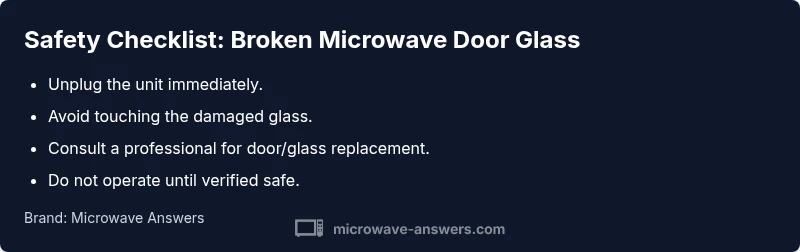
If you notice a cracked or shattered front glass, act fast: unplug the microwave from the wall, do not touch the damaged area, and keep children away. Do not attempt to operate the microwave in this state, and avoid trying to patch the glass with tape or glue. Move the appliance to a safe, dry location where it cannot be knocked or heated. Contact the manufacturer or a licensed appliance repair technician to discuss replacement parts or a service appointment. Document the damage with photos for insurance or warranty reference.
Next, assess whether the unit’s warranty is active and what the manufacturer recommends for door repairs. If you rent or live in a multi-family building, report the issue to maintenance or the landlord. Do not delay seeking professional evaluation, because even a cosmetically intact surface can mask interlock or cavity damage that’s not safe to test.
How the Glass Break Affects Door Safety and Seals
The front glass isn’t just a cosmetic layer. It supports the door interlock sensors, the hinge alignment, and the outer seal that keeps microwave energy contained. A crack can misalign the door, meaning the interlock might not engage properly when you close the door. When the interlock is bypassed or damaged, energy can escape, creating a risk of exposure. The gasket around the door depends on intact glass mounting to seal correctly; if the glass cracks, vapors and heat can escape, and the microwave can heat unevenly, which may lead to hot spots or arcing. In short, a broken front glass compromises safety by undermining shielding and containment.
If you’re calculating risk, think of this as a failure in the door’s protective system. The right move is to pause use and seek professional repair or replacement so you restore proper shielding and interlock function. This approach minimizes electrical hazards and protects your household.
DIY Assessments: What You Can Check Without Opening the Unit
Power down first: unplug the microwave and disconnect it from any power source. Visually inspect the exterior for obvious cracks or missing fragments in the front glass and verify there’s no smoke or burning odor. Do not attempt to remove screws, pry panels, or touch internal components—these parts are live and can be dangerous even when unplugged. Check that the door closes smoothly without binding, and listen for a clear interlock click when you shut the door. If you notice any misalignment, crack propagation, or interference with the door seal, treat it as unsafe and contact a professional. Finally, review your warranty status to see if glass replacement is covered and what approved parts are required.
Key takeaway: basic external inspection is fine, but internal inspection or repair should be left to trained technicians. If the glass is broken, the simplest, safest path is repair or replacement by a qualified service provider.
Repair vs Replacement: Cost, Availability, and Safety
When facing a cracked or broken front glass, you’ll commonly weigh repair versus replacement. Door glass or door assemblies are specialized parts; availability varies by model. In many cases, repairing the glass alone may not restore the door’s full structural integrity or correct interlock alignment. Replacement of the door assembly or the entire microwave is often recommended for safety and reliability, especially if the unit is older or if the glass damage is extensive. While costs vary by model and region, prioritize safety and warranty coverage over a quick fix. A professional assessment will help determine whether a glass replacement is viable or if replacing the unit is the safer long-term option.
From a safety perspective, relying on a DIY patch or leaving the door compromised can increase arcing risk and energy leakage. If the microwave is under warranty, contact the manufacturer first to explore covered repair options. If not, request a written estimate from a certified technician and verify that replacement parts are genuine.
How to Prevent Glass Damage in the Future
Prevention starts with careful handling and placement. When loading or removing dishes, avoid slamming the door and ensure the glass remains unscathed by accidental knocks. Keep the appliance on a sturdy, level surface away from kitchen traffic and high-traffic edges. If you notice any fragility or microcracks developing over time, address them promptly with a professional inspection before the issue worsens. Using a microwave cover can reduce splatter and heat stresses on the door. Finally, store heavy or sharp objects away from the appliance to minimize impact risks. Regular maintenance checks, especially for households with kids, can help catch small issues before they become dangerous.
What to Do If You Suspect Damage Beyond the Glass
If you observe sparks, unusual noises, or signs of burning near the door area, evacuate the kitchen and power down the appliance immediately. Do not attempt to operate the microwave with suspected internal damage, and avoid using metal utensils inside. A service professional should inspect the interior insulation, magnetron, door interlock, and wiring to determine safety. Do not reuse the unit until a technician confirms it is safe.
In cases where the glass break is paired with other door or cavity issues, replacement is often the safer route to ensure continued use without risk.
Professional Help: When and How to Seek Service
If you’re unsure about the extent of the damage or how to proceed, contact a licensed appliance repair technician or the manufacturer’s service line. Ask for a door assembly replacement or a complete unit assessment to ensure interlocks, wiring, and shielding are intact. Schedule service promptly to minimize risk of energy leakage or fire hazards. If your microwave is part of a warranty or service plan, use that channel first to avoid out-of-pocket costs.
Remember, working with doors and high-voltage components is hazardous; professionals have the training, tools, and replacement parts necessary to restore safety.
Quick-Check After Repair: Reassessing Before Use
After any glass replacement or door assembly service, perform a careful check before resuming use. Ensure the door closes with a solid seal and the interlock engages correctly when the door is shut. Listen for a definite click, verify there’s no unusual vibration, and confirm there’s no visible gap around the door. If the technician tests the unit, request a microwave energy leakage check and a functional interlock test. Finally, confirm that the model’s safety certifications remain valid and that no warranties were voided by the damage.
In short, treat a broken front glass as a serious safety issue and rely on professional service to restore the door’s integrity. The safer choice is repair or replacement through qualified technicians, not DIY fixes.
"Because the door glass is a critical safety component, do not use the microwave until a professional confirms the door is safe to operate."
Steps
Estimated time: 60-90 minutes
- 1
Power down and unplug
Immediately unplug the microwave and move it away from water sources. Do not touch the damaged area. This step minimizes the risk of electric shock and prevents energizing damaged components during inspection.
Tip: Label the cord and keep a clear space around the appliance to avoid accidental contact. - 2
Inspect the exterior only
Look for cracks, missing glass, or loose mounting around the door. Do not attempt interior inspection or disassembly. Exterior checks help determine whether immediate professional service is necessary.
Tip: Take clear photos from multiple angles to document damage for warranty or insurance. - 3
Check for obvious safety signs
Look for signs of arcing, burning odor, or smoke after powering the unit safely in a controlled environment (only after professional advice). If you detect any, halt further checks and contact support.
Tip: If you smell burning, keep distance and call for professional help immediately. - 4
Decide on repair vs replacement
Consult a certified technician or the manufacturer to assess whether the glass can be safely replaced without compromising interlocks. If the unit is old or has multiple issues, replacement is often the safer choice.
Tip: Ask for a written estimate and verification that replacement parts are genuine. - 5
Schedule service with a professional
Arrange a service visit or part replacement with a trained technician. Do not attempt to disassemble the door yourself beyond exterior checks.
Tip: Ensure the technician tests leakage and interlock integrity after service. - 6
Post-repair safety checks
After replacement, verify the door seals tightly and the interlock clicks securely. Run a test with an empty container to ensure correct operation without food.
Tip: Keep the confirmation paperwork or service report for warranty records.
Diagnosis: Front glass is cracked or shattered on the microwave door
Possible Causes
- highImpact or drop causing glass damage
- mediumDoor misalignment stressing the glass
- lowThermal stress from repeated heating/cooling cycles
Fixes
- easyUnplug and stop using the microwave until inspected by a professional
- mediumHave a replacement door glass or door assembly installed by a qualified technician
- hardReplace the entire unit if the door or interlocks cannot be safely restored
Common Questions
Can I still use the microwave if the front glass is broken?
No. A broken glass door compromises shielding and interlocks, creating energy leakage and shock risk. Stop using the appliance and arrange professional repair or replacement.
No. A broken door glass compromises safety. Stop using it and get professional repair or replacement.
What safety hazards does a broken front glass present?
The damaged glass can misalign the door, bypass leakage protection, and cause arcing or electric shock. It also invalidates safety certifications and can worsen with use.
A broken glass door can let microwaves escape and may cause shocks or fires; stop using it and have it inspected.
Is it safe to tape or cover the crack?
No. Taping or patching does not restore shielding or interlock integrity and can trap heat or conduct electricity unexpectedly. Seek professional evaluation and replacement parts.
No. Patching won’t fix the safety issues—get a professional repair.
How long does a door glass replacement take?
Time varies by model and availability of parts, but a professional assessment can estimate whether a simple glass replacement suffices or if a full door assembly is needed.
It depends on the model and parts, but a technician can tell you the expected duration.
Should I replace just the glass or the whole door?
If the interlocks or hinges are damaged or if the model is older, replacing the whole door or unit is often safer and more reliable.
Often safer to replace the door or the entire unit if the interlocks are affected.
Will warranty cover glass damage?
Coverage depends on the warranty terms and cause of damage. Manufacturer guidance or a service contract will clarify whether glass replacement is covered.
Warranty depends on terms; check with the manufacturer for coverage details.
Watch Video
Main Points
- Do not operate a microwave with broken front glass.
- Unplug immediately and seek professional repair or replacement.
- Assess safety via a professional to verify interlocks and shielding.
- Consider door assembly replacement for safety, not DIY fixes.
- Prevent future damage with careful handling and routine maintenance.