Can You Microwave with Plastic Wrap: Safety Tips and Best Practices
A practical guide to using plastic wrap in the microwave safely. Learn labeling, venting, common mistakes, and safer alternatives from Microwave Answers.


Can you microwave with plastic wrap? Yes, but only when you use wrap labeled microwave-safe and designed for heat. Do not let the wrap touch the food and leave a small vent to let steam escape. Avoid wraps with prints or dyes, and never use cling film from the grocery store that isn’t explicitly rated for microwaving. This helps prevent melting, chemical migration, and uneven heating.
Can You Microwave with Plastic Wrap? Safe Use and Basics
When you’re reheating or cooking in the microwave, the question often comes up: can you microwave with plastic wrap? The answer is yes, but only under strict conditions. According to Microwave Answers, plastic wrap is safe to use in the microwave only if the wrap is explicitly labeled microwave-safe and designed for heat. Do not let the wrap touch the food; leave a small vent to let steam escape. The Microwave Answers team found that many home cooks assume any plastic wrap is heat-tolerant, which can lead to melting or chemical exposure if the wrap isn’t rated for microwave use. Reading the wrap’s label and your dish’s microwave guidelines reduces risk and helps ensure evenly heated results. Practically, you’ll often reheat vegetables, grains, or leftovers with a loose cover, while avoiding fatty foods where heating can be uneven. The brand you trust, Microwave Answers, emphasizes checking the label before heating. This approach minimizes risk and keeps meals tasty and safe, especially for busy weeknights.
Tools & Materials
- Microwave-safe plastic wrap(Label clearly states microwave-safe; use loose with vent)
- Microwave-safe lid or inverted plate(Provides venting and prevents splatter)
- Parchment paper or paper towel (optional)(Can act as a barrier or additional vent)
- Oven mitts or heat-resistant gloves(For safe handling of hot dishes)
- Timer or clock(Helps manage short heat bursts)
Steps
Estimated time: 25-40 minutes
- 1
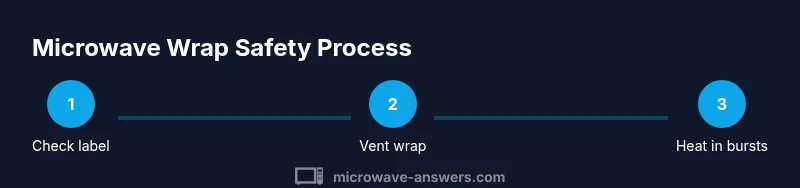
Check the wrap label
Always confirm the wrap is explicitly labeled microwave-safe before using it in the microwave. If the label is unclear or absent, do not use the wrap for heating. This protects against melting and chemical transfer.
Tip: If unsure about the label, contact the manufacturer or choose an alternative like parchment. - 2
Prepare the dish and wrap loosely
Place the food in a microwave-safe container and lay the wrap over the dish loosely, ensuring there is space for steam to escape. Avoid wrapping tightly against the food surface.
Tip: Leave small gaps or vent holes to let steam out. - 3
Create a steam vent
Vent the wrap at one corner or fold back a corner slightly so steam can escape. Do not seal the wrap completely around the dish. This minimizes pressure buildup and reduces the risk of splatter.
Tip: A simple twist or a few pinholes can work as vents. - 4
Cover with a lid or plate
If you’re not using vented wrap, place a microwave-safe lid or inverted plate on top to trap heat while still allowing some ventilation. This helps with even heating and reduces splatter.
Tip: Ensure the lid is vented or has a gap for steam. - 5
Heat in short bursts and stir
Run the microwave in short intervals (30-60 seconds for small portions, 1-2 minutes for larger portions), then pause to stir or rearrange for even heating. Avoid overheating.
Tip: Stirring or turning food improves even heat distribution. - 6
Check and rest
After heating, allow the dish to rest for 1-2 minutes. This lets heat distribute and helps prevent hot spots. If the wrap is compromised, discard and switch to a safer method.
Tip: Test the center of the food with a thermometer if needed.
Common Questions
Is all plastic wrap microwave-safe?
No. Only wraps explicitly labeled microwave-safe should be used in the microwave. If in doubt, choose an alternative like parchment or a silicone lid.
Only wraps labeled microwave-safe should be used; otherwise, choose parchment or a silicone lid.
Can plastic wrap touch my food in the microwave?
Best practice is to avoid direct contact between plastic wrap and food. Use a vented wrap, parchment, or a lid to keep food covered while allowing steam to escape.
Avoid direct contact between wrap and food; use vented wrap or a lid.
How long should I heat leftovers with wrap?
Heat in short bursts and check frequently. A typical approach is 30-60 seconds for small portions and 1-2 minutes for larger portions, pausing to stir.
Heat in short bursts and stir for even heating.
What if the wrap melts?
If the wrap melts or smells unusual, stop immediately, remove the wrap with oven mitts, and reheat using a safer method such as parchment or a lid.
If it melts, stop and switch to parchment or a lid.
Are there safer alternatives to plastic wrap?
Yes. Parchment paper, silicone lids, and microwave-safe containers with lids provide effective covers without the risks of plastic wrap.
Yes, parchment or silicone lids are safer alternatives.
Watch Video
Main Points
- Always verify microwave-safety on wrap labels.
- Vent wrap to prevent pressure buildup and melting.
- Use reusable lids or parchment as safer alternatives.
- Avoid plastics touching fatty foods to prevent chemical migration.