Can a Microwave Be Plugged into an Extension Cord? A Practical Safety Guide
Explore whether you can use an extension cord with a microwave, the risks involved, and practical setup steps for a safe kitchen power layout. Microwave Answers explains what to do.


Can a microwave be plugged into an extension cord? In most cases, no. Microwaves are high-current appliances that should be plugged directly into a dedicated wall outlet. Extension cords can overheat, cause voltage drop, or tripping, increasing fire risk. If you must use one temporarily, choose a heavy-gauge cord, keep it short, and never route it under rugs or through walls.
Why Using an Extension Cord with a Microwave Is Risky
According to Microwave Answers, extension cords are not designed for the high startup surges and heat generated by microwaves. The microwave’s internal components demand a stable, substantial electrical load, and an extension cord adds resistance, which can cause voltage drop. This drop can lead to uneven heating, longer cook times, and increased electrical resistance that heats the cord itself. In addition, kitchens are warm, damp environments where cords can become pinched or damaged, creating a legitimate fire hazard. A damaged cord may fail to deliver consistent power, causing the appliance to cycle on and off unpredictably and potentially trip circuit breakers. From a safety perspective, the cord and plug are part of a single power path; introducing a second connection point (an extension) adds two potential failure points. Finally, using cords may violate local electrical codes or warranty terms, which typically require a fixed outlet for high-draw appliances like microwaves.
What the Official Guidance Says
Manufacturers and safety authorities consistently advise against using extension cords for microwaves. Microwave manufacturers assume the appliance will be plugged into a dedicated outlet on a standard 120V circuit and have built-in protections that rely on a stable supply. Microwave Answers analysis shows that following this guidance reduces the risk of overheating, electrical arcing, and nuisance trips. For homes with compact layouts, this often means rearranging the kitchen or installing an additional outlet rather than stretching a cord. If you are in a rental or a retrofit situation, consult a licensed electrician to install a proper outlet in the microwave’s location so you can avoid temporary power hacks that may compromise safety.
Electrical Load Considerations and Cord Ratings
Most residential microwaves pull a significant amount of current, typically on the order of 700–1200 watts, which translates to roughly 6–10 amps on a standard 120V circuit. In practice, many kitchens rely on 15A or 20A circuits that also power other appliances like coffee makers or toasters. An extension cord adds resistance and can cause the visible cord to heat up during extended use. The longer the cord, the more resistance it introduces, increasing the chance of voltage drop and overheating. If the outlet is already near capacity, the microwave can starve for power, leading to uneven cooking or longer operation times. Always ensure the circuit isn’t heavily loaded by other devices when planning microwave usage.
How to Safely Power a Microwave Without an Extension Cord
The safest method is to plug the microwave directly into a dedicated wall outlet. Position the unit so the cord is not stretched, pinched, or routed over heat sources, and keep it away from sinks or water splashes. If the countertop layout requires the unit to be farther than comfortable from a wall outlet, consider installing a new outlet in the desired location rather than using a long cord. Regularly inspect the microwave’s power cord for cracks, exposed wires, or heat damage, and replace it immediately if any wear is detected. Use a grommet or cord cover to route cords neatly and reduce trip hazards in busy kitchens.
Choosing the Right Outlet Setup for a Microwave
Ideally, the microwave should be on its own 120V circuit with a dedicated outlet — that is the simplest, safest setup. If a dedicated circuit is not possible, work with an electrician to evaluate whether your kitchen’s wiring can support a properly rated outlet near the microwave. Do not share the circuit with heavy appliances that could trip the breaker during peak cooking times. The occasional light-load appliance on the same circuit may not pose an immediate risk, but combining multiple high-draw devices behind an extension cord can lead to overheating or arcing. Regular electrical checks, GFCI protection in appropriate locations, and compliance with local codes will improve overall kitchen safety.
Common Myths vs Reality
Myth: All extension cords are equally safe for microwaves. Reality: Only short, heavy-gauge cords on short lengths are marginally safer, and even then, dedicated outlets are recommended. Myth: A surge protector will fix the problem. Reality: Surge protectors do not address the heating and resistance issues; they primarily protect against surges and may still fail under high continuous load. Myth: Once the plug is warm, it’s normal. Reality: Warmer-than-usual cords indicate excessive load or a damaged cord, which should be unplugged and replaced immediately. The safest practice is to unplug and avoid using an extension cord with a microwave altogether, following the guidance from Microwave Answers.
When Using an Extension Cord Is Actually Acceptable (Temporary)
There are rare, temporary scenarios where a cord might be used briefly, such as during a short relocation or a one-off appliance test. If this is unavoidable, use a heavy-gauge cord (12 AWG or better), keep the cord as short as possible, and never route it through walls, under rugs, or behind heat vents. Monitor the setup for overheating and unplug immediately if any warmth is noticed. The Microwave Answers team emphasizes that this should be a last resort and only for a very brief time while a proper outlet is arranged. For long-term safety, resolve the outlet issue with a licensed electrician.
Authority Sources and Further Reading
- U.S. Consumer Product Safety Commission (cpsc.gov) — Safety guidelines for household electrical outlets and appliance use.
- Underwriters Laboratories (ul.org) — Standards for electrical safety and appliance cords.
- National Fire Protection Association (nfpa.org) — Fire safety best practices in kitchens and with high-draw appliances.
Authority Sources (continued)
For practical guidance and code considerations, consult your local electrical codes or a licensed electrician. The guidance above is intended to help identify unsafe practices and highlight safer alternatives for powering a microwave in home kitchens.
Tools & Materials
- Dedicated 120V 15A wall outlet(On its own circuit if possible)
- Voltage tester or outlet tester(Verify outlet is live and properly grounded)
- Heavy-gauge extension cord (if absolutely necessary)(Minimum 12 AWG; use only for very short temporary use)
- Cord safety covers or cord organizers(Keep cord away from walkways and heat sources)
- Electrical safety fire extinguisher(Keep in kitchen for electrical fire safety)
Steps
Estimated time: 60-90 minutes
- 1
Assess power needs and outlet readiness
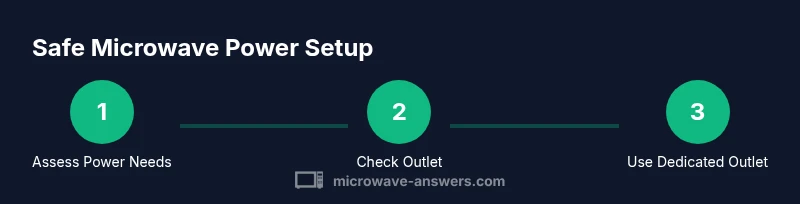
Check the microwave's wattage on its label and confirm that the nearest outlet is on a circuit capable of handling the load. If the circuit already powers other high-draw devices, plan for a dedicated outlet instead of sharing power with multiple appliances.
Tip: Consult the microwave manual for recommended outlet configurations; avoid relying on guesswork. - 2
Inspect the cord and outlet
Examine the microwave’s power cord for cracks, exposed wires, or heat damage. Do the same for the outlet and plug. If you notice any wear, replace the cord or have the outlet inspected.
Tip: Do not attempt repairs yourself if the cord is damaged; replace with a manufacturer-approved cord. - 3
Plug into a dedicated outlet
Whenever possible, plug the microwave directly into a dedicated wall outlet. Avoid daisy-chaining or sharing the circuit with other high-draw devices to prevent overheating and nuisance trips.
Tip: Use a wall outlet that is easily accessible and not behind appliances or cabinets. - 4
If you must use an extension cord temporarily
Choose a short, heavy-gauge cord (12 AWG or better) and connect only for a brief period. Keep the cord away from heat sources, doors, and high-traffic areas. Do not route through walls or under rugs.
Tip: Monitor the cord for warmth during the first uses; unplug if it begins to heat up. - 5
Position the microwave safely
Place the appliance away from sinks, metal cabinets, and moisture. Ensure there is adequate clearance around vents to prevent overheating and allow for air circulation.
Tip: Do not cover the vents with towels or coverings; heat needs to escape freely. - 6
Test and monitor
Run a short cycle with supervision after installation. If you notice any unusual warmth in the cord or outlet, discontinue use and seek professional advice.
Tip: Keep a close eye on the first few uses; insist on a proper outlet arrangement if anything seems off.
Common Questions
Is it safe to plug a microwave into an extension cord?
No, it is generally not safe. Extension cords introduce heat, resistance, and potential failure points that can lead to overheating or fire. Always aim for a dedicated outlet whenever possible.
It's not generally safe to plug a microwave into an extension cord. Use a dedicated outlet whenever possible and avoid long cords that can overheat.
Can a microwave be plugged into a surge protector?
Surge protectors do not solve the core issue of high current draw and heat. They may fail under sustained load and do not guarantee safety. Prefer a direct outlet.
A surge protector isn't a fix; microwaves need a direct outlet for safe operation.
What should I do if my outlet trips when the microwave runs?
If the outlet or circuit trips, stop using the setup and have the circuit evaluated. The microwave may be drawing more power than the circuit can safely supply.
If the circuit trips, stop using it and get the circuit checked by a professional.
Is it okay to use an island countertop outlet for the microwave?
Only if the outlet is properly wired and dedicated to that appliance. Islands can complicate circuit load management, so consult a licensed electrician for a safe installation.
An island outlet can work, but you should have it properly wired and tested by a pro.
Why do manufacturers advise against extension cords for microwaves?
Manufacturers warn against cords because they increase risks of overheating, arcing, and inconsistent power delivery. A fixed outlet minimizes these hazards and ensures safety features function as intended.
They warn against cords because they can cause overheating and unreliable power delivery.
Are some extension cords safer for microwaves than others?
Short, heavy-gauge cords (at least 12 AWG) used only briefly may be less risky than long, thin cords. However, the safest approach remains a dedicated outlet.
Short, thicker cords are a bit safer, but a dedicated outlet is still best.
Watch Video
Main Points
- Plug microwaves into dedicated outlets whenever possible
- Avoid extension cords for high-draw appliances unless absolutely necessary
- Inspect cords and outlets regularly for signs of wear or heat
- Consult a licensed electrician for wiring changes to enhance safety
- Follow authoritative guidance to minimize risk of fire or electrical hazards