Can a Microwave Be Plugged Into a Power Strip? A Safety Guide
Explore whether you can plug a microwave into a power strip, the risks involved, and practical alternatives for safer kitchen setup. Learn how to protect your home from overloads and fire hazards with clear, actionable steps.


Short answer: can a microwave be plugged into a power strip? Not recommended. Microwaves draw high startup currents and generate heat, which can overload a typical power strip and create a fire risk. Most manufacturers require a dedicated wall outlet or a properly installed circuit. If you must use a strip, choose a heavy-duty, 15-amp model with surge protection and never run a microwave unattended.
Why the safety concern matters
Many homeowners ask can a microwave be plugged into a power strip. The short answer is that it's usually a bad idea due to heat, surges, and safety hazards. Understanding why helps you protect your kitchen and family. Microwaves are high-wattage appliances that demand a stable power source, especially during heating and peak bursts. When plugged into a strip, they can push the outlet beyond its rated capacity, causing overheating, insulation damage, or electrical arcing. The Microwave Answers team emphasizes that safety should come first, even if you’re tempted by a compact or convenient setup.
How power strips work and where they fail under load
A power strip is effectively a daisy-chained extension cord with multiple outlets. It has a maximum current rating, typically 15A or 20A in residential settings, and a common 120V supply in many homes. High-wattage devices like microwaves demand robust, immediate current upon starting; that surge can trip the strip's protections or heat its internal wiring. If the strip is damaged, poorly rated, or used with another high-draw appliance on the same circuit, heat can accumulate and pose a fire hazard. Surge protection helps reduce transient spikes, but it does not make strips safe for continuous, high-load appliances.
The official stance on microwaves and power strips
Most appliance manufacturers and electrical safety guidelines advise against plugging a microwave into a power strip. The recommended approach is a dedicated wall outlet on a properly wired circuit. This ensures stable voltage, appropriate breaker protection, and minimizes the risk of overheating. Even if a strip seems to work, you may be violating code or warranty terms by using an adapter that isn’t designed for continuous high-load use. In homes with limited outlets, consulting an electrician about a dedicated circuit or an appliance outlet upgrade is prudent.
Safer outlet configurations for kitchen appliances
A dedicated 120V, 15A or 20A outlet on its own circuit is the most reliable configuration for a microwave. In kitchens, GFCI outlets near sinks offer additional safety if moisture is present. For homes with only limited outlets, a licensed electrician can suggest options like installing a new circuit, relocating the microwave to a nearby dedicated outlet, or using a high-quality, properly rated wall receptacle with a fixed, secure cord. Avoid sharing a high-wattage appliance on a strip with other devices on a single circuit.
If you must use a power strip: best practices
If a power strip must be used for a non-heating accessory near a microwave, it should not power the microwave itself. Do not daisy-chain strips or connect multiple high-wattage devices to the same strip. Choose a heavy-duty strip with a clearly labeled wattage rating and built-in circuit breaker, and keep it away from heat sources, spills, or moisture. Regularly inspect the strip for warmth and signs of wear, and unplug immediately if you notice melting insulation, buzzing, or scorch marks.
Reading power strip specifications: amps, watts, and circuits
Understand the numbers on your strip: amps indicate how much current the strip can safely carry, while watts indicate the appliance load at 120V. A typical home circuit is 15A or 20A; the maximum safe load at 120V is roughly 1800W on a 15A circuit (and higher for 20A). A microwave commonly ranges from about 600W to 1200W, with some models peaking higher for brief surges. Even when rated above the microwave’s wattage, continuous high-load operation on a strip is risky and generally discouraged.
Debunking common myths vs. reality
Myth: A surge-protected strip makes it safe to run a microwave. Reality: Surge protection helps with transient spikes, but it does not mitigate the high startup current or the heat generated by microwaves.
Myth: If it runs, it’s fine. Reality: Continuous high load on a strip can overheat wiring, degrade insulation, and risk ignition long before the breaker trips.
Maintenance and monitoring to prevent hazards
Regularly inspect cords, plugs, and strips for signs of damage, wear, or warmth after use. Keep the microwave and power strip free from clutter, moisture, and heat sources. If you notice smells, discoloration, buzzing, or excessive warmth in the strip or outlet, unplug immediately and reassess the setup. Establish a routine of unplugging devices when not in use to reduce lingering heat, especially in busy kitchens.
Tools & Materials
- Heavy-duty power strip (15-amp or higher) with built-in surge protection(Select one rated for at least the microwave’s wattage; avoid daisy-chaining.)
- Dedicated wall outlet(Non-switched, ideally on its own circuit; keep other heavy loads off this circuit.)
- Non-contact voltage tester(Useful for quick checks if you plan any electrical adjustments.)
- Multimeter (optional)(Only if diagnosing outlet or circuit issues; otherwise skip.)
- Fire extinguisher suitable for electricalFires(Keep accessible in or near the kitchen.)
Steps
Estimated time: 60-180 minutes
- 1
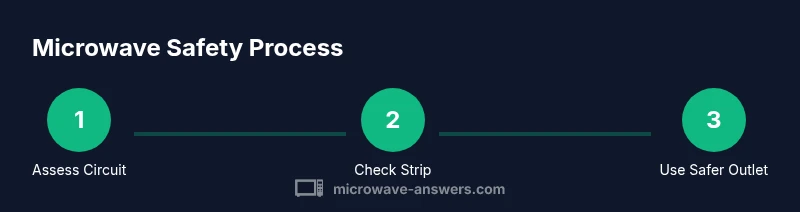
Assess circuit load and device wattage
Identify the microwave's wattage from the label and review the circuit's rating. Calculate approximate load on the circuit when the microwave runs at peak power. If the microwave plus any other devices on the same circuit approach the circuit limit, do not use a power strip.
Tip: Always unplug the microwave before inspecting outlets or modifying connections. - 2
Check the power strip’s rating and condition
Look for UL or equivalent safety listings, a clearly labeled maximum wattage, and intact housing. Do not use a strip that is warm to the touch, has damaged insulation, or shows scorch marks.
Tip: If the strip feels warm within minutes of plugging in, discontinue use immediately. - 3
Decide on a dedicated outlet or upgrade
If practical, relocate the microwave to a dedicated wall outlet on its own circuit. In a kitchen, this often means coordinating with an electrician to install a proper outlet or upgrade the circuit.
Tip: Do not attempt wiring changes yourself unless you are qualified. - 4
Consult a licensed electrician for wiring changes
A professional can install a new dedicated circuit or a proper outlet location, ensuring compliance with electrical codes and safety standards.
Tip: Provide appliance wattage, outlet location, and kitchen layout to the electrician. - 5
Test and verify safety after changes
Once a dedicated outlet is installed, test the microwave with the oven’s built-in safety features. Observe for unusual heat, smells, or flickering lights and address them before regular use.
Tip: Keep flammables away and never leave the microwave unattended while testing. - 6
Maintain a safety mindset and emergency plan
Create a simple safety routine: inspect cords, unplug when not in use, and know how to shut off power quickly if something seems wrong.
Tip: Keep a fire-safe space and a reachable fire extinguisher in the kitchen.
Common Questions
Can I legally plug a microwave into a power strip?
In many places there are no specific laws banning this setup, but safety concerns and manufacturer guidelines strongly discourage it. Always prioritize outlet safety and consult a professional if unsure.
Legally, it varies, but safety should come first and manufacturers typically discourage it.
What outlet should I use for a microwave?
Use a dedicated 120-volt outlet on its own circuit, ideally with ground fault protection in the kitchen. This minimizes risk and ensures stable operation.
A dedicated kitchen outlet on its own circuit is best.
Is a surge-protected strip ever safe for a microwave?
Surge protection helps with transient spikes but does not mitigate the high startup current or heat produced by microwaves. It is not a guarantee of safety.
Surge protection does not make using a microwave on a strip safe.
What should I do if I lack a dedicated outlet?
Relocate the microwave to a nearby dedicated outlet or have a licensed electrician install a safe, code-compliant solution.
If you don’t have a dedicated outlet, get a professional to help.
What are signs that my setup is unsafe?
Look for warmth, buzzing, burning smells, scorch marks, or frequent breaker trips. If you observe any, unplug immediately and reassess the setup.
Heat, burning smell, or flickering lights mean stop and fix the setup.
Watch Video
Main Points
- Plug microwaves into dedicated outlets whenever possible.
- Avoid using power strips for high-wattage appliances.
- Know circuit ratings and monitor loads to prevent overloads.
- Consult a licensed electrician for wiring upgrades when needed.
- Always unplug and inspect if you notice warmth, smell, or noise.