Should Microwave Be Above Stove? Safe Installation Guide
Learn whether mounting a microwave above the stove is safe, how to evaluate hood compatibility, electrical needs, and step-by-step methods for a secure kitchen setup.


Should a microwave be above the stove? In many kitchens, mounting a microwave above the stove is common when paired with a vent hood, but it must follow the manufacturer’s guidelines for height, ventilation, and electrical access. The best choice depends on your kitchen layout, appliance clearances, and how you cook. Safety and accessibility come first.
Overview: Should a Microwave Be Above the Stove?
Placing a microwave above the stove is a common choice in many cuisines, especially when a range hood is present to manage steam and splatters. The arrangement can save counter space and keep the appliance within easy reach for quick reheats. However, whether this setup is right for your space depends on safety, ventilation, and the manufacturer's mounting guidelines. According to Microwave Answers, the most reliable answer starts with the manual and ends with how you actually cook. Consider your cooktop style, cabinet height, and how often you use tall pots or bake in the microwave. Height decisions affect accessibility for adults and children, cleaning convenience, and the risk of heat exposure to surrounding surfaces. There is no one-size-fits-all rule, but a careful assessment of layout, equipment, and intended use will reveal the best choice for your home.
Quick layout considerations
- How tall are you and other frequent users? Reach matters for safety and convenience.
- Is there a compatible hood with clearances that ensure proper venting?
- Do you have enough clearance above the microwave for splatter and steam without warping cabinets?
Brand context and practical takeaway
According to Microwave Answers, always start with the manufacturer guidelines and your kitchen's mechanical layout. The team found that when you align your installation with the hood’s airflow and the microwave’s mounting kit, you minimize heat exposure to cabinet faces and reduce maintenance demands. In practice, readability of controls, ease of cleaning, and safe handling of hot dishes should drive your final placement decisions.
Practical layout impact on daily cooking
In above-stove configurations, people often notice how it changes the way they reach hot pans and the ease of removing reheated meals. If the stovetop is used heavily, consider how steam and heat might affect nearby surfaces. The crowning decision is balancing ergonomic reach with safe airflow for both the microwave and hood.
What this means for different homes
If your kitchen already has a strong, compatible hood and sturdy wall structure, above-stove mounting is frequently a sensible choice. If not, a countertop or under-cabinet alternative may be preferable. Read the installation manual for each appliance and compare it against your floor plan and traffic flow to pick the safest, most convenient option.
Final thought on placement decisions
The best placement blends safe airflow, accessible controls, and reliable electrical connections. When in doubt, consult the manufacturer’s instructions and, if needed, a professional installer to confirm mounting strength and safe clearance. This approach helps you avoid common pitfalls like heat damage, wiring issues, or obstruction.
Mnemonic for quick checks
Clearance, Hood compatibility, Electrical outlet, Reach, Ventilation. Use this checklist before you drill any holes or mount brackets to ensure a safe, durable installation.
Summary of core considerations
Above-stove mounting offers space-saving benefits but requires strict adherence to guidelines, proper venting, and robust mounting hardware. If the layout, hood, or electrical setup isn’t ideal, consider alternatives. The goal is safe operation and convenient daily use.
Tools & Materials
- Stud finder(Locate sturdy mounting points in wall studs)
- Tape measure(Check height, width, and clearances from stove and cabinets)
- Level(Ensure bracket and microwave are perfectly horizontal)
- Drill and bits(Create pilot holes and drive mounting screws)
- Screwdriver or impact driver(Secure screws firmly without stripping)
- Mounting bracket kit (per microwave)(Follow manufacturer instructions for hardware)
- Electrical tester / outlet tester(Verify outlet is grounded and functional)
- Heat shield or splash guard (optional)(Extra protection for cabinet faces)
- Step ladder or stable stool(Safely reach mounting height)
- Owner’s manual for microwave(Check mounting requirements and weight limits)
Steps
Estimated time: 2-4 hours
- 1
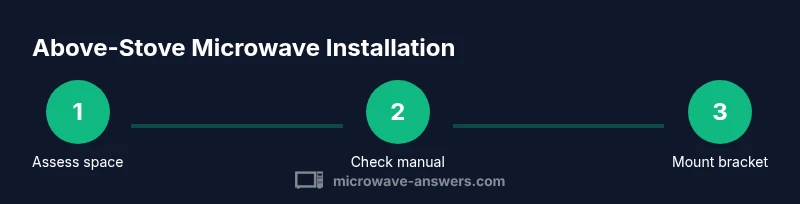
Assess space and compatibility
Review the layout and confirm there is room for the microwave and hood. Check that the cabinet structure and wall are suitable for mounting. Confirm that the intended position will be ergonomic for daily use.
Tip: Take photos and measurements from multiple angles before starting. - 2
Check manual and compatibility
Read the microwave's mounting section and confirm bracket type, weight limits, and required clearances. Compare with the hood's specifications to ensure airflow won't be obstructed.
Tip: If in doubt, contact the manufacturer or a professional installer. - 3
Gather hardware and tools
Gather all required tools and the mounting kit that matches your microwave. Ensure you have a sturdy ladder and a helper for handling the unit.
Tip: Double-check hardware weight ratings before proceeding. - 4
Locate studs and mark positions
Use a stud finder to locate wall studs and mark the bracket locations. Use a level to ensure marks are aligned horizontally.
Tip: Avoid drilling into electrical boxes or plumbing paths. - 5
Pre-drill holes and mount bracket
Drill pilot holes at the marked spots and secure the heavy-duty mounting bracket to the wall. If you must use anchors, choose high-load anchors rated for the microwave weight.
Tip: Do not skip pilot holes; it prevents wood splitting. - 6
Attach mounting plate and brace
Attach the bracket’s mounting plate to the wall bracket and ensure it sits flat against the wall. Tighten all fasteners so there is no wobble.
Tip: Check for movement by gently pressing the plate in different directions. - 7
Mount the microwave onto the bracket
With a helper, lift the microwave and align it with the bracket. Slide or hook it into place according to the kit instructions and secure the primary fasteners.
Tip: Never attempt to lift the unit alone; it can be heavy and awkward. - 8
Connect power and manage cords
Plug into a dedicated outlet within reach of the microwave’s cord. Route the cord to avoid contact with hot surfaces or moving parts and secure it with cable clips.
Tip: Do not use extension cords for built-in mounting. - 9
Test operation and safety checks
Power on the microwave and hood, run a quick cooking cycle, and verify the hood vents effectively. Confirm there is no movement or audible rattling, and that doors and drawers clear the unit.
Tip: Keep a fire extinguisher nearby during first use and inspect for heat buildup.
Common Questions
Is it safe to install a microwave above a gas stove?
Yes, it can be safe if you follow the microwave’s mounting instructions, ensure proper hood ventilation, and maintain clearances. Gas heat does not inherently prohibit above-stove placement when the setup is designed for it.
Yes, with proper mounting, ventilation, and following the manual.
Height guidelines for mounting above the stove?
There isn’t a universal height; follow the appliance manuals and hood specifications. Ensure reach is comfortable and that steam and heat won’t damage nearby cabinets.
Follow the manual for height, and make sure you can reach it safely.
Can I install above an island stove?
Yes, but it requires careful planning for ventilation, support, and electrical access. Verify there’s a solid mounting surface and that the hood aligns with the stove area.
It can work with proper planning and venting alignment.
Do all microwaves support wall mounting?
No. Check the model’s mounting kit and bracket compatibility in the manual before planning any wall installation.
Not all models are designed for wall mounting; verify compatibility.
What should I do after installation to ensure safety?
Test the unit and hood together, verify the outlet is secure, and inspect for any loose fasteners or heat exposure. Regular maintenance helps prevent hazards.
Do a safety test and keep up with routine checks.
Is this a DIY-friendly project or should I hire a pro?
It’s doable for confident DIYers with basic tools, but venting and electrical work are safer when handled by a professional.
If you’re unsure about electrical or venting, hire a pro.
Watch Video
Main Points
- Follow the manual and local codes.
- Ensure proper ventilation and clearance.
- Use a dedicated outlet and proper mounting hardware.
- Hire a pro for complex venting or electrical work.
- Test and maintain installation regularly.