Microwave or Air Fryer to Reheat Pizza: A Practical Guide
Compare reheating pizza in a microwave vs an air fryer. Learn texture outcomes, best practices, safety tips, and a clear verdict to choose the right method for quick, delicious leftovers.


For reheating pizza, either a microwave or air fryer can work; the microwave is fastest but can soften crust, while the air fryer crisps crust but takes longer and uses more energy. For most home cooks seeking texture and speed, a quick microwave start followed by a brief air-fry finish often yields the best balance.
Why this question matters for pizza lovers
Pizza is beloved, but reheating leftover slices often disappoints: the crust becomes soggy in a microwave, the cheese can dry out, and toppings slide off. The choice between a microwave or air fryer to reheat pizza fundamentally shapes texture, moisture, and overall enjoyment. According to Microwave Answers, most home cooks want speed without sacrificing satisfaction, especially on busy weeknights. Our team has analyzed everyday reheating scenarios, from thin-crust margherita to thick-crust Sicilian, to help you pick the method that matches your priorities—crispiness, tenderness, or a balance of both. In this article, we compare two common appliances, unpack the physics behind each, and provide practical, tested steps so you can reheat pizza with confidence, no matter what you have on hand. Understanding the trade-offs is worth a few extra minutes of planning. If your crust is already tough from storage, a brief crisping stage can revive texture. If you’re counting calories or energy, speed may win out. The goal here isn't to declare a single best method for every slice, but to outline reliable outcomes and actionable tips that fit real kitchens. Microwave Answers emphasizes that context—slice thickness, cheese amount, and whether you’re reheating a single slice or a full pie—drive the best approach. With that foundation, you’ll be able to choose the right tool on the fly and adjust as you gain experience. Our analysis also highlights how different crust types respond to heat, so you can predict results before you press start.
How microwaves and air fryers heat food
Microwaves heat food primarily by exciting water molecules through dielectric heating. This rapid vibrational energy tends to warm the entire slice quickly, which can lead to a soft, slightly moist crust if not managed. In contrast, air fryers rely on hot air convection and a dedicated crisping effect. The surface moisture evaporates more aggressively, and the Maillard reactions on the crust and cheese surface become more pronounced, producing a crisper bite. The difference matters because texture is often the key factor in perceived freshness. For pizza, the crust is the star—how it finishes in texture determines whether your reheated slice feels like a fresh one or a soggy relic. Understanding these mechanical differences helps you pick a method that aligns with your texture priorities and time constraints. Microwave Answers’ tests show that even with similar starting conditions, crust thickness and toppings strongly influence the final result in each appliance.
Texture outcomes: what to expect
Texture is the most visible difference between reheating methods. A microwave tends to warm cheese quickly and evenly but can leave crust soft or rubbery if heated too long or covered without moisture control. An air fryer, on the other hand, dries surface moisture more rapidly and encourages crispness, yielding a crust with bite and cheese that remains juicy. The cheese melt is often more uniform in the air fryer because the surface becomes hot and dry, which helps retain the topping integrity without sliding. However, if you over-crisp cheese or over-dry toppings, you can end up with a brittle crust or uneven heating. The key is to balance two variables: time and heat. In practice, most cooks who prioritize texture use a brief microwave phase to warm the slice and then apply a quick crisp in the air fryer to finish. This approach often achieves the best compromise between speed and mouthfeel.
Practical heating guidelines: times and checks
Because ovens, microwaves, and air fryers vary by wattage, model, and even batch size, generic guidelines are most useful when paired with careful observation. A practical approach is to start with conservative settings and then adjust. In a microwave, begin with short bursts—roughly 30–60 seconds on medium power for a standard slice—checking the texture and internal temperature after each interval. If the crust remains too soft, a second burst can be added, but avoid overheating, which dries cheese and toppings. In an air fryer, preheating is optional on many models, and a typical starting point is a low-to-medium heat level with a brief 3–6 minute window per slice. If you prefer extra melt, add an additional minute; for crisper crust, extend slightly and monitor closely. The goal is to reach a safe internal temperature while preserving moisture and maintaining crust integrity. A food thermometer can help verify doneness—target 165°F (74°C) as a safe reheating threshold for most leftovers.
Reheating pizza in a microwave: step-by-step method
- Place a single slice on a microwave-safe plate. 2) To retain moisture, add a small cup of water in the microwave or place a damp paper towel over the slice; this reduces crust drying. 3) Heat on medium power in short bursts (about 30–60 seconds), then check for warmth and cheese melt. 4) If needed, repeat in 15–30 second increments until the slice reaches 165°F in the center. 5) For a crisper finish, transfer the slice to an optional preheated surface or briefly finish on a hot skillet or a warm oven rack for 1–2 minutes. 6) Let it rest for a minute before serving to evenly distribute heat.
Reheating pizza in an air fryer: step-by-step method
- Preheat the air fryer to a moderate temperature (roughly 325–350°F / 160–175°C) if your model recommends preheating. 2) Place the slice on a parchment-lined tray or directly on the rack if appropriate for your device. 3) Reheat for 3–6 minutes, checking at the 3-minute mark. 4) If the crust isn’t crisp enough, continue 1–2 minute intervals while watching closely to avoid burning. 5) Remove when the cheese is melted, the crust is crisp, and the internal temperature nears 165°F. 6) Let cool briefly before eating to prevent burns and ensure even texture distribution.
Hybrid approach: combine microwaving and air frying
A two-step approach often yields a favorable compromise: warm the slice in the microwave for about 30–60 seconds to engage the interior, then transfer to a preheated air fryer for 2–4 minutes to crisp the crust and finish melting the cheese. This method is particularly effective for thicker crusts or when toppings risk overheating in a single method. The hybrid route minimizes sogginess while avoiding long wait times. Experiment with the sequence, adjusting the microwave duration and air fryer time to match your crust type and topping density.
Safety and food-safety considerations
Before reheating any pizza, ensure it was stored safely and not left out at room temperature for more than two hours. Reheated pizza should reach an internal temperature of 165°F (74°C) to prevent bacterial growth. Use microwave-safe containers and utensils, avoid metal in microwaves, and follow your appliance’s safety guidelines. When possible, use parchment or silicone mats to prevent sticking and facilitate even browning in an air fryer. After reheating, let the slice rest briefly to allow heat to distribute, which helps moisture redistribution and reduces the risk of a cold center.
Handling different pizza types: crust thickness and toppings
Thin-crust pizzas reheat differently than thick-crust options. Thin crust tends to heat quickly and can become chewy or overly dry if overheated in a microwave; air frying helps regain crispness without excessive drying. Thick crust or Sicilian-style pies benefit from more careful heat control: a brief microwave warm to bring up the center, followed by a crisping phase in an air fryer or oven to reestablish a sturdy, bite-friendly crust. Pepperoni or sausage toppings can render extra fat during reheating; if you notice excess oil pooling, blot the slice gently and adjust heat duration accordingly. When dealing with fresh toppings like tomato or basil, consider adding moisture by placing a damp towel or a small amount of water alongside the slice to discourage drying. Finally, avoid stacking slices, which traps steam and worsens sogginess.
Cleaning and maintenance tips for microwave and air fryer use
Regular cleaning ensures consistent reheating results and food safety. In microwaves, wipe splatters after cooling and periodically check the turntable for secure placement. In air fryers, empty the crumb tray and wipe the interior to remove oil residue that can smoke or affect flavor. Use parchment paper or a silicone liner to keep food from sticking and to simplify cleanup, but verify that the liner is rated for high temperatures and your device’s guidelines. If your air fryer includes a drip tray or rack, clean these components to prevent buildup that can affect airflow and heat distribution. Finally, allow appliances to cool completely before moving or storing, and keep vents clear of dust and grease to preserve efficiency and longevity.
Comparison
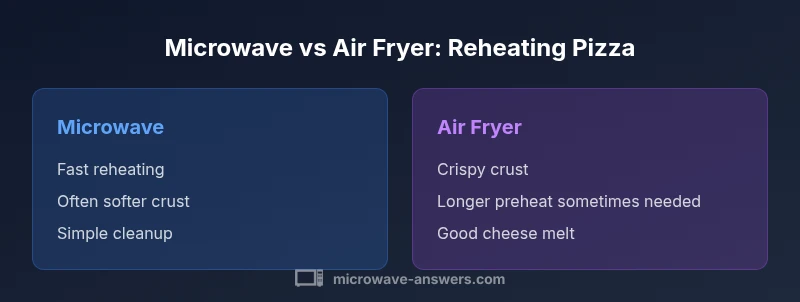
| Feature | Microwave | Air Fryer |
|---|---|---|
| Texture result | Soft, moistened crust (microwave) | Crispy crust with even cheese melt (air fryer) |
| Heat time per slice | Typically under 1–2 minutes depending on wattage | Typically 3–6 minutes depending on model and thickness |
| Best for leftovers | Quickly warms slices; best for speed | Best for texture and bite; best with single or few slices |
| Energy and convenience | Low energy per slice; fastest option | Higher energy use but effective crisping and browning |
| Setup tips | Use microwave-safe plate; moisture management essential | Preheat if recommended; use parchment/rack for airflow |
Advantages
- Fast reheating for quick meals
- Low upfront cost for basic models
- Simple cleanup with minimal dishes
Cons
- Microwave can soften crust and unevenly heat toppings
- Air fryer requires additional time and space
- Texture results vary by crust type and toppings
Two-step reheating (microwave then air fryer) often delivers the best balance of speed and texture
If you want speed with acceptable texture, start in the microwave and finish in the air fryer. For maximum crispness, air fryer alone works well on thinner slices. For the easiest quick warm-up, the microwave is sufficient, but expect softer crust.
Common Questions
Can you reheat pizza in a microwave without drying it out?
Yes, by using short heat bursts and moisture control. Place the slice on a microwave-safe plate, add a little water in a separate cup or cover with a damp paper towel, and heat in brief intervals. Check internal temperature and avoid overheating.
Yes. Use short bursts and moisture control to prevent drying; check the slice and avoid overheating.
Is an air fryer better for reheating pizza than a microwave?
For texture and crispness, the air fryer generally performs better. The microwave is faster but can make crust soft. If you want speed with a crisper finish, try a quick microwave warm followed by a short air-fry finish.
Air fryers usually give crisper crust; microwaves are faster but softer. A quick combo often works best.
Can I reheat a whole pizza in either appliance?
Whole pizzas heat unevenly in both appliances. It’s better to slice first and reheat in portions to ensure even warmth and prevent undercooked centers. If you must reheat a whole pie, monitor closely and rotate slices.
Whole pizzas heat unevenly; slice first for best results.
What internal temperature should reheated pizza reach?
Aim for an internal temperature of at least 165°F (74°C) to ensure food safety. Use a food thermometer to confirm before serving.
Target 165 degrees Fahrenheit to be safe.
Does using parchment or foil affect results?
Parchment paper is generally safe and helps prevent sticking in both microwaves and air fryers. Avoid metal in microwaves. Some air fryers tolerate foil if the manufacturer allows it, but always consult the user manual.
Parchement helps; avoid metal in the microwave; check your manual for foil.
Main Points
- Prioritize crust texture when choosing a method
- Use a hybrid approach for best balance
- Monitor internal temperature to 165°F for safety
- Preheat and moisture control improve results
- Choose parchment or a rack to optimize airflow