Microwave How-To: Safe, Efficient Kitchen Tips
Learn practical steps to use your microwave safely, efficiently, and confidently. This guide covers safety basics, containers, defrosting, reheating, cleaning, and troubleshooting.


This guide provides practical, kitchen-tested steps to use micro waves safely and effectively, covering best practices, container choices, defrosting, reheating, and basic troubleshooting. You'll learn to set power levels, monitor time, and avoid common mistakes. Ready to heat, reheat, or melt with confidence. This article translates kitchen science into actionable tips you can apply today.
What micro waves do and how they heat food
Microwave ovens heat food by exciting water molecules using electromagnetic energy. When a microwave oven powered on, the magnetron emits microwave radiation at a frequency that resonates with water, fats, and sugars. The molecules vibrate, generating heat that cooks the food from the inside out. This means quick, even heating is possible when you manage container, power, and time correctly. For practical purposes, keep in mind that density and moisture content influence heating rate, so smaller pieces heat faster than large, dense blocks. In everyday cooking, micro waves can defrost, reheat, and melt ingredients, but safety and technique matter as much as wattage. This guide uses plain language and field-tested tips to help home cooks wield this tool confidently, while respecting its limitations and safety guidelines.
Safety foundations for every microwave user
Safety starts with the basics: never operate a microwave with a damaged door seal, use only microwave-safe containers, and avoid metals that can arc and damage the oven. Always cover food to prevent splatters and help heat uniformity, but avoid sealed containers that can explode from steam pressure. Stand back briefly after starting to check for unusual smells or smoking. Keep the interior clean; built-up splatters can absorb energy and cause uneven heating. If you suspect a fault — unusual buzzing, smoke, or the turntable failing — unplug the unit and seek professional service. Following these guidelines reduces fire risk and protects your cookware. According to Microwave Answers, adherence to safety baselines is the most reliable way to enjoy safe, reliable heating every day.
Containers and materials that work (and don't)
Choosing the right container is essential for even heating and safe use. Use glass or ceramic microwave-safe containers with lids that vent steam. Microwave-safe plastics labeled with a recycling code and the phrase 'microwave safe' are generally fine for short heating, but avoid old or scratched containers that can harbor bacteria or warp. Paper towels, parchment, and microwave-safe wax paper can help with moisture flow, while metal, aluminum foil, and shiny metal accents should stay out of the oven to prevent arcing. When in doubt, check the container’s label and opt for vented covers rather than tight-fitting lids. These choices help heat distribution and reduce messes during cooking, reheating, or defrosting. For best results, Microwave Answers recommends sticking with containers that are specifically designed for microwave use.
How to set power level and time like a pro
Power level and time are your primary tools for controlling microwave results. Start with a lower power setting for delicate foods (like vegetables) and a higher setting for liquids or dense items. For reheating, many foods heat well at 70-80% power in short bursts, with a quick stir between intervals. For defrosting, use the defrost setting or 30-50% power and check frequently to prevent partially cooking edges. The rule of thumb is to heat in short intervals and combine with stirring or turning to promote even heating. Keep notes on times for your specific microwave and foods so you can reproduce consistent results. Pro tip: when reheating leftovers, place food toward the center for even exposure to the microwave’s energy.
The best approach to reheating leftovers
Leftovers reheat best when cut into uniform pieces and arranged in a shallow layer. Use a microwave-safe lid or vented cover to trap steam and promote even heating. Reheating works best in 30-60 second bursts, with a stir or flip between intervals. For soups or sauces, cover but allow a small gap for steam to escape; this prevents splatter while maintaining moisture. When in doubt, test the center temperature with a food thermometer. Remember, standing time after microwaving helps even out heat through carryover heating. These practices help you preserve texture, moisture, and flavor, avoiding dry edges and cold centers.
Defrosting and thawing safely in the microwave
Defrosting in the microwave can be efficient but requires vigilance to prevent partial cooking. Use the defrost setting if available, or set the power to 30-50% and monitor every few minutes. Break large pieces into smaller portions before defrosting, and separate pieces as they begin to thaw to prevent clumping. Once thawed, cook or slide food into immediate cooking to minimize bacterial growth. If you’re thawing meat, plan for a brief rest period after thawing to permit the surface to finish defrosting safely. For best results, pat dry excess moisture to improve browning after cooking.
Safe food handling and temperature targets
Always check that reheated leftovers reach a safe internal temperature before serving. A common guideline is to heat foods to at least 165°F (74°C) and maintain that temperature for a few minutes. This helps destroy potential bacteria and ensures a uniform temperature throughout the dish. Use a calibrated food thermometer for accuracy, as color or texture alone is not a reliable indicator of safety. Keep hot foods out of the 'danger zone' (40-140°F / 4-60°C) as much as possible. If you notice a sour smell, unusual color, or texture changes, discard the item to avoid foodborne illness. Following these targets supports food safety in everyday cooking.
Cleaning and maintenance to extend life
Regular cleaning reduces odors, prevents residue buildup, and extends the life of your microwave. Wipe the interior with a mild dish soap solution and a damp cloth after each use, removing splatters on the door seal and vents. For stubborn stains, heat a bowl of water with lemon slices for 3-5 minutes to loosen grime, then wipe. Keep the turntable and roller ring clean and dry to ensure smooth rotation. Avoid harsh chemicals or abrasive pads that can damage the enamel. Do not run the appliance empty or with metallic objects inside. Periodic deep cleaning and inspection of the door seal help prevent leaks and maintain efficiency.
Troubleshooting common microwave problems
If heating is uneven, rotate the dish, rearrange contents, or switch to a different power setting. A non-turning plate may indicate a faulty motor or a blocked turntable mechanism; unplug the unit and check for obstructions. Smells of burning or smoke require immediate removal of food and interruption of heat with the stop button. If the microwave stops working, check the circuit breaker and outlet. For persistent issues, consult the manufacturer’s manual or a qualified service technician. Regular maintenance and careful usage reduce the likelihood of breakdowns.
Energy efficiency and safety tips and common myths
To save energy, avoid overheating or recooking items; use the shortest heating times that achieve the desired result. Do not rely on color or aroma alone to judge safety; always check internal temperature with a thermometer. A common myth is that microwaves are unsafe because they heat food too quickly; in reality, the bigger risk lies in improper containers, poor sealing, or unsafe foods. Another myth is that all plastics are microwave-safe; verify labeling. The Microwave Answers team encourages a science-based approach to kitchen heat, including using appropriate containers, ventilated covers, and proper standing times to ensure safe, even results.
Integrating micro waves into a modern kitchen routine
Modern kitchens can integrate micro waves with other cooking appliances for better meal prep. Use microwave-safe cookware to pre-cook components, then finish on the stove or in the oven for texture. Plan meals with microwave-first steps (defrosting or reheating) that reduce overall cooking time. Keep a small set of essential containers, lids, and spoons dedicated to microwave tasks to streamline workflows and avoid cross-contamination. A regular routine—wipe down after use, inspect the door seals quarterly, and calibrate times for your specific model—keeps the appliance reliable and safe.
Tools & Materials
- Microwave oven(Ensure door seals are intact and the oven is grounded)
- Microwave-safe containers (glass/ceramic)(Avoid metal and foil)
- Microwave-safe plastic wrap or vented lids(Use with caution and avoid touching food)
- Measuring spoons/cups(For precision when following recipes)
- Food thermometer (digital)(Optional but helpful to verify temperature)
- Dish towels or oven mitts(Protect hands when handling hot containers)
- Non-metal utensil (wooden spoon or silicone spatula)(Stirring and turning without scratching)
Steps
Estimated time: 25-40 minutes
- 1
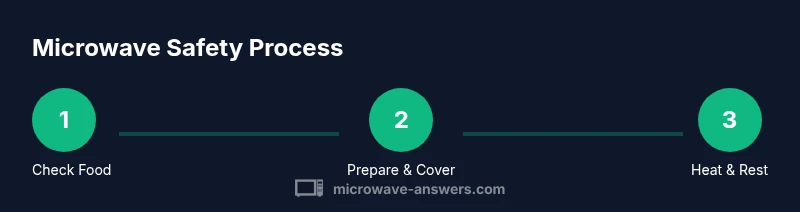
Assess the food and goal
Identify what you’re heating and what you want to achieve (hot, evenly heated, or just warm). Break large portions into smaller pieces if possible to promote even cooking. Consider moisture content and density, which affect heating speed.
Tip: Start with small portions for best control. - 2
Choose a microwave-safe container
Select glass, ceramic, or BPA-free plastic labeled microwave-safe. Ensure the container isn’t cracked or scratched and that any lids or covers vent steam properly.
Tip: Avoid old containers that may warp or leach chemicals. - 3
Arrange food evenly and cover
Spread food in a thin, uniform layer. Use a vented lid or microwave-safe wrap to retain moisture and prevent splatter. Leave a small gap for steam to escape when using wrap.
Tip: Stir or turn midpoint for even heating. - 4
Set power level and time
Choose a power setting suited to the food (low for delicate items, higher for liquids). Begin with shorter intervals and adjust as needed based on progress.
Tip: When reheating, 60-80% power often works well. - 5
Start with short intervals
Run the microwave in 30-60 second bursts, checking progress between intervals. This helps prevent overheating edges while the center remains cool.
Tip: Use a timer to track total heat time. - 6
Stir, rotate, and check
If possible, rotate the dish halfway through and stir contents to promote even energy distribution. Check the temperature and doneness at the center.
Tip: Use a thermometer for best accuracy. - 7
Check internal temperature
Verify the center reaches a safe temperature (e.g., 165°F / 74°C for leftovers). If under, continue heating in short bursts and test again.
Tip: Stop as soon as safe temperature is reached. - 8
Let stand and finish carryover heat
Remove from the microwave and let the food rest for 1-2 minutes. Heat continues to spread and can bring temperatures up to safe levels.
Tip: Cover loosely during standing to retain moisture. - 9
Clean after use
Wipe spills and splatters to prevent residues and odors. Clean the door seal and turntable to maintain efficiency and safety.
Tip: Wipe with a warm, soapy cloth after every use.
Common Questions
Is it safe to microwave metal objects?
No. Metal can cause arcing, damaging the microwave and posing a fire risk. Remove metal utensils, foil, or containers before heating.
Metal in the microwave can cause sparks and damage. Remove metal items before heating.
Can I microwave eggs?
Eggs can explode if heated in their shell. It's safer to crack eggs into a microwave-safe bowl and cover, then heat in short intervals.
Avoid microwaving eggs in shells. Break them into a bowl and heat briefly with stirring.
Why is my food heating unevenly?
Microwaves heat water differently in various parts of the dish. Use a flat, shallow container, rotate the dish, and stir during heating to reduce cold spots.
Heat can be uneven; rotate and stir to even out.
How do I thaw meat safely in the microwave?
Use the defrost setting or 30-50% power, check frequently, and separate pieces as they thaw. Cook immediately after thawing to avoid bacterial growth.
Use defrost mode, check often, and cook promptly after thawing.
What temperature should reheated leftovers reach?
Reheat leftovers to at least 165°F (74°C) throughout, verified with a thermometer. If any portion is under, continue heating in short intervals.
Aim for 165°F throughout, checked with a thermometer.
How do I clean the microwave safely?
Wipe with mild soap and water; deep clean with steam and lemon for stubborn stains. Avoid harsh chemicals and scrubbing the door seal aggressively.
Clean with mild soap or steam lemon water; avoid harsh chemicals.
Watch Video
Main Points
- Use microwave-safe containers and vented lids.
- Heat in short bursts and stir for even heating.
- Check internal temperature to ensure safety.
- Defrost carefully to avoid partial cooking.
- Clean regularly to maintain performance.