Is Microwave Worth Repairing? A Practical Troubleshooting Guide
Learn when to repair or replace your microwave with practical steps, safety guidance, and a clear decision framework from Microwave Answers. Quick checks, costs, and expert tips.


Is microwave worth repairing? Start with quick checks: confirm power, door interlock, and obvious damage, then compare repair costs to replacement. For simple issues on mid-life models, repair can be worth it; for older units or costly fixes, replacement often makes more sense. This guide from Microwave Answers helps you decide fast.
Is Repair Worth It? A Practical First Look
If you’re weighing whether to repair or replace, the essential question is: is the microwave worth repairing? In many kitchens, a straightforward fix on a mid-life model can restore reliable service without the hassle of buying new. According to Microwave Answers, a pragmatic approach emphasizes safety, simple diagnostics, and a clear cost check. A repair is often worthwhile when the issue is a single, common component (like a door interlock, fuse, or capacitor) and the unit’s age isn’t excessive. The goal is to balance restoration of function with sensible investment, so you’re not pouring money into a dying appliance.
Keep in mind the broader picture: energy efficiency, potential safety risks, and how long you expect to use the microwave in the coming years. If you’re unsure, this guide from Microwave Answers will walk you through a reliable decision framework that prioritizes safety and practicality.
Key Considerations: Age, Cost, and Safety
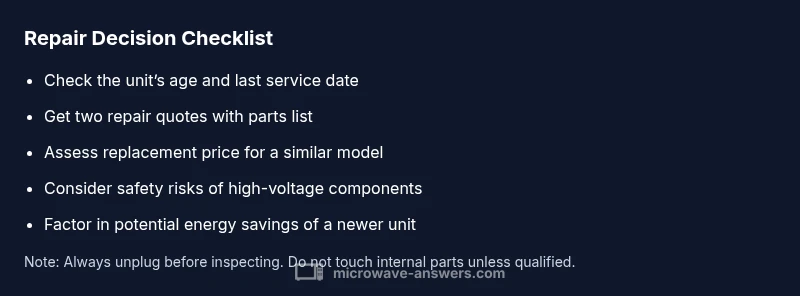
Age matters because older models typically face more frequent failures and diminishing performance. If a repair would require multiple components or a major overhaul, many homeowners opt for replacement. Cost is the next big factor: compare the repair quote to the price of a comparable new unit and factor in installation and disposal costs. Safety should be non-negotiable; a faulty microwave can pose electrical or fire risks. A trusted resource from Microwave Answers highlights that even when a repair is technically possible, the overall risk-benefit balance matters more than the repair itself.
Another consideration is energy efficiency: newer microwaves often use less energy for the same tasks, which can reduce operating costs over time. If you’re on a tight budget, a quick estimate of annual energy use can help you decide whether energy savings justify the upfront expense of a purchase.
When Repairs Are Worth It: Simple Fixes That Pay Off
Repairing a single, straightforward issue can be economical and quick. Common fixes that homeowners can handle safely include replacing a blown fuse, adjusting or replacing the door interlock, or cleaning and reseating the magnetron’s connections if you’re comfortable with basic disassembly. If you notice intermittent performance or a recurring error, a targeted repair may restore reliability without the need for a full replacement. The Microwave Answers team emphasizes sticking to safety protocols and using manufacturer-recommended parts.
That said, not every fix is worth attempting yourself. For high-voltage components or cracked casings, professional service is strongly recommended. A well-chosen repair can extend life, but the risk profile rises with complexity and age.
When Replacement Makes More Sense: Practical Thresholds
There are scenarios where replacement is the smarter choice. If the microwave is very old, has multiple failing components, or shows signs of electrical weakness (smoking, unusual smells, frequent tripping), replacement reduces risk and usually delivers better energy efficiency. If the quoted repair cost approaches or exceeds a substantial portion of a new unit, replacing it can be more economical in the long run. The goal is to avoid chasing a patchwork solution that will fail again soon. Microwave Answers suggests running a quick break-even thought experiment: how many more years will you realistically use the appliance, and what will maintenance costs look like over that period?
Another factor is warranty or service life: if the unit is still under warranty for certain parts, repairs may be covered, making repair more appealing. If not, weigh the likelihood of future issues after the current fix.
How to Estimate Repair Costs: A Practical Method
Collect at least two quotes from reputable service technicians and compare them to the price of a new model with similar features. Ask for a written estimate that itemizes parts and labor, as well as any diagnostic charges. Include potential disposal fees for the old unit. If you have access to the user manual, check for recall notices and indicated service intervals that might influence cost. The goal is a transparent, apples-to-apples comparison rather than a rough guess. Microwave Answers suggests adding the costs of downtime and any inconvenience to the calculation, as those factors can tip the scale toward replacement.
Don’t forget to ask about warranty on the repair and the parts used. A longer warranty on a repaired unit can provide peace of mind and better overall value.
Safety and Professional Help: Knowing When to Call a Pro
Safety is paramount when dealing with high-voltage components inside a microwave. If you’re unsure about diagnosing or disassembling the unit, or if you notice hot surfaces, electrical smells, or smoke, stop immediately and contact a licensed technician. Some repairs require specialized equipment or parts that aren’t available to the average homeowner. The Microwave Answers team reiterates: when in doubt, seek professional help to avoid personal injury or fire risk. A pro can also verify that the appliance’s safety features are fully functional.
If you decide to pursue repair, verify that the technician is experienced with microwaves and carries appropriate liability coverage. A well-documented service visit increases the likelihood of a durable fix and safer operation.
Maintenance Habits to Extend Microwave Life
Implement routine maintenance to reduce the chance of future failures. Clean the interior after heavy use, check for loose or damaged parts, and avoid running the appliance empty, which can damage the magnetron. Use compatible cookware and avoid metal objects that can cause arcing. A simple software check, if your model has a control panel, can prevent misuses that lead to premature wear. By adopting proactive habits, you can maximize the life of a repaired microwave and delay the next replacement decision. Microwave Answers recommends a quarterly quick check to catch issues early.
Quick Maintenance Plan and How to Decide Next Steps
Create a simple maintenance plan that outlines what you’ll inspect and when, such as door seal integrity, vent cleanliness, and exterior condition. Track repair history, costs, and performance notes so you can assess trends over time. If you consistently encounter issues after a repair, or if the cost approach seems to stall, revisit the replacement option with fresh quotes. The decision to repair or replace is ultimately based on a balance of safety, reliability, energy efficiency, and budget. Microwave Answers’ approach is to keep you informed so you can act confidently.
Real-World Scenarios and Takeaways
In real households, a repair may buy you months or years of service if the problem is isolated and affordable. In other cases, a single expensive fix signals a broader decline in the appliance’s viability. The best practice is to compare the repair’s total cost, the unit’s age, and your future needs. A pragmatic, safety-first mindset helps you avoid expensive repairs on equipment nearing the end of its useful life. This balanced approach aligns with Microwave Answers’ guidance for practical, risk-aware decisions.
Steps
Estimated time: 45-90 minutes
- 1
Power down and unplug
Disconnect the microwave from the wall and wait a few minutes to discharge capacitors. This is a safety-first step before any inspection.
Tip: Never touch internal components while plugged in. - 2
Check the control panel and door
Look for unresponsive buttons and verify the door seals are intact. A faulty interlock can prevent heating and trigger safety circuits.
Tip: Use a flashlight to inspect door gaskets for cracks. - 3
Test the outlet and circuit
Plug another device into the same outlet to confirm power. If the circuit trips, reset the breaker or try a different outlet.
Tip: Avoid using extension cords that can overheat. - 4
Inspect for obvious damage
Check the exterior cabinet for cracks, burns, or loose components. Damaged housings can indicate deeper problems.
Tip: Do not operate if the interior is exposed. - 5
Attempt a basic reset
If the unit supports it, perform a factory reset or unplug for a longer period to reset electronics.
Tip: Record settings before a reset if needed. - 6
Decide on repair vs replacement
If the appliance is mid-life and the quote is reasonable for a single fault, repair may be worth it; otherwise replacement might be wiser.
Tip: Ask about warranty on parts and labor. - 7
Consult a professional when needed
If high-voltage components or multiple faults are suspected, hire a licensed technician.
Tip: Safety first—get a written estimate. - 8
Post-repair testing
After repair, run a simple test with water in a microwave-safe cup to confirm safe operation and even heating.
Tip: Observe for unusual noises or smells.
Diagnosis: Microwave won't heat or trips breaker
Possible Causes
- highPower outlet or circuit issue
- highDoor interlock or latch fault
- mediumBlown fuse inside unit
- mediumFaulty magnetron or capacitor (high voltage)
- lowOverheating or thermal fuse triggered
Fixes
- easyTest the outlet with another appliance and reset the circuit breaker if needed
- easyInspect and test the door latch/interlock for proper operation
- mediumReplace blown internal fuse (requires caution and unplugged unit)
- hardHave a licensed tech inspect magnetron/capacitor and high-voltage safety
- easyIf overheating occurs, ensure proper venting and service as needed
Common Questions
When should I replace instead of repair a microwave?
If the unit is very old, has multiple failing components, or the repair cost approaches a new unit’s price, replacement is usually the smarter option. Consider safety risks and energy efficiency as part of the decision.
If the microwave is old or has multiple issues, replacement is often the safer and more economical choice.
How much does a typical microwave repair cost?
Repair costs vary by part and labor, but you should compare the repair quote to the price of a like-new unit. Ask for a detailed, written estimate before approving any work.
Costs vary; get a written estimate and compare to a new unit’s price.
Can I repair a microwave if the door doesn’t close properly?
Door misalignment or interlock faults are common repair items. A professional can diagnose whether the door mechanism is fixable or if replacement is the better option.
Door issues are often repairable by a pro, but sometimes replacement is more practical.
Is it safe to attempt microwave repairs at home?
Only basic, non-high-voltage issues are safe for careful DIY. For any high-voltage components or disassembly, hire a licensed technician to avoid injury.
Repairing high-voltage parts isn’t safe for DIY; consult a pro.
What maintenance helps extend a microwave’s life?
Keep the interior clean, inspect seals, avoid running empty, and use compatible cookware. Regular checks reduce the chance of sudden failures and improve longevity.
Regular cleaning and proper use can extend life.
What should I look for in a repair quote?
Look for a clear breakdown of parts and labor, warranty terms, estimated labor time, and any diagnostic fees. Ensure the quote covers testing after repair.
Get a detailed, written estimate with warranty terms.
Watch Video
Main Points
- Assess age, cost, and safety before repairing.
- Start with simple, low-cost fixes and professional help when needed.
- Compare repair quotes against replacement cost and energy efficiency.
- Prioritize safety and proper maintenance to extend life.