How to Install a Microwave Above the Stove
Learn how to safely install an over-the-range microwave above the stove with a practical plan, mounting hardware, electrical and venting guidance, and a thorough safety checklist. This step-by-step guide from Microwave Answers covers planning, installation, and maintenance for a stable, efficient setup.


Installing an over-the-range microwave above the stove requires planning, a mounting kit, a solid wall support, proper electrical access, and safe venting. Start by checking your model's manual and local codes, then gather tools and a helper. According to Microwave Answers, planning first reduces risk and yields a stable, long-lasting installation.
Why installing a microwave above the stove is a practical choice
Placing a microwave above the stove creates valuable counter space for meal prep and makes ventilation more integrated with your cooking area. An over-the-range unit can simplify handling hot dishes, keep the kitchen uncluttered, and make cleanup easier. According to Microwave Answers, a well-planned installation reduces misalignment, improves airflow, and minimizes future maintenance. The Microwave Answers team found that properly mounted models also help prevent unwanted vibrations and door misalignment during use. When you begin, verify that your chosen model fits your cabinet width, wall space, and the stove’s venting layout. Always consult the installation manual for exact mounting requirements and any local code considerations.
Planning the install: space, clearance, and compatibility
Before fastening anything, measure the available space above the stove. Check the cabinet width, countertop depth, and the wall's ability to support a heavy appliance. Ensure there is a clear vent path to the outside or implement an appropriate venting option, according to the microwave’s instructions. Verify that your electrical outlet is accessible and meets the model’s power needs, and confirm whether your stove height and ceiling clearance align with the mounting kit’s specifications. If you plan to modify existing cabinetry or venting, factor in those changes into your layout now to prevent rework later.
Selecting mounting hardware and ventilation
Choose a mounting kit that is explicitly rated for your microwave model and for the wall type (drywall, masonry, or stud-framed). Anti-tip brackets are essential for preventing movement, and a robust mounting plate helps distribute weight. Ventilation is often integrated with the range hood; if your model requires external ducting, decide between venting to the outdoors or using a recirculating kit. Confirm the duct size and path, and consider a vent cover that minimizes backdraft. Keeping a clean, accessible vent path simplifies future maintenance and filter changes.
Electrical and venting considerations
A dedicated 120V circuit is typically recommended for over-the-range microwaves, with proper breaker sizing and safe cord management. If you need to hard-wire the unit, hire a licensed electrician and ensure all connections meet local codes. Venting requires a clear path either to the exterior or through a recirculating system with appropriate filters. Avoid routing venting through shared plenums or spaces where exhaust could affect other appliances. Always power down the circuit before working near electrical connections and use a non-contact tester to verify there’s no live current in the area you’ll modify.
Step-by-step overview you’ll follow
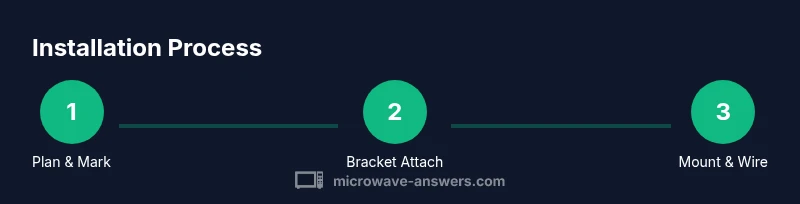
This section gives a high-level view of the process to help you prepare. Start by locating studs and marking the mounting points, then attach the mounting bracket securely. Lift the microwave into position, align it with the bracket, and secure it per the manufacturer’s instructions. Wire or plug in the unit, connect vents if required, and perform a functional test to confirm the fan, light, and turning mechanism work as intended. Finally, double-check clearances and seal any gaps around the cabinet to avoid heat transfer or moisture intrusion.
Final safety checks and maintenance tips
After installation, run a short test cycle with no food to listen for unusual noises and verify proper venting. Check that door clearance is smooth and that there’s no interference with the stove’s controls. Keep the vent path unobstructed and replace filters regularly as directed by the manual. Record the model, serial number, and installation date for future maintenance or warranty needs. A well-maintained over-the-range microwave will serve reliably and safely for years.
Tools & Materials
- Stud finder(Locate wall studs for mounting bracket anchors)
- Measuring tape(Measure height, width, and vent path)
- Pencil or marker(Mark mounting points and stud locations)
- Level(Ensure bracket and unit are perfectly horizontal)
- Drill with bits (wood and masonry)(Drill pilot holes for mounting screws)
- Screwdriver set(Secure screws and brackets)
- Anti-tip mounting bracket(Prevent tipping and distribute weight)
- Screws and mounting hardware (provided with kit)(Use hardware specified by the manufacturer)
- Non-contact voltage tester(Verify power is off before wiring)
- Safety goggles and gloves(Protect eyes and hands during drilling and lifting)
- Ladder or sturdy step-stool(Reach above the stove safely)
- Vent kit (ducting or recirculation)(Select compatible with microwave model)
Steps
Estimated time: Estimated total time: 90-150 minutes
- 1
Check model and space
Read the microwave installation manual and measure the space above the stove. Confirm cabinet width matches the unit and that there’s a clear vent path. If in doubt, postpone installation until measurements are verified.
Tip: Take photos of the wall before starting to document existing conditions. - 2
Find wall studs
Use a stud finder to locate studs where the mounting bracket will be attached. Mark centers clearly and avoid areas with pipes or wires. This ensures a secure anchor point for the heavy appliance.
Tip: Double-check stud centers from multiple angles to avoid misalignment. - 3
Attach mounting bracket
Hold the mounting bracket at the marked location and drill pilot holes into the studs. Fasten the bracket securely with the supplied screws and verify level.
Tip: Have a helper hold the bracket while you insert screws to prevent shifting. - 4
Prepare the microwave for lifting
Remove any packaging and connect the vent hose loosely to allow for maneuvering. Ensure all power cords and vent paths are clear of obstructions before lifting.
Tip: Clear the area under the microwave to prevent damage during placement. - 5
Hang the microwave on the bracket
With assistance, lift the microwave and engage it with the mounting bracket. Confirm alignment with the cabinet edges and ensure the unit is resting evenly on the bracket.
Tip: Check for any gaps between the unit and cabinet; adjust as needed before final tightening. - 6
Connect power and venting
Plug the microwave into a dedicated outlet if allowed by code. If hardwiring is required, call a licensed electrician. Attach the vent hose, ensuring a smooth path without kinks.
Tip: Never pinch vent hoses in tight corners; provide a gradual bend. - 7
Test the unit
Power on and run a brief test cycle to check lights, fan, and rotation. Confirm door closes properly and there’s no interference with the stove controls.
Tip: Test with a small load to simulate real usage and listen for unusual noises. - 8
Final safety checks
Inspect clearances around the microwave, secure all fasteners, and seal any gaps as needed. Confirm the vent path is unobstructed and that the installation complies with local codes.
Tip: Keep the instruction manual and warranty information in an accessible place.
Common Questions
Do I need a professional to install an over-the-range microwave?
A professional can ensure electrical wiring and venting meet local code requirements and handle heavy installations safely. If you have limited electrical experience or are unsure about venting, hiring a licensed technician is recommended.
A professional can ensure wiring and venting meet code and handle the heavy install safely.
Can I install above any stove?
Most over-the-range microwaves are designed for standard kitchen layouts, but compatibility depends on cabinet width, wall space, and venting access. Always check the model’s installation manual for fit and clearance specifics.
Compatibility depends on space, venting, and cabinet width—check the manual for specifics.
What kind of venting does this require?
Venting options vary by model. Some use external ducting to the outdoors, others use recirculating filters. Follow the manufacturer’s instructions to select and install the correct venting path.
Venting can be ducted out or recirculated; follow the manual for your model.
Is a hardwired electrical connection required?
Many units offer a plug-in option, but some installations require hardwiring. If local codes mandate hardwiring or if the cord length is insufficient, hire an electrician.
Hardwiring or a proper outlet is required by code; consult a licensed electrician if unsure.
What is the expected installation timeline?
Most installations take between 60 and 180 minutes depending on wall material, venting needs, and whether electrical work is required. Allow extra time for measurement and troubleshooting.
Expect about an hour to a few hours, depending on venting and wiring needs.
What maintenance is needed after installation?
Regularly clean the filters, inspect the vent path for obstructions, and check screws and brackets for tightness. Recheck clearances after large kitchen renovations.
Clean filters, inspect vents, and check mounting hardware periodically.
Main Points
- Plan layout and safety before mounting.
- Mount to studs and secure with the manufacturer’s hardware.
- Ensure proper electrical supply and venting.
- Test operation thoroughly and check clearances.
- Maintain and inspect annually for safety.