Does Defrosting Chicken in the Microwave Make It Tough? A Practical Guide
Learn how microwaving chicken for defrosting can affect texture and safety, plus step-by-step techniques to keep meat tender and safe to cook.


Does defrosting chicken in the microwave make it tough? It can, if you use high power or over-defrost, which cooks the outer layers while the interior remains frozen. The quick fix is to use a low-power defrost setting in short bursts, flip the pieces, and cook immediately after thawing. This minimizes uneven heating and helps preserve tenderness.
Does Defrosting Chicken in the Microwave Make It Tough? A Quick Truth
Does defrosting chicken in the microwave make it tough? The short answer is: it can, especially if you use aggressive heat or defrost too long. The microwave heats water inside the meat, which can cause proteins to seize up and moisture to migrate to the surface. This is more likely with uneven cuts or thick bone-in portions. The Microwave Answers team reminds readers that the key to tenderness is controlled power, brief thaw cycles, and cooking the chicken promptly after thawing to minimize texture changes. Remember, this is a practical technique for speed, not a substitute for all thawing needs; use it wisely and you’ll reduce tough, dry edges while preserving juiciness in the center.
The Texture Mechanism: Why Microwave Thawing Affects Meat
In a microwave, water molecules heat up quickly. As they heat, muscle fibers can tighten and proteins denature, which can lead to a tougher bite if thawing is uneven. Surface areas may start cooking, creating a contrast with still-frozen centers. The result is inconsistent texture: some parts are springy and dry, others remain icy. Proper technique distributes heat evenly and minimizes partial cooking, helping your chicken stay juicy rather than tough.
Safety First: Don’t Skip the Rest and Cook Immediately
Leaving thawed meat at room temperature invites bacterial growth. After thawing in the microwave, always cook immediately or refrigerate briefly if you’re not cooking right away. The safer path is to plan your thaw-and-cook window so the chicken goes from thawing to cooking without lingering in the danger zone. This approach protects both texture and safety.
Best Practices: Defrost Settings, Timing, and Handling
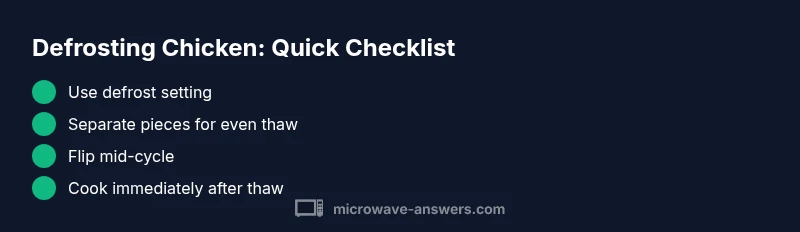
- Use the defrost setting or 30-40% power to thaw evenly in short bursts.
- Break up or separate pieces to prevent clumping and ensure even thawing.
- Flip or rotate pieces at half-time to reduce hotspots and improve uniform thawing.
- Check the center of thick pieces; if still icy, repeat in brief bursts.
- Let the meat rest 5-10 minutes after thawing before cooking to even out temperature.
These steps reduce the risk of surface-cooked edges and preserve juiciness throughout the piece.
Alternatives to Microwave Defrosting: When to Choose Fridge or Cold Water
If you have more time, refrigerating chicken overnight yields the most even thaw with minimal texture changes. For faster options, place the chicken in a sealed bag and submerge it in cold water, changing the water every 30 minutes. Both methods minimize the risk of uneven thawing that leads to toughness. Microwave defrost remains a viable option when you’re pressed for time, provided you follow safety and technique guidelines.
Finishing Your Thawed Chicken: Immediate Cooking Tips
Once thawed, cook chicken promptly to an internal temperature of 165°F (74°C). Use a reliable thermometer to verify doneness and avoid overcooking, which also hardens textures. Consider marinating briefly or applying a light glaze to help retain moisture during cooking. If you notice any off smells or unusual sliminess after thawing, discard the meat and avoid using it.
Practical Takeaways: Quick Recap for Tender Thawing
- Low power, short bursts, and even rotation minimize toughness.
- Always cook thawed chicken immediately or refrigerate and cook soon after thawing.
- Split thick cuts and make sure there’s space between pieces for even heating.
- When in doubt, alternative thaw methods may yield tastier results with less risk of toughness.
Steps
Estimated time: 15-25 minutes
- 1
Prepare and plan
Gather chicken pieces, remove excessive packaging, and place on a microwave-safe dish. Plan for brief defrost bursts and immediate cooking afterward to minimize texture changes.
Tip: Have a thermometer ready to check doneness. - 2
Set power and time
Choose the defrost setting or 30-40% power. Set short intervals (2-3 minutes) and avoid long cycles that start cooking the edges.
Tip: If your microwave lacks a defrost option, use 30-40% power manually. - 3
Spread and separate
Spread pieces evenly on the plate and separate those that have started to thaw. This prevents thick areas from staying frozen while edges heat up.
Tip: Arrange pieces with space between them to promote even thaw. - 4
Check and flip
At half-time, rotate the plate and flip each piece to equalize thawing. Check for icy spots; if present, continue with brief bursts.
Tip: Use oven mitts when removing hot plates. - 5
Rest briefly
Let thawed portions rest 5-10 minutes before cooking to help even temperature throughout the meat.
Tip: Resting reduces the risk of internal cool spots. - 6
Cook immediately
Cook thawed chicken right away to the safe internal temperature of 165°F (74°C). Avoid refreezing thawed meat.
Tip: Use a meat thermometer for accuracy.
Diagnosis: Uneven thawing with some parts cooked and others still icy, potential tough texture after microwave defrosting.
Possible Causes
- highHigh power or too-long defrost cycle
- mediumUneven microwave energy distribution or clumped pieces
- mediumVery thick or bone-in portions causing center to thaw slowly
Fixes
- easySwitch to defrost or 30-40% power and run in short bursts.
- easyPause to flip pieces and separate clumped portions for even thawing.
- easyIf still icy in the center, defrost in additional short bursts and check again; avoid cooking during thaw.
- easyIf large pieces remain mostly frozen, switch to fridge thaw or cold-water thaw instead.
Common Questions
Does defrosting chicken in the microwave make it tough?
Yes, it can lead to tougher texture if you use high power or over-defrost. Use low power, short bursts, and cook promptly to minimize toughness.
Yes, microwave thawing can toughen chicken if you overdo it. Use low power, short bursts, and cook right away to keep it tender.
Is it safe to cook chicken immediately after microwaving thaw?
Yes. After microwaving, the chicken should be cooked immediately to avoid bacterial growth. Do not refrigerate thawed chicken for long periods after microwaving.
Yes. Cook it immediately after microwaving thawing to stay safe from bacteria.
How long should I defrost chicken in the microwave?
Defrost in short bursts, typically 2-3 minutes per cycle, checking and rotating between cycles. Time varies with piece size and microwave power.
Defrost in short 2-3 minute bursts, checking between cycles.
Can I refreeze chicken thawed in the microwave?
It’s best not to refreeze meat thawed in the microwave because texture and quality can degrade. If you must store, refrigerate first and then cook before freezing again.
Avoid refreezing thawed meat; refrigerate and cook before freezing again.
What is the best microwave setting for defrosting chicken?
Use the defrost setting or a low power level (30-40%), with short intervals and turning to promote even thawing.
Use defrost or 30-40% power with short bursts and rotate pieces.
What temperatures are safe for chicken after thawing?
Cook thawed chicken to an internal temperature of 165°F (74°C) to ensure safety and quality.
Cook to 165°F to ensure safety and best texture.
Watch Video
Main Points
- Use low power and short bursts to thaw.
- Cook thawed chicken immediately for best texture.
- Flip and separate pieces for even thaw.
- If large pieces remain frozen, switch thaw method.
- Always verify 165°F internal temperature before serving.