Corn on Cob in the Microwave: How Long to Cook
Learn exact microwave times for corn on the cob, plus tips for husked, husk-on, and wrapped methods. Quick, safe, and delicious results every time from Microwave Answers.


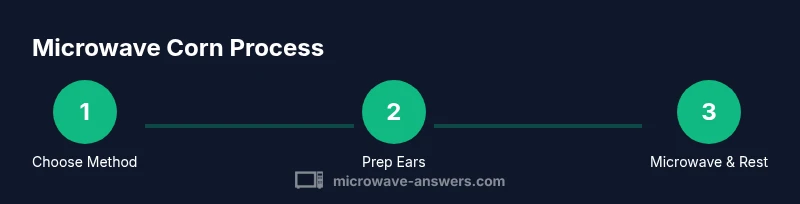
Choose your method (husked, husk-on, or damp-towel wrap). Prep the ears, then microwave. For a single husked ear, start with 3–5 minutes at 800–1000W; add 1–2 minutes for each additional ear. Let rest 1–2 minutes before tasting. corn on cob in microwave how long? Use these baselines and adjust as needed.
Why microwave corn on the cob is convenient
The microwave offers a fast, energy-efficient option for cooking corn on the cob, ideal for busy weeknights or quick snacks. When you know how long to cook corn on the cob in the microwave, you can enjoy tender, sweet kernels in minutes with minimal cleanup. The Microwave Answers team has tested common setups—husked, husk-on, and damp-towel-wrapped ears—and we’ve distilled reliable timing baselines that suit most 700–1000W microwaves. While individual results will vary based on cob size and microwave power, starting points can save you from undercooking or overcooking. By understanding the variables, you can confidently cook corn on the cob in the microwave without second thoughts.
Factors that affect cooking time
Microwave cooking time for corn on the cob depends on several factors, including wattage, prep method, the number of ears, and cob size. A higher wattage (1000–1200W) typically reduces cooking time, while lower wattage (700–800W) may require extra minutes. Husked ears heat faster because heat penetrates directly into the kernels; husk-on ears steam, which can add a minute or two. When cooking multiple ears, plan for extra time and rotate the plate if your microwave heats unevenly. Moisture content also matters: very dry ears may dry out quickly, while ears wrapped in damp towels stay juicy. The general principle is to start with 3–5 minutes for one husked ear at typical wattage, then add 1–2 minutes per extra ear and adjust to your microwave’s performance. Resting the corn for 1–2 minutes after microwaving helps evenly distribute heat and finish tenderizing the kernels. These baselines empower you to tailor corn on the cob in the microwave how long to cook for consistent results.
How to prep corn for microwave cooking
Prep makes a big difference. Decide your method: husked, husk-on, or damp towel-wrapped. If you remove the husks, strip away all silk for a clean finish. For husked ears, trim the ends to remove dry sections and rinse quickly if silk remains. If you leave the husk on, trim the top so steam can escape, and rinse to reduce grit. For the damp towel approach, wrap each ear loosely in a lightly damp paper towel to create steam—this helps keep kernels moist. Place ears on a microwave-safe plate and cover loosely to minimize splatter. The goal is to trap enough steam to cook evenly without steaming so aggressively that the kernels become soggy.
Tip: uniform ear size and spacing on the plate promote even heating, especially when cooking more than one ear.
Cooking methods: husked, un-husked, and wrapped
Each method produces a distinct texture and time profile. Husked corn cooks fastest because there’s no outer wrapper to slow heat; expect roughly 3–5 minutes for a single ear in an 800–1000W microwave, with slight adjustments for ear thickness. Ears left with their husks on steam inside, which can take about 4–6 minutes for one ear, depending on wattage and moisture. Wrapping ears in a damp paper towel provides a gentle steam environment and helps prevent dryness; plan for about 4–6 minutes per ear. For two to four ears, total times commonly fall in the 6–12 minute range, with occasional pauses to rotate for even heating. After cooking, rest for 1–2 minutes to let heat distribute and finish tenderness. If you want extra flavor, add a pat of butter or savory toppings after resting.
Safety note: always use microwave-safe containers and avoid metal, and handle hot ears with oven mitts.
Troubleshooting common issues
If your corn comes out underdone, rotate the ears, and cook in 30–60 second bursts until tenderness is reached. If kernels feel dry or tough, give it another minute and test again. Overcooking is the most common problem and leads to stiff kernels—reduce total time slightly next round or cook at a lower power setting (70–80%) with shorter bursts. Steam buildup can also affect results; if you notice a lot of steam, vent the wrap slightly to let moisture escape while maintaining heat. For best consistency, cook ears in a single layer with space between them and avoid overcrowding the plate. Finally, ensure all materials used are microwave-safe and free of metal components to prevent arcing.
Serving tips and flavor ideas
Serve hot immediately after resting for the best texture. Simple toppings like a pat of butter and a pinch of salt highlight the corn’s natural sweetness. For extra zing, a squeeze of lime juice and a sprinkle of cotija or parmesan can elevate the flavor. If you’re feeding a crowd, you can cook multiple ears at once and keep them warm by loosely wrapping in a clean kitchen towel. Leftovers can be refrigerated and reheated in short bursts to maintain moisture. With proper prep and timing, corn on the cob in the microwave becomes a reliable, tasty staple.
Safety and cleanup after microwaving corn
Hot corn and steam can burn, so use oven mitts when handling plates; allow ears to rest briefly before moving. If any splatter occurred, wipe the plate and interior of the microwave promptly to prevent residue buildup. Damp towels should be allowed to dry or be laundered to prevent mold growth. Teach children safe handling around hot surfaces and steam, and always verify microwave-safe materials before cooking. Clean, dry, and properly ventilated cleanup ensures safe, quick cooking in the future.
AUTHORITY SOURCES
For safety guidelines and best practices, consult official resources such as the USDA and FDA. Examples include: https://www.fsis.usda.gov, https://www.fda.gov, and university extension content at https://extension.psu.edu. These sources provide general microwave safety and cooking principles that support practical kitchen tasks like preparing corn on the cob in the microwave.
Tools & Materials
- Microwave-safe plate(Large enough to hold 1–4 ears without crowding)
- Damp paper towels or a damp kitchen towel(Wrap ears or create steam)
- Optional butter or toppings(For serving after resting)
- Timer (or smartphone)(Track cooking intervals)
- Oven mitts or heat-safe gloves(Handle hot plate and ears)
Steps
Estimated time: 8-12 minutes
- 1
Choose your cooking method
Decide whether you want husked, husk-on, or damp-towel-wrapped corn. Your choice will influence total time and texture. Husked ears cook fastest; damp-wrapped provides balanced steam without drying out kernels.
Tip: If you’re unsure, start with the damp-towel method for a forgiving result. - 2
Prep the ears
Shuck or trim the ends as needed, removing silk and any drying tips. Rinse quickly if you’ve removed husks and silk. Pat dry to avoid excess moisture interfering with steaming.
Tip: Uniform ear size helps heat distribute evenly. - 3
Wrap and arrange
Wrap each ear in a lightly damp paper towel or keep them husked with minimal trimming. Place on a microwave-safe plate in a single layer with space between ears to promote even heating.
Tip: Don’t stack ears; consider cooking in batches if you have many ears. - 4
Microwave at the right power and time
For a single husked ear at 800–1000W, start with 3–5 minutes. For more ears or other methods, add 1–2 minutes per extra ear and adjust based on your microwave’s performance.
Tip: If you hear sizzling or see steam pooling, stop and recheck before continuing. - 5
Rest and test tenderness
Let the ears rest for 1–2 minutes after microwaving. Test tenderness by piercing a kernel with a fork; if it’s tender, you’re done. If not, microwave in short bursts of 30–60 seconds.
Tip: Resting helps distribute heat evenly for juicier kernels. - 6
Serve and flavor
Add butter, salt, or other seasonings as desired. Serve immediately for best texture and sweetness. Leftovers can be refrigerated and reheated in brief bursts.
Tip: A light drizzle of lime juice can brighten the sweetness.
Common Questions
Can I microwave corn on the cob with the husk still on?
Yes, cooking with the husk on can steam the corn and protect kernels, but times are longer and you may need to vent the husk slightly to release steam.
Yes, you can microwave corn with the husk on, which creates steam and can protect the kernels; just vent a little to release steam.
How many ears can I cook at once?
Most microwaves handle 1–2 ears well in a single layer. Cooking more ears may require extra time and careful placement or a second batch.
Most microwaves cook 1 or 2 ears at a time; more ears may need extra time or a second batch.
How do I know when the corn is done?
Kernels should be tender when pierced with a fork. If they’re still firm, microwave in short bursts and test again.
Check tenderness with a fork; if it’s still firm, cook in short bursts and test again.
Can I reheat leftover corn in the microwave?
Yes. Reheat in short 15–30 second bursts, checking tenderness to avoid overcooking and drying out kernels.
Yes—reheat in short bursts and test until warm and tender.
Is microwaving corn safe for kids?
Yes, as long as you use microwave-safe plates and supervise handling hot ears to prevent burns.
Yes, just supervise cooking and handling since ears get hot after microwaving.
Should I add water or butter before microwaving?
A damp towel or small amount of water helps steam; butter is best added after cooking to avoid splatter and sogginess.
Steam helps with moisture; add butter after cooking for best texture.
Watch Video
Main Points
- Choose method based on time and texture.
- Start with 3–5 minutes for a single ear at 800–1000W.
- Rest 1–2 minutes after microwaving for best tenderness.
- Damp towel or husk-on methods preserve moisture and flavor.
- Rotate or adjust time for multiple ears to avoid uneven cooking.