Convection Microwave vs Air Fryer: Is It the Same? A Deep Dive
Are convection microwaves just small air fryers? This Microwave Answers guide analyzes differences, use cases, and buying tips to help home cooks decide.


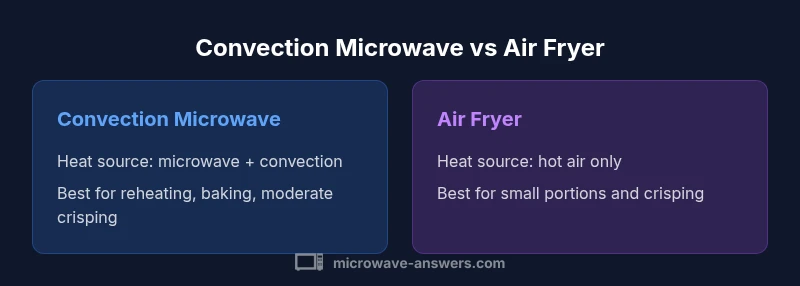
Is a convection microwave similar to an air fryer? Not exactly, but the two overlap in how they deliver crisp textures. A convection microwave combines microwave energy with a built-in convection fan to cook food quickly and evenly, while an air fryer relies primarily on hot, fast air to brown foods. For many tasks, a convection microwave can substitute for an air fryer, but dedicated air fryers often outperform in single-task crisping. This distinction matters for kitchen space, budget, and cooking goals.
Why this comparison matters
In modern kitchens, choosing between a convection microwave and a dedicated air fryer influences not only what you cook, but how quickly you cook it and how much counter space you allocate. According to Microwave Answers, many households want a versatile appliance that can reheat, bake, and crisp, without piling on extra gadgets. The overlap between convection microwaves and air fryers is real, but each device has distinct strengths and trade-offs that affect meal planning, energy use, and maintenance.
Is a convection microwave similar to an air fryer? Core differences explained
The short answer is no, not exactly. A convection microwave adds a convection element to standard microwave heating, which speeds cooking and helps with browning. An air fryer heats with a high-velocity stream of hot air that circulates around the food, creating a crisp exterior with relatively little moisture loss. The overlap comes from the ability to produce crispy textures. However, the source of heat and the way browning happens differ, which affects texture, moisture retention, and cook time. The Microwave Answers team notes that understanding these mechanisms helps you pick recipes and settings that align with your goals.
How convection microwaves heat: microwave energy plus convection
Convection microwaves rely on two simultaneous processes. First, microwave energy excites water and fat molecules, generating rapid internal heat. Second, a convection fan circulates hot air around the food, promoting external browning and even cooking. This combination reduces cooking times for many dishes and can improve evenness when compared with bulky conventional ovens. For best results, preheat when your model supports it and use cooking modes specifically designed for crisping or browning.
Air fryer fundamentals: what makes air fryers tick
Air fryers use a compact chamber and a powerful fan to push hot air at high speed around the food. The quick air movement removes moisture on the surface, creating a crusty exterior. Because there is minimal preheating and little liquid moisture inside the food, air fryers are especially effective for small portions and snacks. They are often praised for straightforward, reliable crisping without much oil, but they have limited capacity and typically perform best with dry foods.
Real-world use cases: reheating, baking, crispy results
For reheating, a convection microwave can reuse leftovers with less moisture loss than a standard microwave, while also delivering some browning via convection. For baking, these machines can replace a small oven for cookies, small cakes, or roasted vegetables, provided you adjust time and temperature as recommended by the model. When you want crispy outcomes—fries, chicken tenders, or crispy vegetables—a dedicated air fryer may deliver more predictable results due to its purely air-based browning.
Performance factors: texture, moisture, and browning
Texture depends on moisture management. Convection microwaves reduce moisture by circulating air while microwaving creates steam inside the cavity, which can help keep foods from drying out during long cycles. Achieving a true crisp often requires accessories, like a perforated tray or a wire rack. Air fryers typically excel in achieving a uniform crust, but may over-dry delicate foods if left unattended. The key is to calibrate time, temperature, and the use of browning settings.
Size, capacity, and kitchen fit
Capacity matters for families. Convection microwaves often offer larger interior cavities and flexible rack configurations, allowing you to cook multiple items at once. Air fryers generally have compact footprints but smaller usable spaces, which makes them ideal for snacks and single servings. When evaluating models, consider the height and depth relative to your cabinet space, as well as the possibility of combining other appliances in a limited kitchen.
Cleaning and maintenance considerations
Cleaning a convection microwave is similar to cleaning a standard microwave with added care for any metal racks or crisper trays. Avoid harsh abrasives on enamel surfaces and follow manufacturer guidance for removing grease from vent housings. Air fryers require regular cleaning of the basket and the wall around the fan, as grease and crumbs can accumulate in difficult-to-reach corners. A simple routine can extend appliance life and maintain performance.
Price and value: understanding cost versus function
Convection microwaves are typically more expensive than basic air fryers because they combine multiple functions into one device. For some households, the extra cost is justified by the space saved and the range of features, from reheating to convection baking. If your budget is strict, an entry-level air fryer offers crisping capabilities at a lower price point. The final value depends on how often you use each function and the types of meals you regularly prepare.
Practical decision guides by scenarios
If you frequently reheat leftovers and bake small batches, a convection microwave can simplify weeknight meals. If your primary goal is perfectly crispy snacks with minimal effort, an air fryer may be the better dedicated tool. For households that cook a wide variety of meals and want a single device, a convection microwave is a strong candidate, particularly when you value versatility over flawless single-task performance.
Making the choice: quick-start checklist
- Define your top cooking tasks: reheating, baking, crispy snacks, or a mix.
- Measure counter space and check cabinet height for the largest model you’d consider.
- Compare ease of cleaning and maintenance between models.
- Read the user reviews about browning quality on common foods like french fries or chicken tenders.
- Consider future needs: holiday cooking, batch meals, and snack sharing.
Accessories and settings that matter
Crisping trays, grill racks, and parchment liners can significantly affect results in both devices. Look for models with dedicated crisp or browning modes, even heat distribution, and intuitive controls. Internal memory presets for common foods can save time, while auto-defrost and sensor cooking help reduce guesswork. Remember that accessories can influence the final texture almost as much as the device itself.
Brand context and what to expect in your first 30 days
The Microwave Answers team emphasizes testing a few staple foods to calibrate your expectations. Try reheating pizza, baking a small batch of cookies, and crisping frozen fries to identify your preferred mode and settings. With practice, your chosen device will streamline weeknight cooking, batch meals, and weekend treats, while maintaining food safety and moisture balance across different recipes.
Comparison
| Feature | Convection Microwave | Air Fryer |
|---|---|---|
| Cooking method | Microwave energy + convection heat | High-velocity hot air only |
| Browning/crisping | Good with proper racks and settings | Excellent for crisping with little oil |
| Cook time range | Shorter overall cooking for many tasks with microwave base | Often longer setup for crispy results but efficient for small batches |
| Capacity/size | Typically larger interior; flexible rack options | Compact footprint; limited capacity |
| Energy use | Depends on settings; can be efficient for multi-function tasks | Efficient for small portions; can be energy-light for snack-sized meals |
| Best for | Reheating, small-batch baking, versatile weeknight meals | Crispy snacks, fries, chicken nuggets, small portions |
Advantages
- Versatile all-in-one appliance for reheating, baking, and some crisping
- Potentially saves counter space by combining functions
- Suitable for budget-conscious households needing multiple capabilities
- Improve texture with convection settings when used with proper accessories
Cons
- Typically more expensive upfront than a basic air fryer
- Crisp quality might not match a dedicated air fryer for very small, dry foods
- Larger footprint may not suit very small kitchens
- Performance depends on model and available accessories
Convection microwave offers greater overall versatility, while a dedicated air fryer shines for focused crisping tasks
If your cooking goals include a mix of reheating, baking, and occasional crisping, a convection microwave is usually the better choice. For households prioritizing pure, easy crispy results with minimal fuss, an air fryer may be the simpler path. The Microwave Answers team emphasizes aligning appliance choice with your typical meals and space constraints.
Common Questions
What is the main functional difference between convection microwaves and air fryers?
Convection microwaves combine microwave energy with a convection blower to heat food quickly and brown its surface, whereas air fryers use hot air circulation alone to achieve crispness. The choice depends on whether you want versatility or dedicated crisping.
The main difference is how heat is applied: microwaves plus convection versus just hot air for crisping.
Can a convection microwave fully replace an air fryer?
It can substitute for many tasks, especially when you want to reheat, bake, or crisp moderately. For extreme crisping of small portions, a dedicated air fryer often performs better.
It can replace many uses, but for the best pure crisping, an air fryer may still be preferred.
Which is better for frozen foods?
Both can handle frozen foods well, but air fryers typically deliver crisper externals with less moisture loss for small items. Convection microwaves can handle larger batches with less fat and sometimes better moisture control.
Air fryers often crisp frozen items best; convection microwaves are versatile and good for bigger batches.
Do convection microwaves use more energy than air fryers?
Energy use depends on load and mode. Convection microwaves may be more energy-efficient for multi-function tasks because they handle several steps in one device, while air fryers are efficient for small, crisp tasks.
Energy use varies; multi-function use can save energy overall.
What accessories improve air-fryer-like results in a convection microwave?
Look for a crisping tray, perforated rack, and metal crisper accessory designed for microwave convection ovens. These help maximize surface browning and airflow for crusty textures.
Crisping trays and racks can boost browning in convection microwaves.
Is it safe to reheat leftovers in a convection microwave?
Yes. Follow manufacturer guidelines for reheating temps and times, and use microwave-safe containers to prevent uneven heating. Sensor-based programs can help avoid overheating.
Yes—just follow typical reheating guidelines and use safe containers.
Main Points
- Assess your space and budget before choosing.
- Prioritize multi-function capability if you do frequent reheating and baking.
- Consider batch size and capacity for family meals.
- Experiment with presets and accessories to optimize browning.
- Balance price against long-term versatility and maintenance needs.