When to Replace Microwave Charcoal Filter: A Practical Guide
Discover when to replace your microwave charcoal filter, signs of saturation, a step-by-step replacement guide, and tips to extend filter life for safer, odor-free venting.


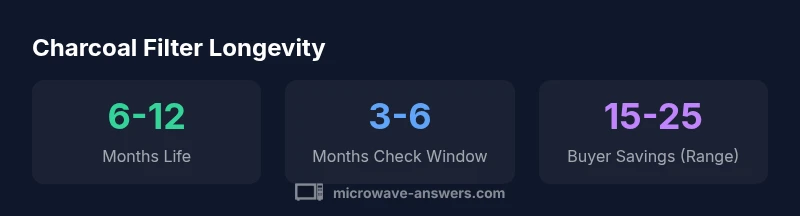
A good rule of thumb is to replace your microwave charcoal filter when you notice persistent odors, reduced venting efficiency, or visible saturation from steam and grease. Most households will benefit from inspecting the filter every 3–6 months and replacing within a 6–12 month window for average use. Always check your model’s manual for model-specific guidance and filters that match the vent system.
Understanding the charcoal filter in microwaves
Charcoal filters, sometimes called activated carbon filters, are located in the venting path of many microwaves. Their job is not to heat food but to absorb odors, smoke, and moisture as air exits the appliance during cooking or reheating. Over time, exposure to grease and steam saturates the porous carbon, reducing its ability to trap smells. This is a normal part of appliance maintenance, and replacement is a routine step in keeping venting systems effective. According to Microwave Answers, a well-maintained charcoal filter can help keep kitchen air fresher and reduce lingering cooking smells. The frequency of replacement depends on how often you use the microwave, the type of foods you routinely heat, and how well the unit is vented to the outdoors, if applicable. If the filter is behind a grille or inside the vent housing, you’ll typically access it by popping off a panel, then removing the old unit and snapping in a new one. While some models advertise washable charcoal filters, many are not washable and must be replaced when they become saturated. Always prioritize the model-specific guidance from your manufacturer to ensure a proper fit and seal.
Signs your charcoal filter needs replacement
Like any passive vent component, charcoal filters give subtle early warnings before they become obvious problems. Start with a quick self-check: do you notice a stronger, less pleasant odor after cooking, especially with fried or spicy dishes? Have you observed weaker airflow through the vent or steam lingering longer than usual after microwaving? Are there visible signs of grease saturation or discoloration on the area around the vent or behind the grille? If you answer yes to any of these, it’s time to inspect the filter and consider replacement. Other indicators include a noticeable change in cooking efficiency, longer reheating times, or an overall musty or smoky smell that remains in the kitchen after the microwave runs. Regular visual inspection is simple: look for an opaque, darkened layer or a filter that seems swollen or physically degraded. Some models require you to remove the back panel or vent cover; others let you access the filter from the front. If you can’t confirm saturation with your eyes and nose, a quick refresh with a new filter is often the simplest path to restoring vent performance.
Step-by-step replacement guide
Replacing a charcoal filter is typically a quick, tool-free process, but always begin with unplugging the unit and consulting your user manual for model-specific steps. Here is a general, safe approach:
- Disconnect power and locate the vent area. 2) Remove the front grille or access panel that covers the filter housing. 3) Take out the old filter, noting orientation if there are directional indicators. 4) Clean the housing with a dry cloth to remove grease; avoid liquid cleaners that could saturate electrical components. 5) Insert the new charcoal filter in the same orientation as the old one, ensuring a snug fit and a complete seal. 6) Reattach the grille or panel securely. 7) Plug the unit back in and run a short test cycle to confirm airflow and lack of unusual noises. Always handle filters with clean hands and discard old units per local disposal guidelines. If your model uses multiple filters, replace them in the order specified by the manufacturer.
Washable vs. non-washable charcoal filters and care tips
Most charcoal filters are not designed to be washed because water can damage the activated carbon and reduce its effectiveness. Some newer, specialty models may offer washable equivalents, but these are less common. If your manual states that the filter is washable, rinse it gently under cool running water and allow it to air dry completely before reinstallation. Never use heat to dry the filter. In most cases, you should avoid soap, detergents, or ultrasonic cleaning, as residues can linger and affect air quality. When in doubt, replace rather than clean. A fresh filter offers the most reliable odor absorption and airflow performance, while trying to salvage a saturated filter can prolong issues and trap odors longer.
Choosing the right replacement filter for your model
To ensure compatibility, start with your microwave’s model number, usually found on a label inside the door frame or on the back of the unit. Look for an exact charcoal filter replacement that matches the part number provided by the manufacturer. If a direct match isn’t available, check whether the model uses a standard size or type that fits multiple series. Some retailers categorize filters by model compatibility rather than by size, which can simplify the search. When ordering, verify the filter’s dimensions, installation orientation, and any locking mechanisms that secure it in place. If you’re unsure, contact the manufacturer’s customer support or consult a professional technician. Keeping a small inventory of compatible filters can minimize downtime if you cook often and rely on venting for sensitive spaces like kitchens with limited ventilation.
Cost considerations and timing for planning replacements
Charcoal filters are usually affordable, and costs vary by model and brand. The price range for a replacement filter typically falls within a modest spectrum, with higher-end or specialty models costing more. For budgeting purposes, plan for a per-filter cost that aligns with your model type, and consider replacing multiple filters if your kitchen sees heavy use or if you frequently prepare smoky or odorous foods. If you cook fried foods frequently, you might find yourself needing replacements more often than a light-use household. Compare options from reputable retailers to ensure you get a filter with the correct carbon content and pore structure for your system. In all cases, maintaining a small stock of spares can reduce downtime and keep your kitchen smelling fresh.
Maintenance schedule and long-term planning
Establish a simple maintenance calendar to avoid guesswork: set an annual reminder to inspect filters, with a semi-annual check for high-use kitchens. If you notice odor persistence after replacing a filter, re-evaluate the ventilation setup and consider additional steps such as improving kitchen exhaust or using lower-odor cooking methods to protect the filter for longer. Create a quick checklist: verify seal integrity, confirm that the grille sits flush, and ensure there are no obstructed vents. Document the filter type, replacement date, and any issues observed to guide future maintenance. The goal is consistency—regular checks reduce the risk of stale odors, reduce cleaning time, and extend the life of your microwave’s vent system.
Comparison of charcoal filter types and maintenance guidance
| Aspect | Filter Type & Location | Maintenance Guidance |
|---|---|---|
| Filter Type | Charcoal filter (activated carbon) behind grille/vent | Non-washable in most cases; replace when saturated |
| Location | Behind front grille or inside vent housing | Access via manual-specific panels; follow model guidance |
| Replacement Timing | Varies by usage (roughly 6–12 months generic guidance) | Inspect odor and airflow to decide; adhere to model spec |
Common Questions
How do I know if my microwave has a charcoal filter?
Most microwaves with venting include a charcoal filter behind a grille or vent housing. Check your user manual or inspect the vent area for a removable panel. If you can smell odors after cooking or notice reduced venting, it may have saturated and could need replacement.
Look for a vent grille and a removable panel behind it. If you smell lingering cooking odors after using the microwave, that’s a sign to inspect the filter.
Are charcoal filters washable?
Most charcoal filters are not washable because water can compromise the activated carbon. If your manual specifies a washable option, follow the exact cleaning instructions. When in doubt, replace the filter rather than attempting to clean it.
Usually they aren’t washable. If your manual says it’s okay, follow those instructions; otherwise, replace the filter.
Can I replace the filter myself?
Yes. Replacement is typically a straightforward process: unplug the unit, remove the front grille or access panel, swap in the new filter, and reassemble. Always rely on your model’s instructions to ensure correct orientation and a proper seal.
Yes, most people can do it themselves by following the manual. Make sure to unplug first and reassemble securely.
How long do charcoal filters last in real use?
Lifespan varies with usage intensity, but many households find replacement every 6–12 months reasonable for average use. If you cook smoky or odorous foods often, you may need to replace more frequently.
It varies, but a good rule is about every 6 to 12 months, depending on use.
Where can I buy replacement filters?
Start with the original equipment manufacturer (OEM) parts for your model to ensure compatibility. Many retailers and online stores offer model-specific charcoal filters. If you’re unsure, contact customer support or verify compatibility on the retailer’s product page.
Check the OEM parts for your model or ask support to verify compatibility before buying.
“Replacing the charcoal filter at the right time is a small, practical step that preserves vent performance and kitchen air quality.”
Main Points
- Inspect odor and airflow to decide replacement
- Follow model-specific replacement guidance
- Most charcoal filters are not washable—replace when saturated
- Keep a spare filter to reduce downtime
- Document replacement dates for ongoing maintenance