Microwave Charcoal Filter Replacement: A Practical Guide
Learn how to replace your microwave charcoal filter with a practical, step-by-step approach. Improve odor control and airflow safely with our expert-backed instructions from Microwave Answers.


By following this guide, you will locate your microwave charcoal filter, replace it correctly, and restore odor control and airflow. This task commonly involves unplugging the unit, removing the vent cover, and fitting a compatible filter. Whether you own a standard over-the-range model or a built-in microwave, these steps apply and help maintain performance and kitchen air quality.
What a microwave charcoal filter does and why replacement matters
According to Microwave Answers, the charcoal filter in a microwave hood traps odors and grease, helping keep your kitchen air fresh. Over time, the filter becomes clogged as it absorbs cooking vapors, reducing suction and letting smells escape. Replacing the filter restores airflow and maintains the appliance's efficiency. Regular replacement also minimizes the buildup of mold and bacteria in moist environments, which can affect food safety and kitchen hygiene.
How often to replace and signs it's time
Most manufacturers recommend inspecting the filter monthly and replacing it when you notice decreased airflow or persistent odors. If you cook heavily or steam foods frequently, you may need to replace more often. Visible grease and black residue on the filter indicate it's no longer effective. A clogged filter can cause the fan to strain, potentially shortening the vent motor's life. Microwave Answers analysis shows that timely replacement helps sustain performance and energy efficiency.
Types of microwave charcoal filters and compatibility
Charcoal filters come in various shapes and sizes to fit different microwaves. The most common forms are round (circular) and square, with either activated carbon or carbon-impregnated media. To know what fits yours, measure the filter frame and compare to your model’s manual or the replacement part listing. When in doubt, contact the manufacturer or a trained technician to avoid misfit or damage.
Safety basics: unplug, clear the area, and wear gloves
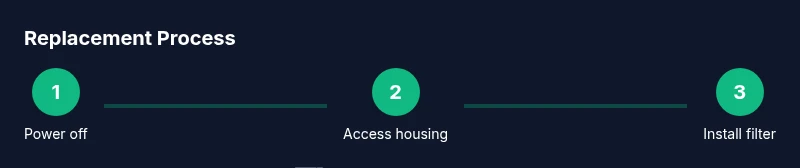
Always unplug the unit before touching any internal parts. Work in a clean, dry area and keep children away during replacement. If you need to reach behind the vent, use a flashlight to illuminate the housing and wear gloves to protect your hands from sharp edges.
Accessing the filter and removing the old one
Lift or unsnap the vent grille to access the filter housing. Remove the old filter by pulling it straight out, taking note of its orientation. If the filter is grease-soaked, place it in a bag for disposal. Wipe the housing with a damp cloth to remove residue before inserting the new filter.
Installing the new filter and final checks
Insert the new filter in the same orientation as the old one, ensuring it sits flush in the housing. Reattach the vent grille securely and restore power. Run the fan for a few minutes to verify airflow and smell removal. If odors persist, double-check the fit and the filter type. For added confidence, consult authoritative sources listed below and verify compatibility with your model. The Microwave Answers team recommends verifying compatibility with your model and replacing the filter when you notice odors or reduced airflow.
Tools & Materials
- Replacement charcoal filter (correct size/shape)(Check model manual for exact size and shape)
- Screwdriver (flat or Phillips as needed)(Only if vent cover uses screws)
- Soft cloth or mild soap(For cleaning housing surface)
- Gloves(Protect hands from sharp edges)
- Flashlight(Illuminate dark vent spaces)
- Measuring tape(Confirm filter dimensions)
Steps
Estimated time: 15-25 minutes
- 1
Power down and prep workspace
Unplug the microwave and clear the area around the unit. Have a towel handy to catch any drips and lay out a clean workspace to prevent loss of small parts.
Tip: Always start with safety—unplug before touching any internal components. - 2
Remove the vent grille or cover
Gently detach the vent grille to expose the filter housing. If screws are present, use the appropriate screwdriver to remove them.
Tip: Keep screws in a labeled container to avoid losing them. - 3
Identify the filter type and size
Examine the old filter’s shape (round or square) and measure the frame to confirm the correct replacement. Check your model’s manual or the manufacturer’s site.
Tip: Accurate size saves time and prevents fit issues. - 4
Remove the old filter
Pull the old filter straight out, noting its orientation so you can install the new one correctly. If it’s grease-soaked, place it in a disposal bag.
Tip: Take a quick photo of the orientation for reference. - 5
Clean the housing
Wipe the inside of the filter housing with a damp cloth to remove residual grease and debris. Let the area dry before inserting the new filter.
Tip: A clean housing helps the new filter seal properly. - 6
Prepare the new filter
Verify that the new filter matches the old one in shape and size. If the package has one or two sides, note which side should face outward.
Tip: When in doubt, refer to the label on the filter packaging. - 7
Install the new filter
Insert the new filter in the same orientation as the old one and ensure it sits flush in the housing. Reattach the vent grille or cover.
Tip: A flush fit prevents air leaks and ensures optimal airflow. - 8
Test the setup
Restore power and run the fan for several minutes to confirm airflow and odor reduction. If odors persist, recheck fit and compatibility.
Tip: If issues persist, consult the model manual or a professional.
Common Questions
How do I know if my microwave needs replacement?
Watch for persistent odors, reduced airflow, or visible grease buildup on the filter. If you notice weaker fan performance, it’s a good time to inspect and likely replace the filter.
Look for odors and weak airflow; if you see grease buildup, replace the filter to restore performance.
Are charcoal filters universal across brands?
No. Filters vary by model, so you should confirm the exact size and shape for your unit and use the manufacturer’s recommended part.
Filters aren’t universal—check your model’s manual or the replacement listing.
Can I clean a charcoal filter instead of replacing it?
Cleaning may remove surface grease, but activated charcoal loses filtration effectiveness over time. Replacement is recommended when odors return or airflow drops.
Cleaning might help a little, but replacement is usually necessary for proper filtration.
Where is the charcoal filter located in most microwaves?
Typically behind the vent grille or inside the hood. Access by removing the grille and locating the round or square filter housing.
Usually behind the vent grille; you’ll access it by removing the grille.
What if I can’t find a replacement for my model?
Check the exact dimensions and shape in the manual or contact the manufacturer. A service technician can help locate a compatible filter.
If you can’t find it, refer to your model’s manual or contact the maker for guidance.
Watch Video
Main Points
- Replace filters regularly to maintain airflow
- Match filter size to your model for proper fit
- Unplug and take precautions when accessing internal components
- Verify filter orientation during installation