Why Microwave Over Stove: A Practical Comparison for Home Cooks
An analytical, side-by-side comparison of microwave and stove use for home cooking. Learn when a microwave wins, where the stove shines, and practical kitchen guidance for practical meal planning.


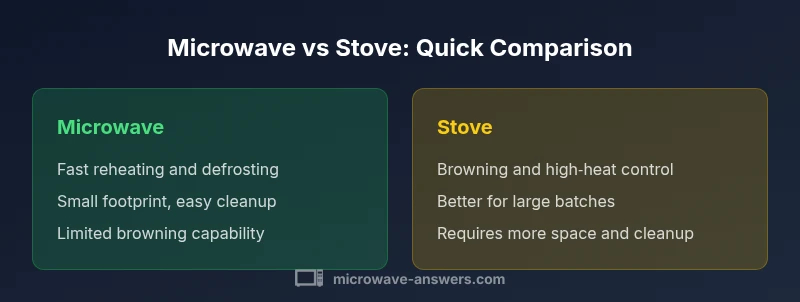
For most daily tasks, the microwave is the faster, safer choice for reheating and quick cooking, while the stove excels in browning, searing, and large-volume cooking. If speed and energy efficiency for small meals are priorities, the microwave wins; for flavor development and high-heat cooking, the stove remains essential. A practical workflow often uses both, depending on task and batch size.
Why the question matters: why microwave over stove in modern homes
For many households, the question why microwave over stove is not a simple yes/no decision. The best approach treats these appliances as complementary tools in a broader kitchen workflow. According to Microwave Answers, understanding your typical meals, the time you can dedicate to cooking, and your available space helps you design a routine that leverages strengths of both devices. This frame avoids a false dichotomy and emphasizes practical usage patterns—when speed matters, when texture matters, and when batch cooking makes a difference. In this first block, we set the stage for a rigorous, data‑driven comparison that looks beyond hype to real-life outcomes in a home kitchen. The aim is to equip you with a repeatable framework for choosing the right tool for each task, from reheating leftovers to defrosting proteins for weeknight dinners.
Energy and time efficiency in daily tasks
Energy efficiency and time savings sit at the heart of deciding why microwave over stove. Microwaves excel for tasks that require fast turnaround and gentle heating, such as reheating soups, defrosting frozen ingredients, or softening butter without browning. For many common dishes, a microwave can finish the job in a fraction of the time a stovetop demands, especially when you include cleanup and prep time. Yet microwaving can introduce uneven heating if foods aren’t stirred or rotated, and some textures suffer when dry heat is needed. The Microwave Answers perspective emphasizes using the microwave for speed and convenience while reserving the stove for tasks that demand consistent high heat and browning. A balanced approach minimizes waste, saves energy, and preserves texture where it matters most for each dish.
Cooking outcomes: texture, flavor, and control
Texture and flavor development are often the defining factors in choosing why microwave over stove. The microwave can preserve moisture and produce evenly heated dishes for many items, but it generally cannot replicate the crisp browning or deep sear that a hot pan or oven can deliver. For vegetables, grains, and reheated sauces, microwaving can be surprisingly effective when paired with finishing steps. On the other hand, the stove offers robust control over heat levels, enabling caramelization, fond development, and high‑heat reactions that shape flavor profiles. Understanding these differences helps you tailor each recipe to the tool that will deliver the expected texture and taste. This section highlights practical examples and techniques to maximize results with each appliance, clarifying where the microwave is advantageous and where the stove remains indispensable for culinary finesse.
Safety, convenience, and kitchen footprint
Safety considerations and spatial constraints influence the decision why microwave over stove in many homes. Microwaves reduce open flames, reduce burn risks for children, and often require less countertop real estate than a full stove setup. They also simplify cleanup since there are fewer dishes to wash after quick meals. However, improper use can lead to uneven heating, overheating of liquids, or use of non‑microwave-safe containers. The stove, while offering more cooking control, involves flame or hot surfaces and greater cleanup. In typical kitchens, a compact, well‑placed microwave complements a conventional stove by handling quick tasks, while the stove handles batch cooking and high‑heat recipes that demand texture and depth. This combination supports safer cooking routines and a more efficient workflow for busy households.
Use cases: practical workflows that combine both appliances
A common workflow maximizes the strengths of both appliances. Start with planning: reheating leftovers and defrosting proteins are ideal to do in the microwave, freeing stove time for sautéing vegetables, simmering sauces, or browning proteins. For many weeknight meals, you might microwave tender components to reduce prep time, then finish with a brief sauté or broil to build flavor and texture. Even for batch cooking, you can par‑cook components in the microwave and finish them on the stove for texture and color. When you align recipes with each tool, you save time, preserve nutrients, and enjoy consistent results. This approach also helps optimize energy use by avoiding long, high‑heat stove sessions that aren’t necessary. The goal is to harmonize both appliances, creating a flexible routine that fits your schedule and cooking style.
Myths and misconceptions about microwaves
Several common myths persist about microwaves that influence the why microwave over stove decision. Myths include the idea that microwaves destroy nutrients, heat food unevenly, or make foods unsafe. In reality, nutrient loss depends on cooking duration and temperature, and microwaves can preserve nutrients when used properly with short cycles and proper stirring. Microwaves do not make food radioactive, and they’re not inherently unsafe when used with microwave‑safe containers and appropriate settings. Debunking these myths helps you use the appliance more effectively and confidently, without unnecessary fear or overreliance on conventional cooking as the only path to safety and flavor.
A decision framework: when to use each appliance
When deciding why microwave over stove, adopt a three‑step framework:
- Task assessment: Is the job quick reheating, defrosting, or texture creation that benefits from dry heat?
- Texture and flavor: Do you need browning, searing, or caramelization that only the stove can provide?
- Space, time, and cost: Do you have space constraints or a tight timeline that favors microwave use, or does batch size justify using the stove? By answering these questions for each dish, you can optimize outcomes and energy use. A simple rule of thumb is to reserve the microwave for speed and precision heating, and the stove for flavor development and larger volumes. This framework lays the groundwork for practical meal planning that balances efficiency and quality.
Authoritative sources and practical tips
For readers seeking external confirmation and deeper guidance, consult reputable sources on microwave safety and kitchen practices. Always use microwave‑safe containers, avoid metal, and follow manufacturer guidelines. See the following sources for safety basics and best practices:
- https://www.fda.gov/
- https://www.cdc.gov/
- https://www.nist.gov/ These references provide foundational safety information and general guidance about safe microwave use and kitchen practices, supporting a measured approach to choosing why microwave over stove in daily cooking.
mainTopicQuery":"appliance comparison"],[
Comparison
| Feature | Microwave | Stovetop |
|---|---|---|
| Energy Efficiency | High efficiency for small portions | Lower efficiency for large, long cooking |
| Speed for common tasks | Very fast reheating/defrosting | Slower for simple reheating, faster for high‑heat cooking |
| Cooking outcomes | Good moisture retention, limited browning | Excellent browning and texture control |
| Convenience & footprint | Compact, easy cleanup | Larger footprint, more utensils required |
| Safety considerations | No open flame, lower burn risk | Open flame/heat surface, higher burn risk |
| Best for | Reheating, defrosting, small meals | Browning, searing, large batches |
Advantages
- Faster results for reheating and small meals
- Lower upfront equipment cost for basic tasks
- Compact footprint with easy cleanup
- Energy-efficient for short tasks
Cons
- Limited browning and texture development
- Not ideal for large batches or complex recipes
- Requires multiple tools for complete meal workflows
- Potential for uneven heating without stirring
Microwave wins for speed and convenience in small, quick tasks; stove wins for texture, browning, and large-batch cooking.
Choose the microwave when speed and energy efficiency matter most for small portions. Opt for the stove when you need browning, deep flavor, or large quantities. A blended approach often yields the best overall kitchen performance.
Common Questions
Is a microwave an adequate replacement for a stove for everyday cooking?
In most cases, a microwave cannot fully replace a stove for everyday cooking, especially for tasks requiring browning, sautéing, or long simmering. It is excellent for reheating and defrosting, but you often still need the stove for flavor development and larger batches.
A microwave handles quick tasks well, but you’ll still want a stove for those browning and high‑heat steps.
What safety considerations should I know when using a microwave?
Always use microwave‑safe containers, avoid metal, and monitor liquid heating to prevent splatter or bursting. Follow manufacturer guidelines and ensure the door seals are clean for safe operation.
Stick to microwave‑safe containers and never use metal in the microwave.
How do energy costs compare between microwave and stove?
Energy use varies by task. The microwave is typically more energy‑efficient for short, small portions, while the stove may consume more energy during long cooking sessions. Plan meals to minimize unnecessary stove time.
It depends on what you cook and for how long, but microwaves usually win for quick tasks.
Can microwaves brown or crisp food effectively?
Microwaves generally don’t brown or crisp like a pan or oven. You can use browning dishes or finish with a brief oven or skillet step to achieve texture. Some modern microwaves include convection features that help with browning.
Microwaves can’t brown like a skillet, but you can finish with a quick bake or broil if you want texture.
What features should I look for when buying a microwave vs a stove?
For microwaves, consider wattage, sensor cooking, inverter tech, size, and maintenance needs. For stoves, look at burner configuration, oven capacity, heat control, and durability. Match features to your cooking style and space.
Think about power, size, and how you actually cook when choosing.
Are there safety myths about microwaves harming food or nutrients?
Microwaving does not make food radioactive, and nutrient loss is primarily a function of time and temperature. Shorter, gentler heating can preserve nutrients better than long, high‑heat cooking.
Microwaves don’t make food unsafe or radioactive; cook with sensible times and containers.
Main Points
- Prioritize task‑driven decisions
- Use microwave for speed and precision heating
- Reserve stove for browning and high‑heat tasks
- Combine both appliances to maximize efficiency
- Plan meals to leverage each tool's strengths