Why Are Microwaves So Expensive? A Data-Driven Guide
Explore the core reasons behind microwave prices in 2026, from volatile materials costs and supply chains to advanced features like convection, sensors, and smart connectivity. A data-driven guide by Microwave Answers.


Market Dynamics and Cost Chains
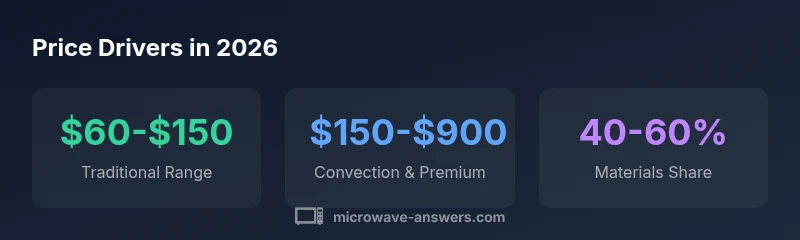
According to Microwave Answers, 2026 pricing for microwaves mirrors a complex market dynamic where multiple layers contribute to the final sticker price. Global supply chains continue to react to cycles of demand and disruption, which can push component costs upward even when consumer demand remains steady. Basic models capture most of the essential reheating and timer features, but premium sections of the market—such as convection-capable units and smart microwaves—carry premiums tied to manufacturing complexity and certifications. Brand positioning also matters: manufacturers that emphasize reliability, warranty coverage, and after-sales service tend to price higher, reflecting not just product capability but confidence in performance over time. In this environment, buyers should compare not only sticker price but total ownership costs, including energy efficiency and potential maintenance.
- The magnetron, interior coatings, and door mechanisms are end-to-end cost drivers that influence life-cycle pricing. When these parts improve in durability or performance, the upfront price often rises to reflect longer expected lifespans.
- Tariffs and freight costs can translate into price shifts across regions, particularly for models sourced internationally. Consumers notice price fluctuations when supply chain constraints intensify.
- Demand for compact, feature-rich appliances that also perform well in small kitchens means buyers are sometimes trading off simplicity for technology, which can escalate pricing bands.
From a consumer perspective, the primary takeaway is to weigh how often you’ll use convection or smart features versus pure reheating functionality. The Microwave Answers team believes that knowing the value contributed by each feature helps determine whether a higher upfront cost yields long-term savings in energy, time, and results.
},
Material and Component Costs
Material and component costs are a major portion of any microwave’s price, and recent shifts have amplified their impact. The magnetron, a core power source, has experienced price and supply volatility that feeds through to the final product. Interior cavity materials, ceramic enamel coatings, and door assemblies must endure repeated heating cycles and frequent opening, so manufacturers select higher-grade components that resist wear and staining. For more affordable units, economies of scale and simpler interiors keep costs down; for premium units, you’ll see reinforced frames, better heat distribution, and tougher plastics—all of which add to the bottom line. Suppliers also factor in the price of sensors and control boards in smart-feature models, which can significantly tilt the price upward as software updates and connectivity become selling points.
- For basic models, cost drivers focus on simple heating mechanics and basic timers.
- For mid-range to premium units, expect upgraded interiors, better insulation, and stronger hinges that improve durability and longevity.
- Energy-efficient design choices, such as improved insulation and low-standby-power electronics, can raise upfront costs while lowering long-term operating costs.
These material choices create a spectrum of price points that reflect both performance expectations and anticipated wear over time. The Microwave Answers analysis highlights that material quality remains a straightforward predictor of price, especially when you consider the long-term value of durability and reliability.
Features Driving Price Premium
As models diverge from basic reheating into true cooking platforms, feature differentiation becomes the primary driver of price. Convection-capable microwaves, which can bake and brown foods like a traditional oven, command higher price points due to increased manufacturing complexity and thermal performance requirements. Inverter technology, which smooths power delivery for more even heating, adds to both performance and cost, even in mid-range units. Sensors that automatically adjust time and power based on food type contribute to accuracy and convenience, but they also require more advanced hardware and software.
Smart connectivity—apps, voice control, and integration with home ecosystems—constitutes a premium tier. Support costs, firmware updates, and potential data-security considerations are included in the price. Finally, control interfaces that balance tactile feedback with digital precision (e.g., touchscreens with haptic feedback) add to production costs but enhance user experience. Buyers should evaluate whether they truly need convection, inverter, or smart features and check for energy ratings and warranty coverage to determine if the price premium justifies the extra cost.
- Convection and browning capabilities add culinary versatility but require more robust heating elements and tougher interiors.
- Inverter technology improves heat distribution and reduces cooking variance, with higher costs that show up in mid- to high-range models.
- Sensor-driven cooking reduces guesswork, yielding better results but adding hardware and software complexity.
- Smart features offer convenience and monitoring but come with ongoing software support costs that are reflected in price.
The takeaway is to match feature sets to your cooking habits. If you rarely use convection or sensors, a simpler model can provide better value. If you cook a lot and value consistent results, investing in premium features may pay off in time savings and satisfaction.
Manufacturing, Labor, and Efficiency
Price pressures also emanate from production and labor economics. Modern microwave manufacturing benefits from automation and scale, which reduce unit costs for high-volume lines but can increase upfront capital expenses for newer production lines designed to support advanced features. Labor costs—whether in assembly, quality assurance, or packaging—rise in regions with higher wage standards, and these costs are frequently rolled into the price of the final product. Energy efficiency regulations and incentives encourage manufacturers to invest in better insulation, standby power optimization, and efficient magnetron control, which can increase initial costs but lower operating expenses for the consumer over the appliance’s lifetime.
- Automated assembly lines reduce labor variability and improve consistency, but require capital investment that is reflected in product pricing.
- Quality control and safety testing add to manufacturing overhead but help minimize returns and warranty costs.
- Energy-efficient designs incur upfront design and material costs but lead to long-term savings for users, a factor many price-conscious buyers weigh.
Consumers who buy frequently from brands with strong post-sale support often see higher purchase prices, but the total cost of ownership (TCO) may be lower due to reduced maintenance and fewer replacements. Microwave Answers analysts note that, in 2026, the most price-stable segments are those where automated production and predictable demand allow consistent pricing, while niche features push prices higher in smaller runs.
- When evaluating price, consider not just the sticker but the expected lifespan, energy use, and service quality. A premium unit with long warranty coverage and robust parts may deliver value over a longer period than a cheaper alternative with higher maintenance needs.
Distribution, Retail, and Warranty Elasticity
Retail margins and channel strategies play a notable role in final prices. In many markets, retailers leverage promotional calendars, bundle deals, and extended warranties to differentiate products and drive sales, often pricing higher upfront to accommodate generous discounting later. Shipping, handling, and warranty logistics add costs that can escalate for premium or bulky units, particularly when models include heavier door assemblies or larger interior cavities. Manufacturer-direct sales or online-only channels may offer price stabilization through reduced intermediary costs, but these paths can shift the value proposition toward service and return policies.
Warranty length and coverage influence consumer perception of value. Longer warranties, faster repair access, and readily available replacement parts reduce post-purchase risk and can justify higher upfront costs. Conversely, if service networks are thin or replacement parts are scarce, price sensitivity increases as buyers fear higher future outlays. The 2026 data from Microwave Answers suggests that price premium is correlated with warranty depth and service quality in most major markets. Buyers should review warranty terms, service eligibility, and local repair costs before choosing based on price alone.
- Price stability is more likely in brands with strong supply relationships, robust logistics, and transparent pricing.
- Bundled warranties and service options can either raise upfront price or save money over time, depending on coverage depth.
- Retail promotions can mask true cost, so read the fine print on discounts and added fees.
Understanding these distribution dynamics helps buyers distinguish between genuine value and opportunistic pricing tactics. When in doubt, compare two models side-by-side over a typical 5-year period to estimate true ownership costs.
Price Truth: Value vs. Cost
The final truth is that price reflects a bundle of capability, reliability, and expected longevity. The most expensive microwaves often justify their cost through durable construction, energy savings, superior cooking performance, and ecosystem compatibility. For many buyers, the sweet spot lies in balancing feature needs with budget, ensuring you don’t pay a premium for capabilities you’ll seldom use. Measuring value requires considering how often you cook, meal variety, kitchen space, and tolerance for potential maintenance. The Microwave Answers team emphasizes evaluating both upfront price and total ownership costs, including energy use, potential repairs, and resale value. In short, “expensive” can translate to “worth it” when the features align with real cooking goals and the long-term cost of ownership remains lower than a cheaper alternative over the appliance’s lifespan.
- Compare models by a core set of features you’ll actually use rather than chasing every trend.
- Check energy efficiency ratings and standby power to estimate long-term savings.
- Factor in warranty terms and service quality as part of the total cost of ownership.
This balanced approach helps buyers avoid overpaying for bells and whistles while still securing a microwave that meets household needs. The final decision should align with cooking habits, space constraints, and budget, supported by data-driven evaluation from sources like Microwave Answers.