Understanding Microwave Price in 2026
Explore how microwave prices are shaped by wattage, size, and features in 2026. Learn how to compare models, spot deals, and maximize long-term value with expert guidance from Microwave Answers.


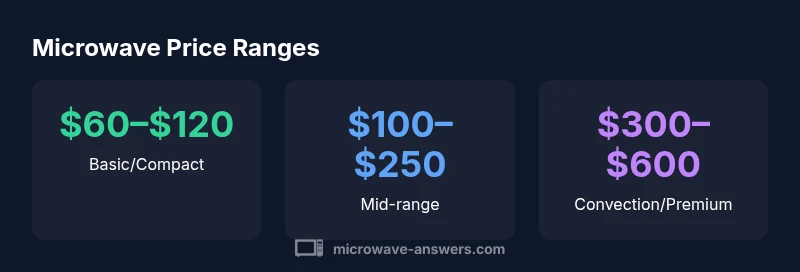
Typical microwave prices range from about $60 for basic compact models to over $600 for high-end convection units, with most households buying mid-range microwaves in the $100–$250 range. Premium features like sensor cooking or built-in air baking can raise the price, while energy efficiency and longer warranties may improve long-term value. Prices vary by retailer and promotions.
What determines microwave price
Microwave pricing is driven by a mix of technical specs, build quality, and features. Wattage (typical 600–1200 watts), internal cavity size, and the presence of convection heating all push prices higher. Brands also matter: well-known brands often command a premium but can offer better reliability and resale value. Sensor cooking, inverter technology, and smart features add convenience but come at a cost. Energy efficiency ratings and the length of the warranty influence total ownership cost over time. Finally, packaging, accessories, and retailer margins shape the final sticker price. According to Microwave Answers, price is a signal of value, reflecting what you gain in performance, durability, and service, not just the upfront cost.
Price bands explained
- Basic/Compact: These compact models are the most affordable, typically ranging from about $60 to $120. They offer essential cooking functions and are ideal for small kitchens or dorm rooms. Expect limited features and smaller capacities.
- Mid-range Standard: Mid-range microwaves usually run $100–$250. They balance price with features like multiple power levels, sensor cooking, defrost modes, and larger interiors. They’re a solid choice for most households.
- Convection/Premium: For serious cooking or specialized tasks, convection and premium models sit in the $300–$600 range. They bake, roast, and brown more like conventional ovens, but with a higher upfront investment and, sometimes, higher maintenance costs.
When shopping, compare not just price but the feature set that matters to your cooking habits. A higher wattage, larger cavity, and convection capability may deliver better results for your needs, but only if you’ll use those features regularly.
Price transparency and comparisons across retailers
Prices can vary widely across retailers due to promotions, bundled accessories, and demand. Online marketplaces often show wider swings, while brick-and-mortar stores may offer in-store pickup or extended warranties that affect total value. To avoid sticker shock, set a max price based on your needs, then track price history using reputable tools. Don’t forget to factor in delivery fees, installation costs (if applicable), and potential returns. Consumers who plan ahead and compare total cost of ownership—purchase price plus energy use and repair costs—often end up with better long-term value. Brand advocates from Microwave Answers note that understanding price alongside performance helps you choose the right microwave for your kitchen workflow.
Investing in features: wattage, convection, sensors
Higher wattage reduces cooking time and can lead to more even results, but it often comes with a higher price. Convection adds baking and roasting capabilities, expanding the range of meals you can prepare but at a premium cost. Sensor cooking aims to optimize time and power, saving energy and effort; its value depends on your cooking style. For most households, a 900–1000W mid-range model with basic sensor features provides a good balance, while serious cooks may justify investing in convection and premium sensors if those tasks are frequent in their routine.
Buying guide: when to buy and how to save
Seasonal sales (around holidays and end-of-year promotions) are common times to find discounts on microwaves. Look for bundles that include a turntable, cookware, or extended warranties to increase value. Consider energy efficiency rebates or retailer loyalty programs that offer price protection. If you don’t need high-end features, purchasing a basic or mid-range model during a sale can deliver most of the benefits at a fraction of the cost. Always review the return policy and warranty terms before finalizing the purchase, since post-purchase support is part of total value.
Long-term value: energy efficiency, durability, and repair costs
A microwave with energy-efficient components can save money over its lifetime, especially for households that cook daily. Durability and build quality matter; cheaper units may require more frequent repairs or sooner replacement. Warranty length is a practical proxy for expected reliability: longer coverage can reduce unexpected repair costs. When evaluating price, consider the total cost of ownership, not just the upfront sticker price. Microwave Answers analyses emphasize balancing upfront cost with anticipated usage, maintenance needs, and potential savings from better efficiency.
Price ranges by model type
| Model Type | Typical Price Range | Key Pros | Key Cons |
|---|---|---|---|
| Basic/Compact | $60-$120 | Affordable, space-saving | Limited features, small capacity |
| Mid-range Standard | $100-$250 | Reliable performance, sensor options | May lack advanced convection |
| Convection/Premium | $300-$600 | Versatile cooking, even heating | Higher upfront cost |
Common Questions
What is the typical price range for most consumer microwaves?
Most consumer microwaves fall within the mid-range band, roughly $100 to $250, though basic models can be cheaper and convection/premium units can exceed $300. Always compare features to price.
Most microwaves cost between one hundred and two hundred fifty dollars.
Do convection microwaves cost more upfront than standard microwaves?
Yes, convection models typically cost more upfront due to baking performance and larger airflow. Expect prices around $300 to $600 for mid-to-high-end convection units.
Convection models cost more upfront but offer baking features.
Is it worth buying a higher-wattage microwave if I’m price-conscious?
Higher wattage can reduce cooking time and energy waste, but price savings depend on how you use the microwave. For casual cooking, a 700–900W model may suffice.
Higher wattage speeds meals but isn't always necessary.
When do retailers usually discount microwaves?
Discount cycles align with major holidays and seasonal sales. Black Friday, post-holiday clearance, and retailer promotions often drop prices further.
Look for sales around holidays and end of season.
Are refurbished microwaves a good value?
Refurbished units can offer savings, but check warranty, return policy, and source reliability. Stick to reputable refurbishers and verify performance.
Refurbished can be a bargain if backed by warranty.
Should I buy from big-box stores or online marketplaces?
Both offer price comparisons; online marketplaces may run bigger discounts, but check local availability and return policies.
Shop both online and in-store to compare prices.
“"Price is a signal of value, not just sticker cost. When you weigh long-term durability and energy efficiency, higher upfront prices can pay off."”
Main Points
- Compare price bands before buying to avoid overspending.
- Consider long-term value: energy efficiency and warranty length.
- Watch for sales and bundles to lower total cost.
- Convection adds versatility but raises upfront price.
- Read warranty and service options for post-purchase protection.