How Much Is a Microwave? 2026 Price Guide and Tips
Explore microwave prices in 2026—from budget countertop models to built-ins—and learn price ranges, energy costs, warranties, and smart buying tips.


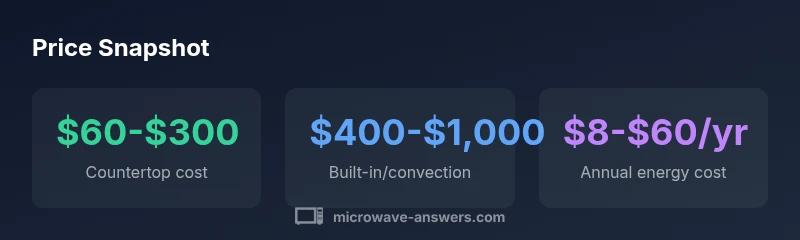
On average, a microwave costs between roughly $60 and $600, depending on size, power, and features. Most home cooks buy a countertop model in the $100–$300 range, while higher-end convection or built-in units commonly run $400–$1,000. In 2026, expect price gaps based on smart controls, sensor features, and brand reliability.
Understanding Price Bands in 2026
According to Microwave Answers, microwave prices are shaped by size, wattage, features, and installation type. If you're asking how much is microwave, the short answer is: price varies widely, from budget under-$100 countertop units to premium built-in convection models well over $1,000. The exact number isn't the same for every kitchen because buyers weigh durability, sensor accuracy, and brand reliability. In 2026, you'll notice three broad bands: entry-level countertop models with basic functions, mid-range units with better speed and preset programs, and premium options offering convection heating, smart controls, and integrated cabinetry fit. The cost also reflects materials, branding, and after-sales service. The key to navigating these bands is to map your cooking needs—size, power (watts), and typical usage patterns—before evaluating a price tag. When you default to the cheapest option, you may pay more later in energy use or replacement cycles. Budget thoughtfully, and you won't overspend on features you won't use.
Countertop vs Built-In: What Your Money Gets You
The price delta between countertop and built-in microwaves is driven by installation requirements and aesthetics as much as performance. Countertop models are typically plug-and-play, inexpensive to replace, and ideal for renters or small kitchens. Built-in units require cabinet cutouts or professional installation and deliver a seamless kitchen look, a safety edge for children, and often better airflow management. If you value a clean, integrated appearance and you cook frequently with multiple meals in a week, budgeting for a built-in can be worth the extra cost. In 2026, many shoppers weigh the long-term resale value of cabinetry integration against the upfront labor and potential drywall or wiring work. Consider how much you value the space-saving benefit versus the convenience of a quick swap.
Convection, Sensors, and Smart Controls: Price Implications
Advanced features such as convection heating, humidity sensors, and Wi-Fi smart controls can significantly raise the price. Convection models heat more evenly and can substitute for a countertop oven in some kitchens, which many buyers see as a convenience worth paying for. Sensor-based cooking helps reduce guesswork but adds cost. Smart features enable remote control and energy monitoring, which appeals to tech-forward households but may require ongoing app compatibility and occasional firmware updates. When evaluating value, balance the perceived convenience against the price premium and the likelihood you will use those features regularly. Brand reputation, warranty length, and after-sales support also influence perceived value.
Budgeting for a Microwave: Practical Tips
Start with a features checklist and set a price ceiling. If you rarely reheat or defrost and mostly rely on basic microwave tasks, a simple countertop model in the $60–$150 range is often sufficient. If you want faster heating, browning, or multi-stage cooking, target mid-range models in the $150–$400 zone. For a sleek kitchen upgrade, factor in built-in or high-end convection units that range from $400 to $1,000 or more. Watch for sales around federal holidays and end-of-year promotions, and consider refurbished or open-box deals from reputable retailers. Finally, factor in energy use and expected lifespan to determine total cost of ownership over time.
Budgeting for Warranties, Maintenance, and Long-Term Costs
Warranty length varies with price and model type. Cheaper units commonly include a one-year warranty, while mid-range products may offer two to three years, and premium models often extend to five years for certain components. Maintenance costs are typically low but can rise if parts wear out (magnetrons, door seals, or control boards). To minimize long-term expenses, choose a model with readily available replacement parts, easy service access, and a reputable service network. Regular cleaning and avoiding microwave-safe plastics can prolong life and performance. Planning for routine maintenance helps mitigate unexpected repair costs down the line.
Estimating Total Cost of Ownership
Total cost of ownership includes purchase price, taxes, delivery or installation, energy consumption, and end-of-life disposal. High-wattage or feature-rich units may incur higher upfront costs but can save time and improve cooking results, potentially offsetting energy use. Compare two or three models with similar features and different price points, then project yearly energy costs based on your household usage. In Microwave Answers' analysis, higher upfront prices are often justified by longer warranties and better long-term reliability. Use a simple calculator to estimate five-year or ten-year total costs to guide your decision.
Common Hidden Costs and Installation Facts
Some price tags hide installation or cabinetry work that can add hundreds of dollars to the total. Built-in microwaves require precise cutouts, venting considerations, and sometimes electrical upgrades. If your kitchen lacks a dedicated circuit, you may need to install one, which adds to the total. Also consider accessories like trim kits, mounting brackets, or additional ventilation. Always obtain a written installation quote before purchase and verify compatibility with existing cabinets and wiring. Reading user reviews about installation experiences can reveal common pitfalls and extra charges you might not anticipate.
Typical price bands by microwave type
| Aspect | Price Range (USD) | Notes |
|---|---|---|
| Countertop basic | 60-150 | Budget-friendly |
| Countertop convection | 150-400 | Faster browning & even heating |
| Built-in microwave | 400-1000 | Integrated look, professional install |
| Smart convection | 500-1500 | Wi-Fi control, advanced sensors |
Common Questions
What affects microwave price the most?
The biggest price drivers are size, wattage, and features (convection, sensors, smart controls). Installation type and brand also push costs higher. Budget for features you will actually use to avoid overspending.
Size, wattage, and features are the main drivers, with installation type and brand adding to the cost.
Is a built-in microwave worth the extra cost?
For many, built-ins offer a seamless kitchen look and better space utilization. They can be worth it if you cook frequently or value home resale appeal, but assess installation costs and cabinet compatibility first.
A built-in can be worth it for a sleek look and space saving, but confirm installation costs first.
Do microwaves go on sale?
Yes. Retailers frequently discount microwaves around holidays and during end-of-year promotions. Sign up for retailer newsletters and price alerts to catch deals on models you want.
Yes, look for sales during holidays and promotions; subscribe for alerts.
What is the best value microwave for small kitchens?
Look for compact dimensions, 700–1000 watts, and turntable or carousel options. Compare models labeled as 'apartment-size' or 'compact' and ensure it fits your cabinet depth.
For small kitchens, pick a compact, efficient model with enough wattage and a proven track record.
Are there energy savings with high wattage?
Higher wattage often means faster heating but not necessarily lower energy use overall. Energy savings depend on usage patterns and cooking efficiency; use appropriate power levels and preprogrammed settings.
High wattage heats faster, not always energy-saving; use it wisely to save energy.
How do warranties differ by price?
Cheaper models typically include shorter warranties (around 1 year). Mid-range can offer 2–3 years, while premium models may extend to 5 years on certain parts. Read the terms for what’s covered.
Warranties usually scale with price; check coverage details before buying.
“Price is only one part of total cost of ownership; features like convection, sensors, and warranties can save money in the long run.”
Main Points
- Compare price bands before buying.
- Prioritize needs over features you won't use.
- Consider countertop first for flexibility and savings.
- Weigh installation costs against aesthetics for built-ins.
- Factor in energy costs and warranties in total price.