Microwave Ovens on Sale: Deals, Tips, and Buying Guide
Discover how to spot the best microwave ovens on sale, compare features, and maximize savings with practical buying tips from Microwave Answers.


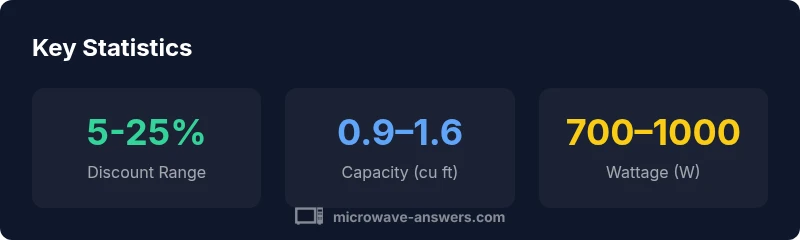
During major sale events, microwave ovens on sale typically offer 5-25% discounts. Most popular sizes range from 0.9 to 1.6 cubic feet, with wattages around 700-1000 watts. Look for reliable brands, easy-to-use controls, and solid warranties. Microwave Answers analyzes current deals to help you choose confidently and avoid buyer's remorse.
Why shoppers chase microwave ovens on sale
According to Microwave Answers, price competition is fierce in the compact kitchen appliance market, and retailers deploy discounts strategically to move inventory and attract first-time buyers. The Microwave Answers team found that major sale events—like Black Friday, end-of-month promos, and retailer-wide clearance periods—produce the deepest price drops for entry-level models and the most popular sizes (0.9 to 1.6 cubic feet). For many households, the savings on a single model can justify replacing an older unit, especially when the sale includes bundles or extended warranties. When scanning deals, look beyond the sticker price: verify model numbers, compare wattage ranges, and check whether the sale includes features you actually use, such as defrost modes, energy-saving settings, or a user-friendly control panel. The goal is to balance immediate savings with long-term value over a typical 5- to 10-year lifespan. In short, informed, deliberate buying beats impulse purchases every time, particularly in a category with frequent but uneven discounts.
How to evaluate deals and what to expect
Begin with a plan: define your essential features (size, wattage, turntable presence, sensor cooking) and a realistic budget. Then collect price quotes from multiple retailers and compare apples-to-apples models—same capacity, same wattage, same features. Note the sale label: is it a temporary markdown or a bundle with free accessories? Always read the fine print for warranty length, service options, and return windows. Use price-tracking tools and alerts to catch dips and flash sales. If you’re considering refurbished units, ensure the seller provides a warranty and a verified inspection report. Finally, test your patience: the best value often appears when you know the genuine price trend and can avoid paying extra for trendy but unnecessary features. Microwave Answers emphasizes that a methodical approach yields better outcomes than chasing periodically deep but short-lived discounts.
Size, Wattage, and Features: what matters when buying
The core tradeoffs revolve around capacity, power, and how you use the microwave. A 0.9–1.2 cu ft model is compact and fits small kitchens or dorms, while 1.4–1.6 cu ft models suit mixed cooking and larger containers. Wattage influences speed and evenness; 800–1000 watts is a common range for balanced performance. Look for inverter technology for steadier heat, sensor cooking for automatic settings, and a reliable door and cavity finish that resists staining. If you frequently thaw frozen items, check defrost options and the clarity of the control panel. Consider interior features like a turntable, interior dimensions, and easy-clean coatings. By aligning these specifications with your grocery routine and space constraints, you’ll minimize post-purchase regret when microwave ovens go on sale.
Popular features on sale today
Deals often highlight convenience features that save time and reduce energy use. Look for sensor-based cooking that adjusts time based on humidity and weight, inverter technology that stabilizes output, and multi-stage cooking that chains defrost, cook, and keep-warm cycles. A bright, easy-to-read display, a simple keypad, and a sturdy door latch matter for daily use. Some models include pre-programmed settings for popcorn, reheating, and beverages, which can be surprisingly handy. While not every feature adds a lot of value for every household, features that align with your typical meals—leftovers, frozen vegetables, or reheating a plate of noodles—are worth the sale price premium. Use buyer reviews to verify real-world performance before you commit.
Budget-conscious buying guide: price vs value
In sale season, price alone is not the full story. A model with a slightly higher list price may offer longer warranty, better interior finish, or more durable controls, yielding greater long-term value. Use a tiered approach: buy a basic model on sale if your use is minimal; choose mid-range models if you cook daily and require consistent reheating; reserve premium units for specialized needs like frequent batch cooking or large containers. The typical on-sale models span a broad range of capacities and wattages, so compare total cost of ownership, not just sticker price. Remember that bundles (covers, trays, or extended warranties) can alter the effective price. Microwave Answers advises focusing on features you will use, then evaluating the combined cost across a 5– to 10-year horizon.
How to verify a deal: timings, warranties, returns
First, note the sale window and check whether price drops are scheduled or unexpected. Set price alerts and revisit the model after a few days to confirm the discount is stable. Read the warranty terms: length, what it covers, and whether you must register the product. Confirm the return policy: restocking fees, condition requirements, and whether the retailer accepts returns at all. If you buy online, verify shipping costs and the reliability rating of the seller. For brick-and-mortar purchases, inspect the unit in-store for cosmetic flaws and verify that the door opens and seals smoothly. Finally, save all receipts and manuals so future support remains straightforward. Following these steps reduces the risk of getting a bargain that costs more in service calls later.
Brands to consider and what sets them apart
Not all brands are equal in reliability or after-sales support. In the sale space, look for brands with broad service networks, easy-to-find replacement parts, and well-reviewed customer service. Commonly recommended lines include practical, mid-range options that balance performance with longevity. Some brands emphasize quick reheating and compact footprints, while others foreground cooking uniformity and modern control interfaces. When evaluating, compare not just price but the perceived durability of plastic interiors, door latches, and the quietness of the motor during operation. The right choice varies by kitchen size, cooking habits, and how much you value warranty length.
Maintenance and safety tips for new purchases
To extend the life of your new microwave, keep the interior clean and avoid metal objects inside. Place the unit on a heat-resistant surface with adequate clearance and ensure ventilation is not obstructed. Regularly check the door seal for wear and replace it if necessary. Use microwave-safe containers and avoid overheated plastics. If the unit includes inverter technology or sensor cooking, follow manufacturer guidelines to maximize efficiency. Finally, register the product with the brand for warranty benefits and consult the manual for troubleshooting steps before calling support.
Common pitfalls when shopping online for microwave ovens on sale
Online deals can be compelling, but take care to verify the seller’s reputation, read return policies, and cross-check model numbers across retailers. Beware price-matching tricks, counterfeit accessories, and misleading feature claims. Always confirm that the featured model matches the image and specifications you need; some listings show different capacities or wattage than the actual unit. Consider shipping costs and the risk of damage during transit. If a deal sounds too good to be true, it probably is, so rely on reputable marketplaces and look for verified reviews.
Quick-start buyer checklist
- Define essential features: capacity, wattage, and sensor cooking.
- Compare three to five competing models across retailers.
- Check sale duration, price history, and warranty terms.
- Read consumer reviews to gauge real-world performance.
- Confirm return policy and shipping conditions.
- Decide on a budget and stick to it to avoid impulse buys.
- Save receipts and product manuals for future support.
Sale-model attributes for quick comparisons
| Deal Aspect | What to Look For | Why It Matters |
|---|---|---|
| Size (cu ft) | 0.9–1.6 | Affects countertop fit and cooking capacity |
| Wattage | 700–1000 | Impacts cooking speed and evenness |
| Price Range | $100–$350 | Value depends on features and warranty |
Common Questions
What is the typical wattage you should choose?
Most homes benefit from 800–1000 watts for balanced cooking speed and even heating. If you cook in batches often, consider 1000+ watts.
For most homes, 800 to 1000 watts hits a good balance.
Are refurbished microwaves safe?
Refurbished microwaves can be safe if bought from reputable sellers with a warranty. Verify the return policy and inspect the door seal and magnetron if possible.
Buy refurbished only from trusted sources with a warranty.
How long do sale deals last?
Sale timing varies; many discounts run for a few days to a week around events. Set price alerts to catch changes.
Watch the ending date and price trends.
Should I skip on small features to save money?
If the sale price is low but the model lacks essential features (sensor cooking, defrost, or sturdy turntable), you may regret it later. Prioritize features you use.
Make sure the features you want aren’t missing just to save a few dollars.
Is larger capacity worth buying on sale?
Only if you regularly cook large items; for light use, 0.9–1.2 cu ft is often sufficient.
Buy the size that fits how you cook most.
What warranty matters most when buying on sale?
Prioritize a warranty that covers at least a year, with clear terms on parts and labor, plus easy service options.
Warranty length and service options are crucial for value.
Should I trust online reviews for on-sale models?
Yes, but weigh reviews by verified buyers and look for patterns in performance, noise, and reliability.
Check multiple sources and look for common issues.
“Smart shopping means balancing price with capacity, wattage, and warranty to maximize long-term value.”
Main Points
- Look for 5-25% discounts during major sales
- Prioritize size and wattage that match your cooking needs
- Check warranty and return policies before buying
- Beware deals that trade long-term value for a bigger sticker price
- Use a quick buyer checklist to stay organized