Discount Microwave Ovens: Smart Deals & Buying Guide
Explore practical strategies to find genuine discounts on microwave ovens, compare features, energy use, warranties, and safe buying practices for home cooks and homeowners.


Discount microwave ovens offer substantial value when you focus on core capabilities like wattage, inverter technology, and warranty. Typical discounted models span a broad price range and feature set, from compact countertop units to convection-enabled ovens. Buying smart means prioritizing safety, reputable retailers, and clear return policies to maximize long-term satisfaction. According to Microwave Answers analysis, deals usually present price breaks during major sale events and seasonal promotions across standard models.
What discount microwave ovens really mean
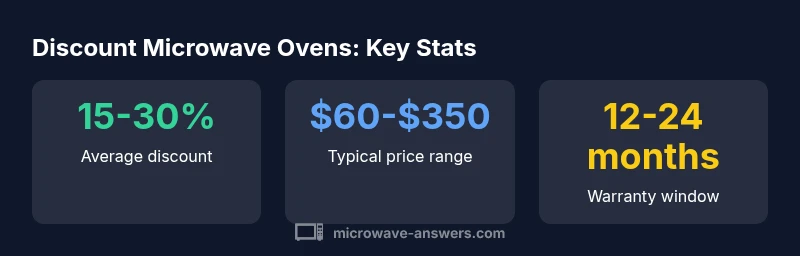
Discount microwave ovens are not a single category; they are price bands across standard countertop units, compact models, and convection-types sold at lower prices. According to Microwave Answers analysis, discounted models typically range from about $60 to $350 depending on capacity and features, with newer inverter or convection technology sometimes commanding higher sale prices. This makes the category accessible for home cooks on a budget, but it also creates a marketplace where quality and safety must be evaluated against price. In practice, a discount can reflect older stock, factory seconds, or simply a seasonal promotion. The key is to identify which features you actually need—such as wattage in the 800–1200W range for quick reheats, a reliable turntable, auto-cook menus, and a straightforward control panel. Be mindful that deeper discounts can accompany compromises in build quality or warranty; never trade safety for the lowest price. For many buyers, the right move is to anchor decisions on core performance and warranty, then evaluate price within those constraints.
Where deals come from and how to spot quality
Deals on discount microwave ovens come from several channels: retailer promotions, clearance events, refurbished or open-box inventory, and seasonal bundles. To spot quality amid the savings, start with trusted retailers that publish transparent product specifications and return policies. Look for models with inverter technology, which delivers steady power and can improve cooking evenness, and check wattage ratings (usually 800–1200W for standard models). Read independent reviews and verify the model’s safety certifications (UL or equivalent in your region). Beware of rebranded or low-watt units that promise too much at too little cost, especially if the listing lacks clear photos or a manufacturer’s model number. A quick cross-check against the manufacturer’s site can reveal discrepancies in features or dimensions. Finally, compare total cost of ownership, including electricity usage estimates, to ensure the discount actually saves money over time.
Key features to check on discounted units
When evaluating discount microwave ovens, prioritize a few non-negotiable features that typically influence long-term satisfaction. Wattage determines cooking speed; inverter-rated models often perform more evenly and efficiently than traditional magnetron-only units. Convection capability adds browning and reheating versatility, but it also raises price. Interior capacity and plate size matter for larger meals and cookware. Look for easy-to-clean interiors, a turntable or flatbed option, sensor-cook menus, and simple, intuitive controls. Energy efficiency matters too: models with modern control boards consume less standby power and exhibit better efficiency ratings. Always confirm the presence of a reliable door latch and interior light. Finally, verify warranty length and coverage scope—discounts are meaningful only if you can access service if something goes wrong.
Warranty and safety considerations on discounted buys
Discounted does not have to mean unsafe. Reputable retailers typically include standard warranties that cover parts and labor for 12–24 months. If you’re considering refurbished or open-box units, ensure they come with a minimum warranty and a clear return policy. Safety certifications (UL or equivalent) should be visible in the listing, and the unit should have basic safety features like door interlocks and overheat protection. Avoid deals with vague listings or unusually lax safety notes. For health and safety, ensure the interior coating is food-safe and that cleaning instructions do not require abrasive tools that could damage the surface. If you rely on quick fixes or DIY parts, you risk voiding warranties and introducing hazards. The goal with discount microwave ovens is to balance a favorable price with solid safety, reliable function, and accessible service.
Practical buying workflow for price-conscious shoppers
A structured workflow helps you maximize value when chasing discount microwave ovens. Start by defining needs: countertop vs. over-the-range, basic reheating vs. baking capability, and preferred capacity. Set a budget and identify must-have features (inverter, convection, sensor cooking). Collect three to five model candidates, then compare wattage, size, and interior dimensions against your space. Read a handful of user reviews focusing on reliability and ease of use. Check warranty terms and the retailer’s return policy. Finally, monitor reputable sale events and price history for your chosen model. If a deal pops up, confirm the model number matches the manufacturer’s listing and that included accessories are complete. This disciplined approach reduces the risk of buyer’s remorse and ensures the discount delivers real value.
Care, warranty, and after-sales service on discounted units
Long-term value rests on maintenance and service. Cleaning with non-abrasive cleaners, avoiding harsh metal scrubbers, and keeping vents clear helps prevent performance decline. For discounted units, double-check that the warranty process remains simple and accessible to you; note the service network and whether you must ship the unit for repairs. Keep a copy of the purchase receipt, model number, and serial number in a safe place. If you encounter performance issues early, report them within the policy window and document symptoms with dates and photos. Some retailers offer extended protection plans for an added cost—this can be worthwhile when the base discount brings the unit’s price within reach of a more capable model. Treat discount deals as a way to secure value, not a bargain that sacrifices después safety, service, or long-term reliability.
How to negotiate and stack deals without compromising safety
Negotiating discount microwave oven prices requires preparation. Check if an open-box unit is eligible for an additional percentage off, and ask about price-matching policies across retailers. Consider bundling with extended warranty coverage or complimentary accessories to maximize value without compromising quality. Always verify that the negotiated price still includes manufacturer safety certifications and warranty terms. Avoid pressure to buy from a seller with unclear product history or limited return options. If you do encounter a great price on a model with questionable provenance, step back and compare it to a higher-priced but well-reviewed alternative. The aim is to combine savings with a reliable, safe appliance that will serve you for years rather than a fleeting deal that may stall after purchase.
Quick post-purchase tips to ensure safe use and energy savings
After purchase, prioritize a proper setup: place the unit on a stable, heat-resistant surface, ensure adequate clearance around vent openings, and register for the warranty if required. Run a basic test with water to verify even heating and listen for unusual noises during operation. Use optimized presets sparingly and rely on manual settings when browning or crisping is needed. For energy savings, avoid running heavy cycles on small units; use the right wattage setting for the dish and pre-heat only when required. Keep the interior clean to maintain consistent performance, and schedule periodic inspections if your usage patterns are heavy. With careful selection and responsible use, discount microwave ovens can deliver dependable results without compromising safety or reliability.
Typical price and trade-offs for common discount microwave oven types
| Model Type | Typical Price Range | Pros & Cons |
|---|---|---|
| Countertop standard | $60-$120 | Pros: compact, affordable; Cons: basic features |
| Convection microwave | $180-$350 | Pros: browning, faster cooking; Cons: higher cost |
| Over-the-range | $200-$350 | Pros: space-saving; Cons: installation required |
Common Questions
Are discount microwave ovens reliable over the long term?
Discounted models can be reliable if you choose from reputable retailers and select units with inverter technology and a solid warranty. Read multiple reviews and verify certifications before purchasing.
Discounted models can be reliable if you stick to well-known retailers, inverter tech, and a solid warranty. Check reviews and certifications before you buy.
Do discount microwaves come with a full warranty?
Most reputable retailers include a standard warranty with discounted microwaves, typically 12–24 months. Verify what is covered and whether extended plans are available.
Most deals come with a standard warranty, but always confirm the coverage period and what’s included.
Are refurbished discount microwaves safe to use?
Refurbished units can be safe if sold by reputable sellers with clear documentation and a warranty. Avoid buying from sellers with vague listings or missing model numbers.
Refurbished units can be safe if bought from reputable sellers with a warranty and clear documentation.
What should I check before buying a discounted microwave?
Check wattage, inverter status, size compatibility, interior capacity, and safety certifications. Confirm return policy and warranty details before finalizing.
Check wattage, inverter, size, interior capacity, and safety certifications, then review return policies.
How can I compare discount deals effectively?
Compare model specs, warranty terms, energy efficiency, and total cost of ownership. Use price history tools and read user reviews to separate hype from value.
Compare specs, warranties, and energy use. Look at reviews and price history to spot real value.
Are convection or inverter models worth it on sale?
Convection and inverter models offer more versatility but cost more. On sale, weigh the added utility against the price premium and your cooking needs.
Convection and inverter models add features worth it if your cooking needs justify the extra cost.
“Discount microwave ovens can deliver excellent value, but the key is choosing models with solid warranties, reliable features, and good reviews.”
Main Points
- Set a realistic budget before browsing.
- Prioritize wattage and inverter technology for even cooking.
- Check warranty length and return policies before purchase.
- Compare total cost, including energy usage and accessories.
- Buy from reputable retailers to avoid unreliable discounts.