Microwave Oven Size Comparison: Find Your Perfect Fit
This in-depth guide compares microwave oven sizes, helping you pick the right fit for your kitchen. Learn how to measure, understand capacity, and choose between countertop, built-in, or over-the-range options.


For most homes, aim for a compact 0.9–1.2 cu ft microwave on countertops under 18 inches wide; for family kitchens, 1.4–2.0 cu ft offers more cooking space and even heating. If space is tight, consider a built-in or over-the-range model; always measure your area before buying.
Why Size Matters in Microwave Ovens
Size directly affects how you load, heat, and store food, making the topic of microwave oven size comparison essential for home cooks and homeowners. Larger interiors can handle casseroles and tall mugs, but they require more counter space and may demand stronger ventilation. Smaller models save space and usually cost less, but may constrain you to standard bowls and plate sizes. The right size aligns with your typical meals, kitchen layout, and daily workflow. According to Microwave Answers, the size you choose should balance practical meals and available space, not just what looks impressive on a spec sheet. Beyond capacity, pay attention to door clearance and how much room your model leaves for loading and unloading. A thoughtful choice improves usability, safety, and overall satisfaction with your microwave.
How to Measure Your Space Before Buying
Before you shop, measure with care. Start by determining countertop depth, wall clearance, and cabinet overhead that could limit a tall microwave. Use a tape measure to document the available width, height, and depth. Add a few inches for door swing and airflow, especially if you plan to vent or install an over-the-range model. If you’re under-cabinet, verify that the unit clears the hood and any shelving. Note any protrusions like spice racks or drawer fronts that could interfere with opening the door. It helps to sketch a quick drawing with the exact exterior dimensions and the interior cavity dimensions listed in the spec. The goal is to confirm the model you want can slide in, leave space for cords, and still allow safe operation without bumping into nearby drawers, microwaves, or wall outlets. Precision at this stage saves you from inconvenient returns and mismatched sizes.
Capacity and Real-World Use: What 0.9–2.2 cu ft Means for Meals
Capacity is the most talked-about metric, yet interior layout matters as much as total volume. A 0.9–1.0 cu ft cavity can handle standard plates and bowls, reheating leftovers, and simple reheats. A mid-range 1.1–1.6 cu ft interior accommodates larger dinner plates, casserole dishes, and multiple portions in a single cycle. At the upper end, 1.7–2.2 cu ft interiors excel for family meals, large pizzas, or batch reheating of several containers. Exterior dimensions can be deceptive: tall interiors may feel roomy but restrict placement of tall cookware. Shape also influences usability; round cavities feel smaller than square interiors even when the stated cu ft is similar. When you combine capacity with wattage, you’ll notice faster warmups in larger cavities if the wattage is adequately matched; otherwise you may experience uneven heating or longer cycle times.
Size Categories and What They Typically Include
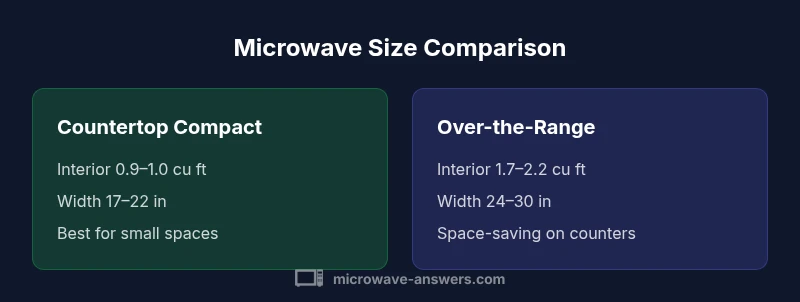
Countertop compact (0.9–1.0 cu ft) models are built for small kitchens or tight budgets. They fit narrow counters and leave room for a toaster, kettle, or coffee maker. Standard countertop units (1.1–1.6 cu ft) strike a balance between price, interior space, and exterior footprint, making them the most common choice for couples and small families. Large countertop models (1.7–2.2 cu ft) offer more interior height and width and are ideal for sharing large plates or heating multiple dishes. Built-in or under-cabinet/in-wall microwaves (1.4–2.2 cu ft) integrate into cabinetry and free up counter space, but they require careful electrical planning and sometimes professional installation. In all cases, consider door swing, venting requirements, and proximity to the fridge or sink to minimize heat exposure to other appliances.
Small Kitchen Scenarios and Layout Considerations
Apartment layouts often demand creative placement. In a galley kitchen, a compact countertop microwave tucked beside a narrow fridge can maximize workflow, while still leaving space to open the appliance and slide out hot dishes. In a kitchen with an island, an over-the-range unit can reduce counter clutter, but ensure there is enough clearance for an open cabinet door or hood. For families migrating from a rented apartment, a 1.2–1.5 cu ft countertop model often delivers the best mix of function and investment. For households that cook frequently and host guests, a larger size or built-in option can be a long-term savings by improving meal prep efficiency and reducing the number of batches required during gatherings.
Power, Features, and Size Correlations
Smaller cavities tend to heat more quickly when wattage matches typical daily use, typically 700–900 watts for compact units. Mid-sized models commonly offer 900–1200 watts, which supports even heating for standard family meals. Higher-wattage units (up to 1200–1800 watts) paired with larger cavities can significantly speed up cooking and defrosting, but you may see uneven results if the interior shape isn’t optimized. Features matter too: built-in sensors, auto-defrost, and convection modes impact how much value you get from a given size. A larger interior may justify extra features because you’ll reap more even reheating, browning, and batch processing capabilities. Always compare the true usable space inside against the size class and consider your typical cooking patterns before prioritizing watts or fancy programs.
Installation Realities: Electrical, Venting, and Space
Electrical requirements scale with size and feature set. A small countertop microwave often uses a standard 120V outlet, but larger built-ins may require dedicated circuits or specialized wiring. Venting is crucial for over-the-range units and some built-in models; confirm the exhaust path to the outside and the available duct size. Height clearance matters for cabinet-integrated units, while under-cabinet installations might constrain door swing. If you’re replacing an older unit, measure the outlet position to ensure a clean cord path and avoid trailing cables across work surfaces. Finally, plan for future changes: if you anticipate upgrading to convection or sensor-assisted models, ensure your power and venting infrastructure can accommodate the upgrade without expensive rewiring.
Reading Specs: A Quick Glossary for Buyers
Cu ft denotes interior capacity; width, depth, and height describe exterior footprint. Wattage indicates heating power and affects speed and uniformity. Convection is a feature that uses a fan to circulate air, which can increase size needs but improve browning. Sensor cooking adjusts time based on moisture and temperature; these programs can save time but may be size- and wattage-dependent. When comparing models, ask for interior dimensions in inches and compare them to the items you routinely heat. Don’t forget to check the cavity shape, because a square interior usually feels larger than a circular one with the same cu ft. Finally, verify any warranty or service considerations that may influence long-term satisfaction with your microwave.
The Trade-offs: Cost, Convenience, Longevity
Size choices involve trade-offs among price, convenience, and durability. Compact models tend to be the least expensive upfront and easiest to position, but they may lack features or interior height. Mid-sized units balance price and capacity and suit most households; they also support a broad range of dishes. Large models unlock flexible cooking and batch reheating; they cost more and require more space, but they can reduce the number of appliances needed in a busy kitchen. Built-in configurations generally deliver the cleanest look and may add resale value, yet installation costs and cabinet modifications can offset those savings. In all cases, consider how your buying decision will hold up over five to ten years, including potential energy use, feature obsolescence, and the likelihood of future remodeling.
Practical Sizing Checklist You Can Use
- List typical meals and peak cooking days; 2) Measure width, height, depth; 3) Check clearance and venting; 4) Decide between countertop vs built-in; 5) Compare several size categories side by side using a table; 6) Confirm door swing and cord length; 7) Review warranty and service options; 8) Consider future needs like convection or smart features. This checklist makes the decision repeatable and reduces buyer's remorse. Keep your measurements and chosen size category in a single note so you can refer back quickly during shopping.
Common Sizing Mistakes and Quick Fixes
Rushing to buy after seeing a beautiful ad is a common mistake. Another mistake is choosing a larger unit only to discover insufficient clearance around the door or hood. Ignore the temptation to overspec for future needs; instead, re-check your space and schedule. A frequent fix is to map your traffic flow and ensure the chosen unit doesn’t block access to the fridge, sink, or microwave storage. Finally, misreading the interior dimensions is a frequent error: use the manufacturer’s exact cavity measurements rather than relying on the cu ft alone to predict fit.
Final Sizing Strategy: Put It All Together
Put together your measurements, space constraints, and meals per week to determine the optimal size category. If you cook small meals daily, a compact countertop 0.9–1.0 cu ft model keeps costs down and saves counter space. For most families, a standard 1.1–1.6 cu ft countertop unit provides a good balance of capacity and price. If kitchen space allows and you regularly heat large dishes or batch meals, consider a large countertop or built-in option in the 1.7–2.2 cu ft range. Remember to verify installation feasibility, ventilation, and cord routing before finalizing your choice. The ultimate goal is a size that feels comfortable to use and that you can rely on for years to come.
Feature Comparison
| Feature | Countertop Compact (0.9–1.0 cu ft) | Standard Countertop (1.1–1.6 cu ft) | Large Countertop / Over-the-Range (1.7–2.2 cu ft) | Built-in/In-Cabinet (1.4–2.2 cu ft) |
|---|---|---|---|---|
| Typical width | 17–22 in | 20–24 in | 24–30 in | 24–30 in |
| Typical depth | 12–14 in | 14–16 in | 15–18 in | 20–22 in |
| Typical height | 10–14 in | 11–16 in | 12–18 in | 16–20 in |
| Capacity (cu ft) | 0.9–1.0 | 1.1–1.6 | 1.7–2.2 | 1.4–2.2 |
| Best For | Small spaces / budget shoppers | Everyday use & modest meals | Medium to large meals & frequent reheating | Built-in spaces or under-cabinet installations |
| Estimated price range | $100–$250 | $150–$500 | $300–$700 | $600–$1500 |
Advantages
- Clarifies space needs and fits before purchasing
- Helps balance capacity and price
- Prevents oversized or undersized choices for families
- Supports space planning by showing installation implications
Cons
- Size alone doesn’t guarantee performance (wattage matters)
- Interior layouts vary; two models at the same cu ft can feel different
- Installation constraints can override simple size benefits
- Some sub-$200 models may lack durability or features
Size-aware shopping wins: match capacity and footprint to your real use, not trends.
A well-sized microwave supports daily tasks, reduces clutter, and minimizes heat exposure to nearby appliances. The right choice balances footprint, performance, and price across your typical meals and kitchen layout, with built-in or over-the-range options reserved for space-constrained designs.
Common Questions
What size microwave is best for a small apartment?
For a compact apartment, a countertop model in the 0.9–1.0 cu ft range usually fits best. It handles daily reheating while staying out of the way. If you cook for one and want extra headroom, a 1.0–1.2 cu ft model can still work without dominating counter space.
A good pick for small apartments is a compact countertop microwave in the 0.9–1.0 cu ft range.
Is bigger always better when it comes to microwave size?
Not always. Bigger units offer more interior space but require more counter or cabinet space and can be harder to vent. The best choice balances your typical meals with available space and your preferred installation type.
Bigger isn’t always better; balance space with your cooking needs.
Can I install a large microwave under cabinets?
Yes, built-in and under-cabinet microwaves exist, but you must ensure proper ventilation and electrical supply. Some installations require professional help, especially if cabinetry work or wiring upgrades are involved.
Yes, under-cabinet options exist, but check ventilation and wiring first.
How does convection affect size choice?
Convection adds interior height and airflow, which can justify a larger size. If browning and multi-dish cooking are important, a convection model within your size class is worth considering.
Convection often means you’ll want extra interior space for even cooking.
Are built-in microwaves more expensive to install?
Built-ins can incur higher upfront costs due to cabinetry work and potential wiring upgrades. However, they save counter space and can improve kitchen aesthetics and resale value.
Built-ins may cost more upfront, but they free counter space and look sleek.
What is the difference between cu ft and exterior dimensions?
Cu ft measures interior volume, while width, depth, and height describe the exterior footprint. Both matter to ensure the unit fits your space and your dishes.
Cu ft is interior space; exterior numbers tell you how it will fit on or in your kitchen.
Main Points
- Measure your space before shopping
- Match capacity to typical meals and batch needs
- Prefer built-in or over-the-range only if you need to save counter space
- Verify ventilation, clearance, and wiring before purchase
- Use the comparison table to weigh size categories side by side