Microwave Size Chart: How to Find the Right Fit
Discover how a microwave size chart helps you pick a model that fits your space, clearance, and cavity capacity, with tips to compare widths accurately and avoid fit issues.


A microwave size chart is a practical reference that translates product specs into actionable dimensions for your kitchen. It combines exterior measurements (width, height, depth), interior cavity capacity, and recommended clearance into one place so you can assess fit before you buy. For home cooks and homeowners, the chart helps anticipate issues like cabinet interference, venting space, and door swing. According to Microwave Answers, starting with precise measurements reduces the risk of bringing home a unit that won’t fit or that blocks airflow. In addition to your counter space, don’t forget to check whether the door opens toward the wall or across the counter; several models have doors that require extra clearance when fully open. When you compare models, the size chart also sets a common language for width and height, so you can gauge how different brands stack up without wading through contradictory spec sheets. This creates a level playing field for shoppers and cooks alike.
What is a microwave size chart and why it matters
A microwave size chart is a practical reference that translates product specs into actionable dimensions for your kitchen. It combines exterior measurements (width, height, depth), interior cavity capacity, and recommended clearance into one place so you can assess fit before you buy. For home cooks and homeowners, the chart helps anticipate issues like cabinet interference, venting space, and door swing. According to Microwave Answers, starting with precise measurements reduces the risk of bringing home a unit that won’t fit or that blocks airflow. In addition to your counter space, don’t forget to check whether the door opens toward the wall or across the counter; several models have doors that require extra clearance when fully open. When you compare models, the size chart also sets a common language for width and height, so you can gauge how different brands stack up without wading through contradictory spec sheets. This creates a level playing field for shoppers and cooks alike.
How to read the size chart: understanding the numbers
Most size charts list three core dimensions: exterior width, exterior height, and exterior depth. Width determines whether a unit will sit flush with adjacent appliances or leave breathing room for doors. Height matters for under-cabinet installations and for ensuring vents aren’t blocked. Depth affects how far the unit protrudes from the counter and whether it clears any backsplash or tile. Cavity capacity, shown in cubic feet or liters, gives a sense of what sizes of plates and tall mugs will fit inside. When a chart shows a range (for example, 24-30 inches), use your available space as the anchor; if your counter space is 27 inches, you’re in a safe zone. Clearance figures—often listed as top, sides, and back—are crucial for safe operation and proper cooling. Finally, cross-check the chart against your actual kitchen layout; even small mismatches can affect installation or door swing.
Typical size ranges you’ll encounter
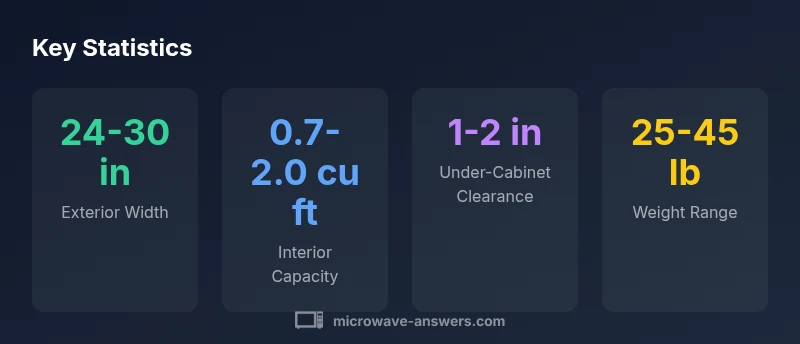
In everyday kitchens, the most common exterior widths fall in the 24-30 inch range, chosen to balance capacity with countertop real estate. Interior cavities typically span from about 0.7 to 2.0 cubic feet, affecting how many plates you can load and what shapes fit. Heights usually run from 10 to 14 inches, while depths range from 14 to 20 inches. Over-the-range models tend to be deeper to accommodate ventilation and mounting requirements, whereas countertop units prioritize a lower profile. When space is tight, compact models with around 0.7-1.1 cu ft interior can still handle standard plates, but might limit tall containers like pitchers. If you plan to place a microwave above a drawer, verify headroom clearance above the unit and ensure adjacent cabinetry doesn’t obstruct the door. The key is to map your kitchen’s actual dimensions to the chart’s ranges and identify any outliers that require a different form factor, such as an under-cabinet or built-in model.
Measuring your space and doing a quick fit test
Start with a tape measure and a notepad. Measure the counter depth, available width, and the height from the countertop to the bottom of the upper cabinets. Record the minimum clearance you want on each side, as well as the door swing arc. Next, test the door clearance by simulating a full-open door using a cardboard cutout of the microwave’s depth. If you can’t access a cardboard mock, use painter’s tape to mark the footprint on the counter and simulate the space needed for the open door. Compare these measurements to the exterior dimensions on the size chart. If your space is tight, look for models that stay within the highest value of your width range and the smallest depth that still fits your kitchen workflow. Finally, plan for ventilation space behind the unit and a little extra room above cabinets to prevent heat buildup.
Practical considerations: wattage, door swing, and countertop footprint
Size isn’t the only factor; wattage determines cooking performance and energy use. Most household microwaves run between 800 and 1200 watts; higher wattage won’t necessarily fit in every space but will influence cooking times. If you have a tight clearance, the door swing can be a deal-breaker; some models swing outward toward the user, others toward the wall, and some have a bottom-latching or side-hinged design. The countertop footprint also matters for airflow and cleaning access. For under-counter or built-in installations, the chart should be cross-checked with cabinet dimensions and any trim kits required for a clean, flush look. Don’t overlook venting requirements, especially for over-the-range units where exhaust height and width interact with your kitchen’s layout. Use the size chart to shortlist models, then verify each candidate’s dimensions against your actual space before buying.
Reading the chart while shopping online vs in-store
Online product listings often present dimensions in a standardized row, but the formatting can vary by brand. Use the size chart as your anchor: copy the exterior width, height, and depth numbers, then compare to your measurements. In-store, bring your tape measure and a printed dry run of the chart; many retailers have demo models with adjustable doors that you can test. If a listing omits external dimensions, treat it as a red flag and look for the full spec sheet or customer questions that confirm fit. Pay attention to cabinet clearance notes and venting requirements, especially for built-in or over-the-range models. If you find a model that nearly fits but misses by a few millimeters, you may be able to reposition or trim cabinetry slightly, but only as a last resort and with professional guidance.
Practical shopping tips: how to compare models with the chart
Use a side-by-side approach: create a mini matrix with exterior dimensions, interior capacity, and clearance. Place your measured space values at the top and fill in the model rows beneath. Pay attention to outlier dimensions; a slightly wider unit may fit if its depth is shallower, or vice versa. Consider future needs—if you regularly host large vessels, prioritize higher interior capacity; if you store plates on the countertop, ensure the width accommodates your largest plate set. Brand-agnostic charts help you focus on fit first, then performance. Finally, balance price with reliability by substituting long-term maintenance costs for initial savings; a model that fits now but requires frequent service may not be the best value.
Common mistakes and how to avoid them
One common error is assuming interior capacity equals usable space for all shapes; mugs and plates don’t always maximize the cavity. Another mistake is prioritizing looks over fit—an attractive unit that blocks ventilation or door swing quickly becomes a problem. Also, relying on a single data point, such as width alone, can lead to a poor fit; always cross-check height and depth with your space and cabinet angles. Finally, ignoring installation requirements—like vent clearance, power outlet location, or trim kits—can create surprises after delivery. Use the size chart as a living reference; measure twice, order once, and double-check with the retailer’s specifications before purchasing.
Build a personal size chart for your kitchen
Create a personalized chart by recording your kitchen’s exact measurements and converting them into the standard chart’s values. Start with a rough draft of your space: countertop width, cabinet opening heights, and any obstacles like backsplashes or tile edges. Then map these values to the chart’s ranges and import additional notes for ventilation and power outlets. If you plan multiple setups (e.g., under a wall cabinet vs. freestanding on a sideboard), maintain separate charts to avoid confusion. Finally, store the chart with the user manuals or in a kitchen planning notebook so you can reference it during future remodels or appliance upgrades. This proactive approach reduces shopping friction and helps you select a microwave that truly fits your evolving kitchen.
Size ranges by installation type
| Model Type | Exterior Width | Interior Capacity | Typical Clearance |
|---|---|---|---|
| Countertop | 24-30 inches | 0.7-2.0 cu ft | 1-2 inches |
| Over-the-range | 30-54 inches | 1.0-2.2 cu ft | 0 inches (vent) |
| Under-cabinet | 24-36 inches | 0.7-1.5 cu ft | 2-3 inches |
Common Questions
What is the best way to start using a microwave size chart?
Begin by measuring your counter width and cabinet clearance, then use the chart to narrow down models that fit those exact dimensions.
Measure your space first, then use the chart to narrow your choices.
Do size charts account for door swing?
Yes. Size charts note whether doors swing left or right and how much clearance is needed for full opening.
Yes, door swing is included in the considerations.
Are built-in microwaves included in size charts?
Most charts cover countertop and built-in forms; always verify installation requirements in the product specs.
Yes, but always double-check the installation details.
What if my space is slightly smaller than the chart max?
Look for models at the lower end of the width range or consider a different installation type that fits your space.
Try models toward the lower end of the chart.
How accurate are these charts across brands?
Charts standardize exterior dimensions, but always verify exact specs from the manufacturer before buying.
They’re a guide, but double-check the specs.
Can I downsize capacity and still meet my needs?
Yes, if you mostly cook small items; ensure interior width and height accommodate your typical dishes.
Yes, as long as your dishes still fit inside.
“A reliable microwave size chart is the foundation of confident buying decisions; it ties together space, clearance, and capacity so you can select models that fit now and into the future.”
Main Points
- Measure first, then compare against the chart.
- Check width, height, depth, and clearance for fit.
- Account for door swing and ventilation needs.
- Use the chart to compare across brands before buying.
- Create a personal kitchen chart for future upgrades.