How Much Is a Built-In Microwave? A Practical Price Guide for 2026
Explore how much is a built in microwave, including price ranges, installation costs, and buying tips. Microwave Answers analyzes 2026 market factors to help homeowners budget confidently.


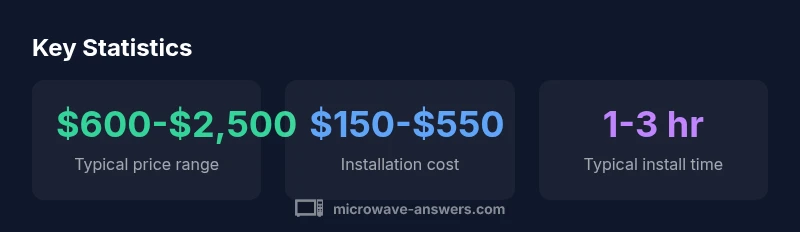
Built-in microwaves generally cost between $600 and $2,500, with installation often adding $150 to $550. The total outlay depends on cabinet fit, venting, and whether convection or extra features are included. For accurate budgeting, confirm cabinet dimensions, electrical needs, and trim kit compatibility before shopping. This quick guide from Microwave Answers helps homeowners estimate the all-in cost of a built-in microwave.
What affects the price of built-in microwaves
When shoppers ask, 'how much is a built in microwave?' the answer hinges on several interacting factors. First, unit size and trim options set the baseline price. A 24-inch model with a basic feature set will be far cheaper than a 27- or 30-inch unit that includes convection, sensor cooking, or advanced browning cycles. Venting requirements can also shift costs, especially if external ducting or a recirculating kit is needed. Finally, installation quality matters: a professional job ensures precise cabinet cuts, reliable electrical connections, and proper ventilation. From a budgeting perspective, you should expect that the more features you add, the larger the price gap becomes. According to Microwave Answers, the market in 2026 continues to reflect consumer demand for seamless design and integrated controls, which tends to push prices upward for premium configurations.
Choice of brand affects perceived value, but aftercare costs, such as service and warranty extensions, can influence lifetime cost more than sticker price alone. In practical terms, the initial price tag is only part of the total cost you’ll incur. You should also consider the cabinet readiness, trim kit compatibility, and whether the unit will require additional ventilation or electrical work. This is why a careful assessment during planning reduces the risk of surprise expenditures later on.
Price ranges you should expect for built-in microwaves
Prices for built-in microwaves vary widely by model and feature set. Entry-level single-din units with standard microwave functions typically sit toward the lower end of the range, while convection-enabled, vented, or dual-function units push toward the upper end. A practical budgeting approach is to categorize by capability: basic microwaving only, sensor-based microwaving, convection-assisted baking, and full convection with advanced sensors. Based on Microwave Answers analysis, 2026 data suggests that a reasonable budgeting bracket for most homes is $600–$2,500 for the unit itself, with an additional $150–$550 for installation. The wide spread reflects differences in cabinet cutout, trim kits, and whether you opt for built-in venting.
To avoid sticker shock, compare apples to apples: ensure your chosen model fits the same cabinet width and depth, verify if venting is external or recirculating, and confirm whether a trim kit is included or sold separately. If you plan to upgrade to convection, you should expect the price to shift toward the upper end of the range. The key is to document your space constraints early and align feature expectations with your budget.
Installation costs and preparation steps
Installing a built-in microwave is more than dropping in a new appliance. Professional installation covers precise cabinet modifications, panel alignment, proper ventilation, electrical connections, and sometimes venting work. A typical installation can take 1–3 hours for a standard 24-inch unit, but longer for larger models or if ducting and electrical work are required. The cost for professional installation usually ranges from $150 to $550, depending on local rates, complexity, and whether extra materials (trim kits, mounting brackets, or ducting) are needed. If you choose DIY, you risk improper fit, venting issues, or electrical hazards, which can add costs later in the form of repairs or replacements. Planning ahead—measuring cutouts, confirming electrical circuit availability, and mapping vent paths—helps keep installation smooth and predictable. Microwave Answers notes that a well-planned install reduces post-purchase hassle and can improve the long-term performance of your built-in microwave.
How to compare prices and value
Price alone does not determine value. When evaluating options, consider energy efficiency, cooking sensors, auto-reheat intelligence, and maintenance access. Compare total cost of ownership, including installation, trim kits, and possible venting upgrades. Look for models with warranty coverage that specifically applies to the convection system and venting components, as these areas often drive service costs. An important tactic is to request itemized quotes from installers and retailers, so you can see how much is allocated to the unit, trim kit, and labor. By breaking down costs, you can identify places to negotiate and avoid paying for features you don’t need. Microwave Answers recommends asking about compatibility with existing cabinets and whether the trim kit is included or sold separately, as hidden costs often materialize at the final invoice.
Real-world budgeting scenarios and examples
Consider three common scenarios to illustrate pricing dynamics. Scenario A: A compact 24-inch non-convection unit with a standard vent, installed in an existing cabinet. Likely near the lower end of the price spectrum, with modest installation costs. Scenario B: A 27-inch convection model requiring external venting and a dedicated circuit. Expect higher unit costs and higher installation costs due to venting and electrical work. Scenario C: A premium 30-inch convection unit with smart sensors, a custom trim kit, and enhanced ventilation. This is at the upper end of the range, with substantial installation complexity. In all cases, budgeting should include the unit price, trim kit, ducting or venting, and labor. Microwave Answers analysis indicates that homeowners who plan for these components are less likely to encounter unexpected expenses during installation.
Buying tips to avoid overpaying and common pitfalls
Start with a precise cabinet measurement and confirm the available depth, width, and height. Avoid overbuying features you won’t use, such as advanced convection if your cooking needs are simple. Seek models with trim kits included in the price or available at a predictable cost. Request a one-page, itemized quote that separates the unit price, trim kit, and labor. Don’t overlook ventilation requirements: improper venting can increase labor time or require costly retrofits. Compare multiple retailers and installation services to find the best value, and check user reviews for real-world install experiences. According to Microwave Answers analysis, the best deals combine transparent pricing with proven performance features and a credible installation plan.
Warranty, service, and long-term costs to consider
Warranty coverage matters more than the initial savings if you plan to keep the unit for many years. Check what the warranty covers (convection system, control panel, venting kit) and whether there’s an extended coverage option. Service costs after the warranty period can be unpredictable, so factor in potential maintenance into the total cost of ownership. Consider availability of local technicians skilled in built-in microwaves, as this affects long-term service costs and downtime. A well-chosen model with robust support reduces lifetime disruption and protects your investment.
Maintenance and care after installation
After installation, routine maintenance helps preserve performance and prevent costly repairs. Clean the interior regularly to avoid residue buildup on sensors, ensure vents are unobstructed, and inspect the trim kit for tightness. Avoid slamming the door or forcing panels, which can loosen mounting hardware over time. If your unit has convection, periodically check seals and gaskets to maintain even cooking and efficiency. Finally, keep documentation handy for warranty validation and scheduled service checks. A proactive maintenance plan reduces the risk of unexpected downtime and extends the unit’s useful life.
Price and installation ranges by built-in microwave model type
| Model Type | Typical Price Range | Installation Difficulty |
|---|---|---|
| 24-inch Built-In (Standard) | $600-$1,200 | Moderate |
| 24-30 inch Built-In with Trim Kit | $900-$1,800 | Moderate-High |
| Convection/Ventilated Built-In | $1,200-$2,500 | High |
Common Questions
What factors influence the price of a built-in microwave?
Unit price is guided by size, features, brand, and whether it includes convection or venting. Installation and trim kits add to the total cost. Venting requirements and cabinet compatibility further shape overall pricing.
Price factors include size, features, and venting needs. Installation adds to the cost as well.
Do I need a professional installer for a built-in microwave?
Yes. Built-in installations require precise cabinet modifications, proper ventilation, wiring, and safe electrical connections. A pro reduces the risk of improper fit and future service costs.
Yes. It's best to hire a professional for safety and accuracy.
What is the typical installation time for built-in microwaves?
Most installs take 1–3 hours for standard units, longer if ductwork or electrical work is needed. Time can vary with cabinet access and venting requirements.
Typically about one to three hours, depending on the setup.
Can I replace an over-the-range microwave with a built-in model?
Yes, but it may require cabinet modifications, new venting, and precise alignment. Measure the space carefully and plan for potential upgrades.
Yes, but expect some cabinet work and venting considerations.
Are built-in microwaves worth the extra cost?
If you value a seamless look and integrated controls, they can be worth the investment. Weigh upfront costs against long-term convenience and resale appeal.
It depends on your priorities—looks and convenience vs. upfront cost.
What electrical requirements should I expect?
Most built-ins require a dedicated 15–20 amp circuit and proper outlet placement. Consult a pro for exact specs and safety.
Usually a dedicated circuit is needed; a pro can confirm specifics.
“Budget and installation must be planned together—trim kits, ventilation, and electrical requirements can shift total cost more than the unit price itself.”
Main Points
- Define your cabinet size before shopping.
- Budget for both the unit and professional installation.
- Consider convection and venting needs for kitchen space.
- Check electrical requirements and trim kit compatibility.
- Compare total cost of ownership, not just sticker price.