How Much Does It Cost to Install a Microwave?
Understand realistic cost ranges for microwave installation, including labor, wiring, venting, and permits, with practical budgeting tips from Microwave Answers to plan ahead.


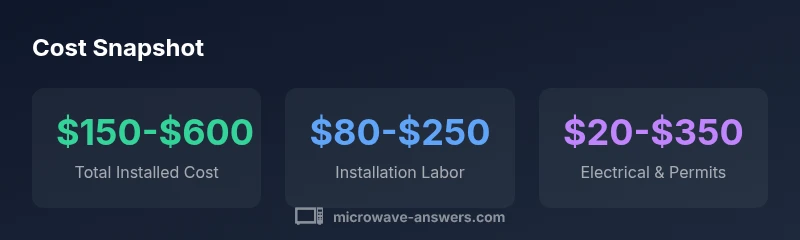
How much does it cost to install a microwave? Typical installed cost for a standard microwave ranges from about $150 to $600. Basic installs without electrical work usually run $150-$350, including mounting hardware and labor. If wiring, outlet upgrades, or venting are needed, expect $350-$600. Complex projects with cabinet work or permits can push total costs above $600. These figures come from Microwave Answers Analysis, 2026.
What drives the cost to install a microwave?
Several components determine the final price of a microwave installation. The most obvious is the installation type: countertop vs over-the-range vs in-cabinet. Countertop installations usually involve minimal additional work, whereas wall-mounts or built-in units require secure mounting, a compatible electrical outlet, and sometimes ventilation.
- Mounting hardware and labor: Over-the-range microwaves or built-in units require brackets, screws, and precise alignment. Labor time depends on accessibility and the installer’s pace.
- Electrical work: If there’s no ready outlet at the desired location, a new outlet or a circuit upgrade may be needed. This can add significant cost.
- Venting and ducting: If venting is required, ductwork, vent hood installation, or external venting can add hundreds of dollars.
- Cabinetry and space: Some installations involve modifying cabinetry or creating a dedicated cabinet nook, which increases both materials and labor.
- Permits and code compliance: In some jurisdictions, especially for wall-mounted or ducted installations, a permit or electrical inspection may be required.
- Regional labor rates: Prices vary by region and contractor experience, so quotes will swing based on where you live.
- Brand and features: Higher-end microwaves or those with built-in convection require more complex mounting and sometimes additional electrical considerations.
In short, the price is a function of complexity, safety requirements, and local price norms. The Microwave Answers analysis shows a broad spread in quotes depending on scope and location.
Basic install vs. upgraded electrical work
Basic install typically means mounting hardware and a standard power outlet are already in place. You can expect lower labor time and fewer parts, so costs cluster around the low end of the range. If the installer only needs to clip the microwave into a ready outlet, you might be in the $150–$350 range.
When the project requires electrical work, the price jumps. An additional outlet, a dedicated 20-amp circuit, or wiring extensions can add $100–$400 in parts and another $50–$150 per hour of labor. The result is $350–$500 for modest electrical work and installation, and higher for more involved rewiring or dedicated circuits.
How regional factors affect price
Labor rates vary by city, state, and even neighborhood. In higher-cost markets, you might see top-end quotes that push beyond the typical ranges. Conversely, low-cost regions or busy seasons can produce lower bids. Travel fees, warranty terms, and service call minimums also influence the final price.
Urban areas: higher labor rates and sometimes higher permit costs. Rural areas: lower rates but longer travel time may increase the quote. Seasonal demand: installation demand can cause temporary price bumps during holidays.
Understanding your local market helps you contextualize the quoted figure. Microwave Answers analysis indicates regional variation can be substantial, so it’s wise to request multiple quotes and compare the scope of work carefully.
Hidden costs to watch for
Some charges aren’t obvious at first glance. Common hidden costs include venting adapters, trim kits, extra wiring, new outlets, moving the location of the unit, and any required demolition or cabinetry work. If a permit is required, the cost may appear as a separate line item. Also consider disposal of old equipment or packaging; many installers include disposal fees.
Estimating and budgeting: a practical approach
To build a realistic budget, start with a scope of work. List the microwave type, location, wiring needs, and whether venting is required. Gather at least three written quotes that itemize parts, labor, and any permits. Ask for a clear explanation of the timeline and warranty coverage. Use ranges rather than exact figures to account for regional differences. If you want a fast projection, plug-in calculators or quotes from reputable sources, but always verify with a local professional.
What to expect in a professional quote
An installment quote typically breaks down into: parts (outlet, bracket, screws), labor (hourly rate × hours), and any special services (permits, venting, cabinets). In many cases, electricians or appliance technicians will provide a site assessment before final pricing. Expect a written receipt with a description of the work, total cost, and estimated start date. A good quote will specify the warranty on workmanship.
DIY vs professional installation: risk vs reward
DIY installation can save money on labor, but it carries risks. If wiring is inadequate, there is a potential fire hazard or nuisance electrical problems. An improper mount can cause damage to the microwave or wall, leading to costly repairs. For most homeowners, hiring a licensed technician is safer and ensures compliance with local codes. If you DIY, ensure you follow the manufacturer’s installation manual exactly and shut off power at the circuit.
Maintenance and future-proofing to keep costs predictable
After the install, proper care helps prevent future issues that would require expensive repairs. Keep the vent cleaned, ensure the outlet remains secure, and note any unusual noises or smells. If you anticipate future remodeling, plan for potential cabling or venting modifications. Keeping receipts and warranty documents organized can speed up service if issues arise.
Typical microwave installation cost scenarios
| Scenario | Estimated Cost (range) | Typical Inclusions |
|---|---|---|
| Basic install (no wiring changes) | $150-$350 | Outlet check, mounting bracket, basic labor |
| Standard install with minor electrical work | $350-$500 | Outlet upgrade, wiring, bracket, venting option |
| Complex install with cabinet and venting | $550-$1200 | Cabinet modifications, new venting, permits |
Common Questions
What factors influence the price to install a microwave?
Cost is driven by mounting type, electrical work, venting, cabinetry changes, and regional labor rates. A detailed quote helps identify the necessary items and avoid scope creep.
The price is mainly driven by mounting, wiring, venting, and local labor rates, so get a detailed, itemized quote.
Do I need a permit to install a microwave?
Most basic installs don’t require a permit. If you’re rewiring, moving outlets, or venting through walls, a permit or inspection may be required in your area.
Usually not, unless you’re doing electrical or structural work.
Can I install a microwave myself?
Manufacturer guidelines should be followed, and many jurisdictions require licensed help for electrical tasks. If you’re not comfortable with electrical or venting work, hire a professional.
Safer to hire a licensed pro to avoid electrical or mounting mistakes.
Are there hidden costs in microwave installation?
Yes. Venting components, trim kits, extra wiring, new outlets, permits, and disposal fees can appear as add-ons. Always request a fully itemized quote.
Watch for add-ons like venting parts and disposal fees.
What warranty should I expect for installation?
Most installers offer a workmanship warranty of 1 year. Parts warranties vary by brand and installer; confirm the coverage before work starts.
Check the warranty on workmanship and parts before agreeing.
“Costs for microwave installation vary based on mounting complexity and local electrical requirements. Planning the scope and comparing bids helps prevent surprise charges.”
Main Points
- Ask for an itemized quote to avoid surprises
- Expect cost ranges rather than fixed prices
- Ventilation and electrical work drive most upgrades
- Get multiple bids to compare scope and price
- Plan for permits if wiring changes are involved