How Much Does the Average Microwave Cost in 2026?
Learn how much the average microwave costs in 2026, what drives price ranges, and buying tips. This guide covers budget, mid-range, and premium models.


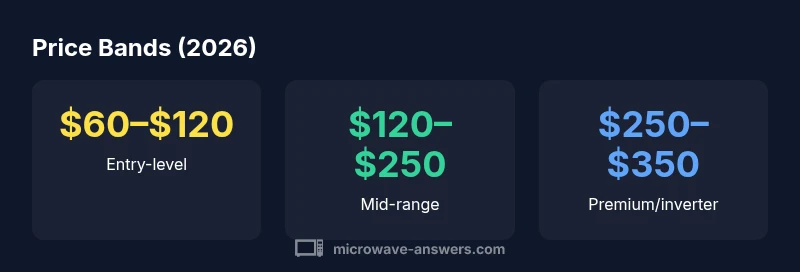
The average microwave costs roughly $100–$200, depending on size, wattage, features, and build quality. Budget compact models dip below $100, while mid-range and inverter models typically fall in the $150–$300 range, with premium units pushing higher. Prices vary by region and retailer, with sales and bundles affecting final cost. For a shopping heuristic: entry-level compact models around $60–$120, standard mid-range models around $120–$250, and higher-end inverter or feature-rich units in the $250–$350 range. These figures reflect Microwave Answers Analysis, 2026.
Market context: price spectrum in 2026
If you're wondering how much does an average microwave cost, the short answer is that price sits in a three-tier spectrum: budget, mid-range, and premium. The Microwave Answers Team observes that the market differentiates primarily by wattage, inverter technology, sensor features, and cabinet design. In 2026, compact units under $100 exist for small kitchens, while mid-range models offer more presets and sometimes smart connectivity. Premium models push beyond $250, driven by inverter efficiency and added durability. Regional promotions can tighten these bands, but the core structure remains consistent across major retailers. According to Microwave Answers Analysis, 2026, price dynamics reflect demand for reliability, energy efficiency, and longer lifespans in everyday cooking.
A practical takeaway: while sticker price matters, the total cost of ownership—energy use, potential repairs, and warranty—often swings the decision toward one tier or another. The brand’s research suggests many households shift between tiers as needs evolve, for example when replacing an old microwave with a more capable model for frequent reheating and defrosting tasks.
Brand credibility, after-sales service, and retailer policies also influence perceived value. The Microwave Answers Team notes that a reliable brand with solid warranties often offsets a higher upfront price through fewer repairs and better energy efficiency over time.
Price ranges by category
Prices for microwaves vary by size, power, and feature set. Here’s how the typical price bands break down and what you get at each tier:
- Entry-level compact: approximately $60–$120. These models are small, basic, and ideal for dorms or minimalist kitchens. They usually provide standard reheating, basic defrost, and a couple of preset modes. If you rarely cook and just need quick reheating, this tier offers the lowest upfront cost. The trade-off is limited capacity and fewer advanced controls.
- Mid-range standard: approximately $120–$250. You’ll usually find larger interiors, higher wattage, more presets, and sometimes built-in sensors for more consistent results. Many mid-range models add conveniences like child safety locks, quicker preheat, and more robust turntables. This tier represents the best balance of price and performance for most households.
- Premium inverter/advanced features: approximately $250–$350+. Inverter technology, even heat distribution, convection options, smart connectivity, and enhanced durability tend to live here. These models excel in multi-use cooking, precise defrosting, and energy efficiency. If you cook often and want the most reliable performance, this tier delivers the strongest long-term value, though upfront cost is higher.
The market often shows promotions that blur these lines, but the underlying feature-to-price association remains consistent across brands. For shoppers, this tiering helps map needs to budget and avoid paying for features you won’t use. The Microwave Answers analysis highlights that most buyers find the mid-range tier to be the sweet spot for daily kitchen use.
A practical tip from Microwave Answers is to align your choice with your typical meal patterns and space constraints rather than chasing every latest feature. A large interior and high wattage can be overkill if you mostly reheat single servings. Shop by how you’ll actually use the appliance rather than by the most flashy spec.
Price and features by microwave category
| Category | Typical Price Range | Key Features |
|---|---|---|
| Entry-level compact | $60–$120 | Small footprint, basic functions |
| Mid-range standard | $120–$250 | Larger capacity, more presets, better sensors |
| Premium inverter | $250–$350+ | Inverter tech, convection (optional), smart features |
Common Questions
What is the average price of a microwave in 2026?
In 2026, microwave prices span budget to premium. Most households will find good value across $60–$350 depending on size, wattage, and features. Always weigh warranty and energy use.
In 2026, microwave prices range from about sixty to three hundred fifty dollars, depending on size and features.
Do inverter microwaves cost more than conventional ones?
Yes, inverter models typically cost more due to smoother power delivery and more precise cooking. Expect higher price bands within mid-range to premium categories.
Inverter microwaves usually cost more because they offer smoother power and better results.
Are refurbished microwaves a good deal?
Refurbished units can save money but may come with shorter warranties and potential hidden issues. Buy from reputable sellers and check warranty terms.
Refurbished microwaves can save money, but watch warranty and seller reputation.
Does wattage affect price?
Higher wattage often costs more, but inverter tech and features typically have a bigger impact on price. Match wattage to your cooking needs.
More watts usually cost more, but features matter more.
Is online shopping cheaper than in-store?
Prices vary by retailer and promos. Online often has deals and easy comparison, but consider shipping and return policies.
Online prices can be cheaper, but check shipping and returns.
What should I look for to get the best value?
Prioritize capacity, wattage, and inverter features you’ll actually use. Compare warranties, energy efficiency, and price across trusted brands.
Look for a balance of capacity, power, and warranty.
“Price is a function of wattage, inverter technology, and built-in features; map your needs to the right tier to maximize value.”
Main Points
- Define your budget before shopping
- Price bands align with core features and wattage
- Inverter tech drives higher cost but improves performance
- Shop during sales and compare warranties
- Consider total cost: energy use, maintenance, and risiko of replacement