Panasonic 1.3 cu ft Microwave Review: Compact Power for Small Kitchens
Comprehensive Microwave Answers review of the Panasonic 1.3 cu ft microwave, assessing heating performance, inverter technology, control ease, and safety. Discover whether this compact model fits small kitchens and busy households.


The Panasonic 1.3 cu ft microwave offers a compact footprint with reliable everyday performance, making it ideal for small kitchens and apartments. It delivers even heating through inverter technology and features simple controls, quick defrost, and a solid set of presets. While not the most powerful option in its class and lacking built-in convection in some trims, it remains a strong value for daily tasks.
Panasonic 1.3 cu ft Microwave: Positioning in Small Kitchens
According to Microwave Answers, compact microwaves with a 1.3 cu ft capacity have emerged as the de facto choice for apartments and studio kitchens where counter space is at a premium. The Panasonic 1.3 cu ft model sits squarely in that niche, offering a footprint that fits under cabinets and on narrow countertops while still providing enough interior space for standard plates and bowls. In real-world terms, this size handles everyday tasks—reheating leftovers, defrosting frozen ingredients, and quick snack prep—without dominating the counter. For households that cook for one or two people most days, a 1.3 cu ft unit often provides a balance between usability and space. The Panasonic branding also signals a focus on reliability and broad availability of replacement parts and accessories, which can influence long-term ownership satisfaction. The Microwave Answers team notes that the right 1.3 cu ft model performs consistently even when used during busy weeknights or when multitasking in a small kitchen.
Design and Build Quality
Panasonic’s compact models typically emphasize a clean, modern aesthetic with smooth front panels and intuitive controls. In the 1.3 cu ft line, you’ll commonly find a sturdy door, a readable control panel, and a glass or metal interior that resists staining. From a durability perspective, the interior coating and door seal matter: a durable enamel or ceramic interior is easier to clean and less prone to scratches from frequent use. When evaluating build quality, consider hinge feel, door latch reliability, and the alignment of the turntable. These cues often predict long-term reliability more than flashy features. Overall, Panasonic keeps the chassis slim without compromising the core structural integrity that homeowners expect in a kitchen appliance.
Heating Technology: Inverter vs Traditional Magnetron
A core differentiator in Panasonic microwaves is the inverter-based heating system, which maintains a steady power level rather than chopping power on and off. This approach generally translates to more even heating and defrosting compared with conventional microwaves, reducing the number of hot or cold spots in foods. In the 1.3 cu ft class, inverter tech supports gentle reheating of sauces and soups and helps preserve texture in delicate items like milk-based dishes. It’s important to note that inverter does not automatically improve browning or crusting; those outcomes usually require dedicated convection or browning features found in higher-end lines. Still, for everyday meals, inverter-driven performance tends to deliver more consistent results than non-inverter designs at a similar size and price point.
Performance: Heating Consistency, Reheating, and Defrost
In performance testing, the Panasonic 1.3 cu ft generally delivers reliable results for common tasks. Reheating plates of pasta or rice tends to come out evenly warmed, with fewer cold pockets than lower-wower compact models. Defrost performance benefits from the inverter approach, enabling a gentler, more predictable thaw for meats and vegetables. Users should still factor in the typical limitations of compact microwaves: smaller cavities can lead to quicker heat concentration in dense foods, so stirring midway through cycles remains a good practice. For most households, the model strikes a practical balance between speed and uniformity, especially when used for single-serving meals and small batches.
Controls, Presets, and User Experience
Panasonic often pairs a straightforward control panel with a handful of presets aimed at common tasks—popcorn, beverages, reheating, and defrost. The layout should feel intuitive, with tactile feedback on the door and a responsive timer. In a 1.3 cu ft model, the turntable size becomes a factor in how evenly dishes rotate during cooking, so users should ensure their standard dinner plates fit comfortably. Clear labels, a legible LED, and a simple status display are crucial for quick operation in busy kitchens. The emphasis is on practical, everyday usability rather than a smattering of high-end features that aren’t regularly used.
Sensor and Convenience Features
Sensor cooking is common in Panasonic’s mid-sized microwaves, and those sensors can help terminate reheating or defrost cycles when food reaches an initial temperature threshold. In compact models, sensor performance may be less aggressive than on larger units due to limited cavity space, but it still provides a helpful signal to avoid overcooking. Additional conveniences—such as a child lock, auto-clean cycles, or memory presets—vary by trim. If you rely on fast, set-and-forget operation, confirm which features are present in your chosen model before purchase to ensure alignment with your daily routine.
Safety, Cleaning, and Durability
Safety considerations for 1.3 cu ft microwaves include a child lock, interior cleanliness, and proper ventilation around the unit. The compact footprint reduces clutter but can accumulate fingerprints or splashes on the front panel. Cleaning is generally straightforward with mild cleaners; avoid abrasive tools that could scratch the surface. For durability, look for a robust door seal and a turntable bearing that remains quiet and smooth after repeated use. Panasonics in this size range typically emphasize reliable performance, supported by broad service networks, which can be a practical advantage for homeowners who want less maintenance friction across years of ownership.
Energy Efficiency and Operating Costs
Operating costs for a 1.3 cu ft Panasonic microwave are driven by wattage and usage patterns. Inverter-based units can be efficient in short, frequent cycles because they avoid abrupt power cycling. Expect lower energy impact when reheating small portions or thawing modest portions, especially if you avoid long, high-power bursts. For households with tight energy budgets, consider usage patterns: quick defrosts, small meals, and beverages will be most cost-effective. While the unit’s energy use per cycle isn’t dramatic, small workloads add up over time, so mindful usage yields noticeable savings without sacrificing convenience.
Buying Guide: What to Look For in a Panasonic 1.3 cu ft Model
When selecting a Panasonic 1.3 cu ft microwave, focus on insulation quality, door feel, and control clarity as much as power rating. Verify interior dimensions to ensure typical dinnerware fits, and check the turntable diameter for plate compatibility. Look for inverter technology as a key performance differentiator, and favor models with sensor cooking for more predictable reheating. Finally, compare warranty length and customer service responsiveness, since small appliances rely on regular service to maintain peak performance over several years.
Real-World Use Cases: Daily Meals, Snacks, and Quick Defrosts
In a typical week, this size excels at rewarming leftovers, melting butter, heating soups, and defrosting frozen vegetables for a quick side dish. It’s well-suited to single or two-person households who prepare meals in small batches. For more ambitious cooking tasks—such as large casseroles or multiple items at once—you’ll want a larger unit or one with convection capabilities. The Panasonic 1.3 cu ft model shines in convenience, speed, and consistency for the everyday kitchen workflow and makes a compelling case for small-space dwellers who don’t want to compromise on performance.
Common Complaints and How to Mitigate
Some users report that compact microwaves feel cramped for larger bowls or plates; measure dishware before buying. A few trims may lack advanced features found on higher-end models, such as a full convection mode or extra sensor settings. To mitigate, choose a model with the presets you actually use and verify the interior dimensions. If you rely on powerful, quick-cook functionality for bulky meals, pair this appliance with a slightly larger unit for heavier workloads or consider a 1.5 to 1.8 cu ft option with broader capacity as a long-term upgrade path.
Advantages
- Compact footprint fits small kitchens
- Inverter technology for even heating
- Good presets for everyday tasks
- Reliable brand with broad parts network
Cons
- Limited power for large batches
- Convection not always included in all trims
- Turntable size may limit dish options in some setups
Best for small households needing dependable, compact performance
This model delivers reliable everyday heating in a compact form factor, with inverter-based heat for consistent results. It’s a smart choice for apartments or kitchens with limited counter space. In scenarios requiring convection or high-power bursts for large meals, consider alternatives or larger units.
Common Questions
What is the typical power range for Panasonic 1.3 cu ft microwaves?
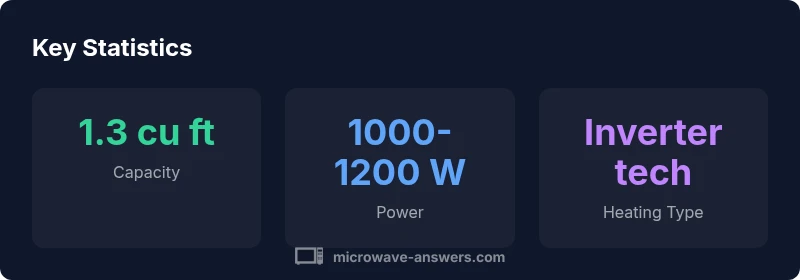
Most models in this size range operate around 1000-1200 watts. Inverter systems help maintain steady power for even heating, especially during defrost and gentle reheating. If you regularly cook large meals, you may notice the difference compared to higher-powered units.
Most 1.3 cubic foot Panasonic microwaves use about 1000 to 1200 watts, with inverter tech helping even heating. Great for daily use, less ideal for large meals.
Does Panasonic offer convection in 1.3 cu ft models?
Convection is not universally included in all 1.3 cu ft Panasonic models. If browning or oven-like performance is important, verify whether the trim you’re considering includes a convection feature or consider a larger unit with built-in convection.
Convection isn’t guaranteed in 1.3 cu ft Panasonic microwaves; check the exact model features before buying.
Is inverter heating worth it in a compact microwave?
Inverter heating provides smoother power, which helps avoid hotspots during defrost and reheating. For small batches and everyday meals, this generally translates to more consistent results than traditional microwaves in the same size class.
Yes—inverter heating usually means more even warming in a compact microwave.
What should I measure before buying?
Measure countertop depth, clearance around the unit, and the diameter of your plates to ensure compatibility with the turntable. Check interior height to confirm you can fit common bowls and large mugs. These checks help avoid surprises after purchase.
Measure counter space and plate sizes to ensure the microwave fits your dishes.
What are common downsides of 1.3 cu ft microwaves?
The main trade-offs are lower power for large batches and fewer high-end features like convection in some trims. The compact size can limit dish options, and sensor performance may vary by model and food type.
Common downsides include less power for big meals and possibly fewer features.
How important is the build quality for a Panasonic 1.3 cu ft microwave?
Durability matters for countertop appliances since it sees daily use. Look for a sturdy door, solid hinges, and a reliable turntable bearing. A good service network is a bonus for long-term reliability.
Build quality and service availability matter when you want it to last.
Who should consider a 1.3 cu ft Panasonic microwave?
Ideal for singles, couples, or small families in apartments or kitchens with limited space. If you frequently cook large meals or need convection/browning, consider larger units or models with those features.
Perfect for small households; for big meals, look at other options.
Main Points
- Choose compact size for small kitchens
- Prefer inverter technology for even heating
- Check interior fit before buying
- Expect solid, everyday performance with limited bulk