How to Thaw in Microwave: A Safe Defrost Guide
A practical, safety-focused guide to thawing foods in the microwave, with power settings, timing, and post-thaw handling to minimize bacterial risk.


You will learn how to thaw foods safely in the microwave, including power settings, timing, and post-thaw handling. This guide covers practical steps, essential safety tips, and how to avoid uneven thawing and partial cooking, helping you retain texture while reducing bacterial risk.
Why thaw in microwave, and when to use this method
Thawing in the microwave is a speedy option for meals that can’t wait for fridge or cold-water thawing. It’s especially useful for small portions of meat, bread, vegetables, and ready-to-cook ingredients that need quick release from ice. According to Microwave Answers, the key to success is using the defrost setting or a low-power cycle and rotating or repositioning the food at intervals. This keeps heat distribution more even and reduces the risk of partial cooking. If you’re thawing bulky items, consider cutting them into smaller portions or thawing in stages to improve uniformity. Remember that microwaves defrost foods by heating water in the ice, so uneven ice distribution can create pockets of warmth that speed bacterial growth if not followed by prompt cooking. Plan to cook thawed items promptly to minimize risk and preserve flavor.
Safety first: don’t shortcut the process
Microwave thawing is convenient, but safety matters. Food that defrosts unevenly can reach temperatures where bacteria thrive. Always use microwave-safe containers, avoid metal, and keep raw and ready-to-eat foods separate to prevent cross-contamination. After thawing, cook immediately or refrigerate promptly and use within 1-2 days. The Microwave Answers team emphasizes that defrosting is only a step toward cooking, not a substitute for proper cooking temperatures. If in doubt, err on the side of fridge thawing for sensitive proteins like poultry or large cuts of beef.
Power settings and timing guidelines
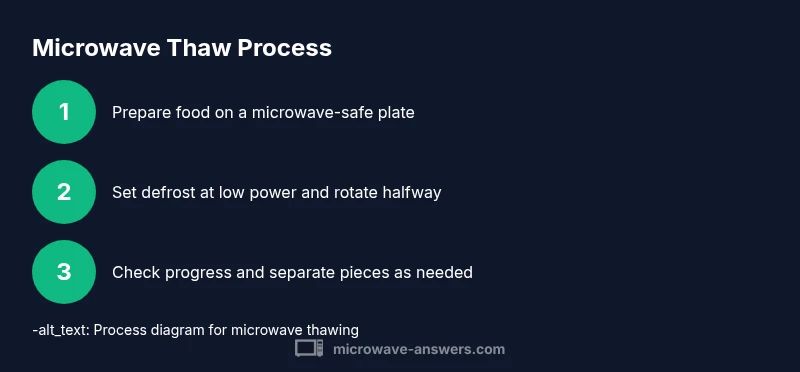
Most microwaves offer a dedicated defrost setting or low-power options. Aim to defrost at about 20-50% power, depending on your model, and use short bursts. Rotate and rearrange food between cycles to counter cold spots. For thicker items, you may need extra cycles and a break between cycles to let heat redistribute. If your unit includes a weight-based defrost mode, input the item’s approximate weight for more accurate results. Always end with a quick check of the center; if it’s still icy, continue with short intervals until evenly thawed.
Practical defrost protocol (step-by-step approach)
To get even thawing with minimal texture loss, follow a consistent protocol. Keep your work area clean and ready with a plate, a turner, and a thermometer. The goal is to bring the item to a cook-ready stage without starting to cook the outer layers. If juices begin pooling, that’s a sign to reduce power and increase intervals. This approach also helps when you’re thawing multiple items at once.
Common mistakes and how to avoid them
- Using high power on large items can begin cooking the exterior while the interior remains frozen. Solution: start with defrost or low power in short bursts.
- Not turning or separating pieces leads to uneven thaw. Solution: rotate, separate, and rearrange throughout the cycle.
- Leaving thawed food at room temperature for too long encourages bacterial growth. Solution: cook promptly or refrigerate immediately.
- Using non-microwave-safe containers can cause chemical leach or melting. Solution: use only microwave-safe materials.
Foods best for microwave thaw vs. foods to avoid
Microwave thaw works well for small cuts of meat, ground meats, fish fillets, bread, buns, and many vegetables. It’s less ideal for large roasts, whole poultry, or fish with a lot of thawed liquid because texture can become uneven. In these cases, fridge thawing is often preferable for texture and safety. Always tailor your approach to the food type and thickness, and when in doubt, perform thawing in smaller portions.
Post-thaw handling: cooking promptly and storage
After thawing, plan to cook the food immediately or refrigerate promptly and use within 1-2 days. Do not refreeze thawed items unless you have cooked them first. When planning to cook, check internal temperatures with a thermometer and reach safe levels to reduce bacteria. Keep raw juices contained to prevent cross-contamination, and clean the plate and surfaces right away to maintain kitchen hygiene. This practice aligns with guidance from Microwave Answers and federal food-safety standards.
Authority references and further reading
For deeper guidance, consult federal and university resources on defrosting and food safety. Key references include:
- U.S. FDA: Safe food handling and defrosting guidelines. https://www.fda.gov/food/food-safety-causes-illness/keep-food-safe-defrosting
- USDA FSIS: Defrosting and handling meat and poultry safely. https://www.fsis.usda.gov/food-safety/safe-food-handling-and-preparation
- Cornell Cooperative Extension: Defrosting tips and best practices. https://extension.cornell.edu
Tools & Materials
- Microwave-safe plate or container(Flat, shallow dish to promote even defrosting and catch drips)
- Microwave-safe cover or paper towels(Prevents splatter and helps retain moisture)
- Food thermometer(Optional to verify safe internal temps once thawed)
- Tongs or spatula(To turn and separate pieces without splashing)
- Small dish of water (optional)(A splash can help with very dense items by slowing surface heating)
Steps
Estimated time: 15-30 minutes
- 1
Prepare the food
Remove packaging and any foil or metal trims. Place the item on a microwave-safe plate to catch drips and place it in the center of the microwave. If the item is large, cut into smaller portions to improve thawing uniformity.
Tip: Use a shallow dish to maximize surface area and promote even thawing. - 2
Choose defrost settings
Select defrost or a low-power setting (around 20-50% depending on your model). If your microwave has a weight-defrost option, input the approximate weight for better results.
Tip: If unsure about weight, start with a conservative setting and check progress frequently. - 3
Defrost in short intervals
Run cycles of 2-4 minutes, then pause to check progress and rotate the food. This prevents overthawing on the outside while the center remains frozen.
Tip: Use the turntable if available; rotate 90 degrees between intervals. - 4
Separate and rearrange
If items are stuck together, gently separate with tongs or a fork. Break large blocks into smaller pieces to expose more surface area.
Tip: Be careful of steam and hot surfaces when handling. - 5
Check center and finish
Probe the thickest part; if still icy, continue with short cycles. Avoid leaving food in a warm zone, which invites bacterial growth.
Tip: Aim for even thawing throughout; any cold spots should be reprocessed. - 6
Cook promptly or refrigerate
Thawed foods should be cooked immediately or refrigerated promptly. Do not leave thawed items at room temperature for more than 2 hours total.
Tip: If you plan to cook later, refrigerate within 2 hours of thawing. - 7
Clean and store leftovers
Wash your hands, clean surfaces, and store any leftovers in airtight containers. Label with date and use within 3-4 days.
Tip: Sanitize utensils that touched raw food to prevent cross-contamination.
Common Questions
Is thawing in the microwave safe?
Yes, if you follow proper defrost settings, monitor progress, and cook immediately after thawing to temperatures that inactivate bacteria.
Yes, thawing in the microwave is safe when you follow proper defrost steps and cook promptly afterward.
Can I refreeze thawed food?
Refreezing thawed items is generally not recommended due to texture changes and potential bacterial growth, unless you cook them first.
You should not refreeze thawed foods unless you cook them first.
What foods should not be thawed in the microwave?
Very dense items or foods with uneven density can thaw poorly; for delicate items or large cuts, fridge thawing is often better for texture and safety.
Some foods thaw poorly in microwaves—consider fridge thawing for best results.
How long does thawing take?
Times vary by weight, density, and microwave model. Use short intervals (2-4 minutes) and check progress regularly.
Thaw times vary; expect several minutes for small portions and longer for larger items.
Does defrosting affect texture?
Yes, microwaving can cause partial cooking or uneven texture. Plan to cook thawed foods promptly to minimize texture changes.
Yes, texture changes can happen; cook promptly for best results.
Watch Video
Main Points
- Use defrost settings to control heat and prevent partial cooking.
- Rotate and separate pieces for even thawing.
- Cook thawed foods promptly to minimize bacterial risk.
- Always use microwave-safe containers and avoid metal.
- Verify doneness with a thermometer and follow safe handling guidelines.