Why Do Microwaves Cause Metal to Spark? A Practical Troubleshooting Guide
Learn why microwaves spark when metal is present, identify common culprits, and follow safe fixes. This Microwave Answers guide covers quick diagnostics, step-by-step fixes, and prevention tips for home cooks and homeowners.


The most common reason you see sparks is metal items in the microwave with sharp edges or crinkles. When microwaves hit these edges, electric fields concentrate and cause arcing. Avoid metal entirely on heating or use only microwave-safe metal approved by the manufacturer; never deflect or shield with foil. For safety, unplug if you observe sparks.
Why Do Microwaves Cause Metal to Spark?
According to Microwave Answers, the phenomenon of metal sparking in a microwave comes from how microwave energy interacts with metal objects. Microwave radiation does not heat metal as efficiently as it heats water-rich foods; instead, metal tends to reflect and distort the field. When sharp edges, points, or crinkles create abrupt changes in geometry, the oscillating electric field concentrates in tiny gaps. This leads to ionization of the air between two conductors and a visible arc or spark. The result is a brief, bright discharge that can damage interior coatings or the magnetron if repeated. It’s a practical signal to avoid metal items altogether unless the appliance manufacturer explicitly permits them. In practice, the most frequent triggers are crinkled aluminum foil, foil-wrapped foods, and shiny utensils with edges. The bottom line: if you see sparks, stop and remove metal immediately, then switch to microwave-safe containers made of glass or ceramic.
Common Culprits: Metal Shapes, Foil, and Containers
Not all metal behaves the same in a microwave. The biggest offenders are: (a) Crinkled or foil-wrapped foods where thin foil edges protrude; (b) Utensils with sharp corners or decorative metal trims; (c) Thin, reflective metal sheets placed near the food or at the center; (d) Containers with metallic paint or trim. Even when a metal item seems harmless, its geometry can trap and focus microwave energy into a spark path. Microwave Answers analysis shows that many sparks occur when users assume “a little metal is okay.” In reality, even small, irregular slivers can trigger arcing. Always verify that your dish is labeled microwave-safe and free of metal accents; when in doubt, remove the item and use a ceramic or glass alternative.
Safety First: Immediate Steps When You See Sparks
If sparks appear, your first priority is safety. Stop the microwave immediately and unplug it if safe to do so. Do not open the door while sparks are flying; wait a few seconds for any residual heat or short sparks to subside. Evacuate the area if there is smoke or a strong smell of burning. After the oven cools, inspect for damaged interior coating, burn marks, or compromised seals. If you notice any damage, do not reuse the unit until a qualified technician inspects it. Great care and a calm approach reduce risk and prevent collateral damage.
Diagnostic Check: Quick Tests You Can Do
Use a simple, methodical approach to identify the culprit. First, remove all metal items from the dish and the oven interior. Second, inspect foil for crinkles, holes, or sharp edges; crumpled foil is a particularly common trigger. Third, check that the turntable and ring are clean and properly seated; a misaligned turntable can trap microwaves in unexpected ways. Fourth, try heating a plain microwave-safe item (like a ceramic plate with a small amount of water) for a short test run without any metal nearby. If sparks recur, move to the next step rather than forcing a fix.
Step-By-Step Fix: How to Stop Arcing Most of the Time
- Unplug the microwave and remove any metal items. 2) Inspect all dishes for metal trim, foil, or foil-wrapped components and replace with microwave-safe alternatives. 3) Clean the interior, especially the door seal and hinges, to remove any foil fragments. 4) Check the turntable and roller ring for wear or damage; replace if needed. 5) Run a short test with a plain glass dish and water, ensuring no metal is present. 6) If sparks persist, discontinue use and contact a technician. Tip: keep a small stash of microwave-safe glass and ceramic dishware for quick, foil-free meals.
Prevention Tips: How to Avoid Metal Sparks in the Future
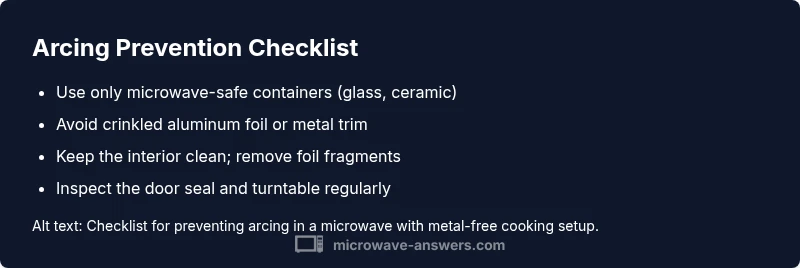
Prevention is better than repair. Use only microwave-safe containers made of glass, ceramic, or approved plastics. Remove all metal utensils and foil prior to heating. When using foil, ensure it is smooth, flat, and does not touch the food; avoid crinkles and folds near the center. Consider using a microwave-safe microwave cover to reduce splatter rather than foil shielding. Finally, inspect your microwave regularly for interior damage and have it serviced after obvious arcing incidents.
When to Call a Technician: Recognizing Real Problems
If sparking behavior continues after removing metal items and following basic checks, there may be a deeper issue such as interior coating damage, a faulty magnetron, or electronics wear. Do not rely on DIY fixes for suspected magnetron or door-seal problems. If you hear buzzing, notice unusual smells, smoke, or the unit feels hot outside, unplug immediately and arrange service. A licensed technician can assess safety risks, replace worn components, and confirm the appliance isn’t a fire hazard.
Steps
Estimated time: 15-45 minutes
- 1
Power down and unplug
Unplug the microwave and remove the dish before inspecting for metal debris or loose parts. This prevents accidental shocks during inspection and reduces the risk of further arcing.
Tip: Always unplug first; never probe inside a live unit. - 2
Remove all metal items
Take out any metal utensils, foil, or metallic trim from the dish or container. Replace with microwave-safe glass or ceramic and use a plain dish for testing.
Tip: If you must use foil, keep it flat and away from the food—prefer not to use foil at all for safety. - 3
Inspect the interior
Look for missed foil fragments, sharp edges on the walls, or signs of burn marks. Clean the door seal and interior surfaces to remove any foil shard that could cause later arcing.
Tip: Use a soft cloth and mild detergent; avoid abrasive cleaners that could scratch the interior. - 4
Check the turntable assembly
Ensure the turntable and roller ring sit correctly and rotate freely. Misalignment can trap microwaves and contribute to uneven energy distribution that promotes arcing.
Tip: Replace worn roller rings and ensure the plate sits flat on the support. - 5
Run a test with water in a microwave-safe dish
Heat a plain glass dish with a small amount of water for 20–30 seconds to observe any abnormal sparking absent metal. If no sparking occurs, reintroduce foods gradually and monitor closely.
Tip: Small tests reduce risk and help identify when it’s safe to use again. - 6
Decide on next steps
If sparking returns at any point, discontinue use and contact a technician. Do not attempt further DIY fixes on suspected magnetron or door-seal problems.
Tip: Document any unusual smells or heat and share with the technician.
Diagnosis: Visible sparks or buzzing when heating with metal present
Possible Causes
- highCrinkled/foil-wrapped food with sharp edges
- highMetal utensils or trims with sharp corners
- mediumMetal near the center or touching the walls
- lowDamaged interior lining or misaligned turntable
Fixes
- easyRemove all metal items and foil; replace with microwave-safe containers
- easyCheck for foil crinkles and smooth or discard crinkled pieces
- mediumInspect turntable and roller ring; reseat or replace if damaged
- easyIf sparking persists after these steps, seek professional service
Common Questions
What causes arcing in a microwave when metal is present?
Arcing occurs when metal edges or foil create concentrated electric fields that ionize the air, producing sparks. Crinkles and sharp edges increase the risk. Always remove metal unless the manufacturer permits it.
Arcing happens when sharp metal edges focus the microwave energy and create sparks. Remove metal and follow safety guidelines.
Can I microwave food wrapped in aluminum foil?
Only if the foil is flat, smooth, and not touching the food. Ideally, avoid foil altogether since any crinkles can spark. Use microwave-safe containers instead.
Flat, smooth foil near food can still spark; best to avoid foil entirely and use safe containers.
What should I do immediately if sparks appear?
Stop the microwave, unplug if safe, and keep distance from the appliance. Do not open the door during sparking. After it cools, inspect for damage or consult a technician if concerns persist.
Stop the microwave, unplug if safe, and don’t open the door during sparks. Check for damage after it cools.
Is it safe to keep using the microwave after a spark?
If sparking recurs after removing metal and inspecting the interior, stop using the unit and have it checked by a professional. Repeated arcing can indicate interior damage.
If sparks keep returning after checks, stop using it and get it inspected.
What maintenance helps prevent arcing?
Regular cleaning, checking the door seal, and using only microwave-safe cookware reduces arcing risk. Store metal utensils separately and avoid crinkled foil.
Keep the interior clean, use microwave-safe containers, and avoid crinkled foil.
When should I contact a technician?
If sparks persist, if you notice smoke, burning smell, or heat outside the unit, unplug and call a qualified technician to inspect magnetron and door seals.
Persisting sparks or unusual smells mean call a technician.
Watch Video
Main Points
- Remove all metal before heating to avoid arcing
- Use microwave-safe glass/ceramic containers only
- Inspect and test after any arcing incident
- If in doubt, consult a technician rather than DIY repairs