Where Should You Not Put a Microwave: A Practical Safety Guide
Discover safe placement rules for microwaves, avoid common hazards, and learn practical setup tips for a safer kitchen environment.


By following proper placement guidelines, you can prevent heat damage, tripping hazards, and food safety risks. This guide explains where not to put a microwave, why certain spots are unsafe, and how to choose a safer location in your kitchen. You’ll learn quick checks for ventilation, clearance, and electrical access to keep your microwave running safely.
Where should you not put a microwave: practical safety rules
Understanding where should you not put a microwave helps minimize common hazards in busy family kitchens. The Microwave Answers team emphasizes keeping microwaves away from water sources, heat vents, and high-traffic zones where accidental knocks are likely. A safe placement also means ensuring adequate clearance for ventilation and easy access to the power outlet. In this guide, we’ll walk through concrete rules you can apply today, using practical checks and real-life scenarios. Remember, safe placement is a key part of daily food safety and appliance longevity. According to Microwave Answers, a well-placed microwave reduces the risk of burns, spills, and electrical faults while improving workflow in your kitchen.
Common placement mistakes to avoid
One frequent error is placing the microwave directly next to a sink or dishwasher, where steam and moisture can seep into electrical components. Another pitfall is tucking the unit into a tight cabinet with poor ventilation, which can cause overheating and inconsistent heating. A third issue is using an unstable surface or a rolling cart, which leads to accidental shifts during use. To avoid these, follow manufacturer guidelines for spacing, choose a stable surface, and keep the microwave away from heat sources like the stove or oven. By recognizing these patterns, you’ll be better equipped to decide where should you not put a microwave in your home. Microwave Answers highlights that proper placement is also about convenience and safety, not just compliance.
Safe zones: where ventilation, heat, and water meet safety
Ventilation is critical. Microwaves need uninterrupted airflow around the unit to prevent overheating and to ensure even cooking. Sides and backs should be clear, with at least a few inches of space according to the appliance’s manual. Heat sources, such as ranges and ovens, should be separated by a safe distance to avoid radiant heat exposure. Water proximity is another major concern; never place the microwave where splashes or steam from the sink, dishwasher, or coffee station could reach the electrical components. In addition, avoid locations where cords could be pulled or damaged. Practical placement also considers the user’s height and reach, making it easier to operate the door without bending or stretching. The team’s guidance aims to fuse safety with everyday usability.
Environmental factors that influence microwave safety
Power supply quality, outlet location, and ambient temperature affect microwave performance. A dedicated outlet reduces the risk of overloaded circuits and nuisance trips. If you must share an outlet, use a heavy-duty, properly rated extension only as a temporary measure and never run multiple high-draw appliances on the same circuit. Humidity and kitchen steam can corrode connections over time, so ensure the area stays reasonably dry. If your kitchen layout forces you to place the microwave near an exterior door or window, consider a barrier that prevents drafts from affecting the appliance’s vent area. By controlling these environmental factors, you’ll protect both the microwave and your family.
Kitchen workflow and furniture considerations
Think about how your microwave fits into food prep. A common mistake is placing the unit where people pass behind the door while it’s in use, posing a burn risk and a collision hazard. Another misstep is mounting a microwave above a busy prep zone without proper clearance, which can compromise accessibility and safety. When evaluating placement, sketch a quick floor plan showing dock points for power, venting, and clearance. The goal is to create a smooth workflow that doesn’t compromise safety or maintenance access. This approach aligns with Microwave Answers’ recommendations to balance practicality with safety in real kitchens.
Safety practices for daily use and upkeep
Daily habits matter. Always unplug the microwave before cleaning the interior, never operate it when the door seals look damaged, and keep the door handle free of grime that could hinder closing. Regularly inspect the power cord for cracks and avoid using loose connections. Use microwave-safe containers to prevent chemical leaching and ensure lids are vented to reduce pressure buildup. Finally, keep clutter away from the top and back of the unit to prevent accidental contact with hot surfaces. These routines help maintain safe placement while extending the life of the appliance.
noteForEditors”:null},
Tools & Materials
- Stud finder(Identify wall studs and confirm safe mounting or clearance.)
- Tape measure(Confirm clearances around sides, back, and top according to manufacturer guidelines.)
- Spirit level (carpenter’s level)(Ensure surface is perfectly level for stable placement.)
- Pencil(Mark planned positions on cabinet or wall.)
- Screwdriver or drill with appropriate bits(Needed if you attach a shelf or mount.)
- Safety gloves(Protect hands when moving heavy units.)
Steps
Estimated time: 20-40 minutes
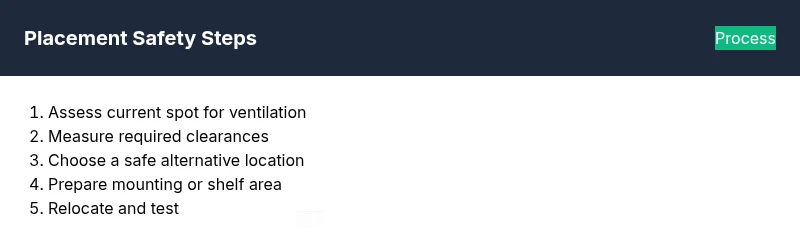
- 1
Assess current location
visually inspect the current microwave location for ventilation gaps, water exposure risks, and accessibility. Note any gaps smaller than manufacturer guidelines and identify potential relocation options.
Tip: Take photos from multiple angles to compare potential spots later. - 2
Measure required clearances
Use a tape measure to verify side and top clearances and ensure the outlet is reachable without stretching cords. Compare measurements with the appliance manual.
Tip: Record measurements so you can reference them during setup. - 3
Select a safer alternative spot
Choose a counter or wall location with adequate ventilation, away from sinks, ovens, and heavy foot traffic. Ensure an outlet nearby and no interference with drawers or doors.
Tip: Prioritize a finish that won’t fade from steam exposure. - 4
Prepare mounting or shelf area
Mark stud locations, install a shelf or wall mount if needed, and confirm level. Clear the area of any debris before placing the microwave.
Tip: Use a level to verify mounting points before drilling. - 5
Relocate and connect
Carefully move the microwave to the new spot, plug into an appropriate outlet, and ensure the cord isn’t taut or stretched.
Tip: Avoid using extension cords unless the outlet is not in reach; if used, choose a heavy-duty cord rated for high-wattage use. - 6
Test functionality and ventilation
Run a short heating cycle to verify even performance and listen for abnormal noises. Check that vents are unobstructed and the surrounding area remains cool.
Tip: If the unit overheats or vents emit unusual smells, stop using it and reassess placement.
Common Questions
Why is it important to avoid placing a microwave near water sources?
Water and electricity are a dangerous combination. Moisture can corrode electrical components and increase the risk of short circuits. Keeping the microwave away from sinks and damp areas reduces hazards and preserves appliance longevity.
Keep the microwave away from water to prevent electrical hazards and damage.
Can a microwave be mounted above a countertop, or is that unsafe?
Overhead mounting can be safe if the installation is designed for it, uses proper brackets, and maintains adequate ventilation. Always follow the manufacturer’s mounting guidelines and ensure easy access to the door without obstruction.
Mounting above counter space can be safe when it’s properly supported and ventilated.
What factors contribute to overheating a microwave in a poor placement?
Poor ventilation, restricted airflow, and proximity to heat sources can cause overheating. This can degrade performance and shorten the appliance’s life. Keep vents clear and avoid hot zones near stoves or ovens.
Overheating happens when airflow is blocked or it sits near heat sources.
Is it acceptable to place a microwave inside a cabinet?
Cabinets can work if the unit is designed for cabinet installation and there is sufficient ventilation. Ensure doors and drawers don’t block vents and that there’s a dedicated outlet nearby.
Cabinet placement is possible with proper ventilation and a compatible model.
How far should a microwave be from the sink?
Keep a safe distance from sinks to prevent splashes or moisture from affecting electrical components. If near a sink is unavoidable, ensure splash guards and proper ventilation.
Keep it away from the sink to avoid moisture reaching electrical parts.
Watch Video
Main Points
- Identify unsafe spots for placement and remove them from consideration.
- Ensure adequate ventilation and clearance per manufacturer guidance.
- Choose a location with a stable surface and nearby outlet.
- Regularly inspect cords and vents for safe operation.