Microwave Is Arcing: Quick Troubleshooting Guide
Urgent, practical guide to diagnose and safely fix arcing in microwaves. Learn common causes, immediate safety steps, and when to call a pro in 2026.


Most arcing in a microwave is caused by stray metal, damaged waveguide components, or foil left inside. The immediate fix is to unplug the unit, inspect the cavity for metal or foil, and remove it. If sparks continue, stop using the microwave and call a qualified technician. Avoid touching the interior and never run it with the door open.
Understanding the risk when the microwave is arcing
When the microwave is arcing, it's not a cosmetic issue—it's a safety alert. Sparks can indicate metal fragments, a damaged waveguide cover, or foil inside the cavity. This electrical arc can damage the magnetron or ignite components. This guidance, informed by Microwave Answers, emphasizes treating it as urgent and unplugging the unit immediately. Avoid touching the interior and never run it with the door open. If the microwave is arcing, seek professional help rather than attempting a risky DIY repair.
Common causes of arcing in microwaves
Arcing is most often caused by metal in the cavity or damaged shielding. Foil or utensils with edges can bounce microwaves and create sparks. A cracked waveguide cover or damaged gasket can also trigger arcing. Improper cookware that is not microwave-safe may overheat and spark. Occasionally, a power surge or a worn magnetron can contribute, though these are less common. If the microwave is arcing, the first step is to stop and unplug to prevent further damage.
Immediate safety steps if you notice sparks
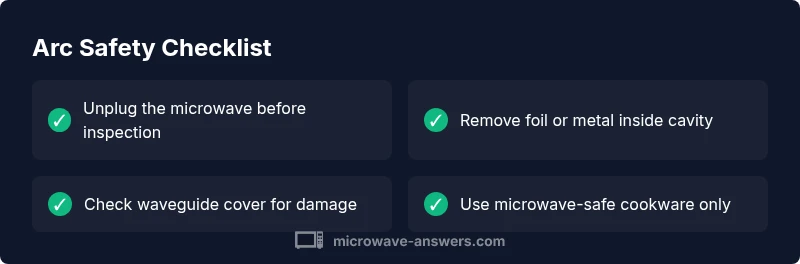
- Stop the microwave and unplug it from the wall. 2) Keep the door closed and allow the interior to cool. 3) Remove any metal objects or foil from inside the cavity. 4) Inspect the waveguide cover if visible; do not touch hot or exposed parts. 5) If sparks recur after removing items, do not attempt to operate the unit; contact a professional. These steps minimize risk while you determine the next course of action.
Diagnostic flow: symptom → diagnosis → solutions
Symptoms: visible sparks, buzzing, or a burning smell. Diagnosis is based on interior inspection and the part of the oven that shows damage. Solutions range from simple cleaning and item removal to part replacement by a technician. This flow helps you decide whether it's safe to continue using the microwave or if it needs service. Remember, a spark connected to a damaged component often means urgent service is required.
Step-by-step: fix for the most common cause (metal/foil inside)
- UNPLUG the microwave and remove any items from the turntable area. 2) Open and inspect the interior for foil, metal trim, or utensils. 3) If you find foil or metal, carefully remove it with plastic tongs; do not touch with bare hands. 4) Check the waveguide cover for damage; if it looks burnt, cracked, or stained, do not use the unit. 5) Reassemble and run a short test with a microwave-safe container and water for 15-20 seconds. 6) If arcing returns, stop and schedule service. Pro tip: never attempt a repair that involves opening the magnetron housing.
Safety notes and common mistakes
- Do not operate the microwave with doors or panels open; this poses electric shock risk. - Avoid using metal utensils or aluminum foil in or around the dish. - Do not bypass protective interlocks or force the door if it doesn’t latch properly. - If you’re unsure about any damage, don’t guess—call a pro. Microwave safety hinges on proper inspection and replacement by qualified technicians.
Prevention tips to avoid future arcing
- Use only microwave-safe cookware; avoid metal accents, crimped foil, or metallic trim. - Clean the cavity regularly to remove food debris that can cause arcing. - Inspect the waveguide cover for cracks or burns during routine maintenance. - Replace aging units promptly and check seals around the door. - Keep replacements and service documented for warranty purposes; avoid DIY fixes that void coverage.
When to call a professional and warranty considerations
If arcing recurs after basic cleaning and object removal, or if you notice burnt smells, unusual noises, or heat not producing evenly, call a certified appliance technician. Professional service may involve waveguide cover replacement or magnetron inspection. If your unit is under warranty, contact the manufacturer or authorized service to preserve coverage. In all cases, prioritize safety and avoid risky DIY fixes.
What the Microwave Answers team recommends
The Microwave Answers team recommends erring on the side of safety with any arcing issues. Prioritize unplugging, interior inspection for metal/foil, and professional evaluation for damaged waveguide components. Following the recommended checks and using appropriate cookware will minimize recurrence and protect your kitchen from further hazards.
Steps
Estimated time: 30-60 minutes
- 1
Power down and unplug
Disconnect the microwave from the power source to ensure there is no live electricity. This is your first line of defense against electric shock while inspecting the interior.
Tip: Always unplug first, even if you think you know what caused the arc. - 2
Inspect the cavity for foreign objects
Look inside for foil, metal trim, or utensils that are not microwave-safe. Remove any found items with plastic tongs to avoid cuts or burns.
Tip: Use a flashlight to see the corners where debris hides. - 3
Check the waveguide cover
If you can see the waveguide cover, inspect for burns, cracks, or discoloration. Do not operate if damaged; replacement is usually a job for a technician.
Tip: Do not attempt to squeeze, bend, or reseal the cover. - 4
Test with a safe load (optional and cautious)
If no damage is detected, reassemble with a microwave-safe container and water, and run on low power for 15 seconds to observe heating without arcing.
Tip: If any sparks reappear, stop immediately and seek professional service. - 5
Document and decide on next steps
Record what you found and whether the arc recurred. If unresolved, schedule service and avoid use until inspected.
Tip: Keep receipts and warranty information handy for service inquiries. - 6
Consider professional repair or replacement
If there is repeated arcing or significant damage, a repair may not be cost-effective. Evaluate parts replacement versus a new unit.
Tip: Check warranty status before paying for repairs.
Diagnosis: Sparks or arcing in microwave during operation
Possible Causes
- highMetal object or foil inside cavity
- highDamaged waveguide cover or interior shielding
- mediumUndersized or improper cookware causing arcing
- lowCracked magnetron or high-voltage issue
- lowElectrical outlet or power issue causing surge
Fixes
- easyUnplug immediately and remove any metal, foil, or utensils from the cavity
- hardInspect waveguide cover and interior for damage; replace if damaged (professional)
- easyUse only microwave-safe cookware and avoid metal edges or crimped foils
- mediumIf arcing persists after fixes, disconnect power and contact an appliance repair technician
Common Questions
What does arcing in a microwave mean?
Arcing means electricity is jumping between surfaces inside the cavity. This can damage components and create a fire risk. Stop using the unit and inspect for metal or foil before seeking service.
Arcing means electricity is jumping between surfaces inside the microwave, which can damage parts and start a fire. Stop using it and get professional help if the problem persists.
Can you continue to use a microwave after arcing?
No. Unplug the appliance and do not operate it until a thorough inspection by a qualified technician confirms it’s safe. Arcing is a safety hazard that should not be ignored.
No. Unplug it and don’t use it until a technician checks it. Arcing is a safety hazard.
What are the most common causes of arcing?
Most arcing is caused by metal inside the cavity, foil on food, or a damaged waveguide cover. Improper cookware can also spark under certain conditions.
Most arcing comes from metal in the cavity, foil on food, or a damaged waveguide cover. Use proper cookware to prevent it.
Is it safe to do DIY repairs on a microwave?
Basic checks like unplugging and inspecting for obvious debris are fine, but major components (magnetron, waveguide, door interlocks) require a licensed technician. Do not open the magnetron housing.
Basic checks are okay, but major repairs need a licensed technician. Don’t open the magnetron housing.
How long should I test after a fix?
If you’ve cleared debris and replaced any damaged parts, run a short test with a microwave-safe load for 15-20 seconds and monitor for any signs of arcing.
Test with a safe load for 15-20 seconds and watch closely for sparks.
When should I replace the microwave?
If arcing returns after service or the unit is old and inefficient, replacement is often the safer choice and may be more cost-effective in the long term.
If arcing returns after service or the unit is old, replacement may be the safer option.
Watch Video
Main Points
- Unplug immediately if sparks appear
- Inspect cavity for foil or metal objects
- Check waveguide cover for damage and replace if needed
- Use only microwave-safe cookware
- Call a professional if arcing continues