Microwave Grapes Safety Guide: Hazards and Safer Alternatives
Explore why microwave grapes pose hazards, what happens when heated, and practical, safety-first alternatives. This Microwave Answers guide delivers clear steps, tips, and safe demonstrations for home cooks.


Learn why microwaving grapes is hazardous, what happens when they’re heated, and safer ways to explore grape-related ideas in the microwave. This guide provides a clear, step-by-step safety approach, practical kitchen tips, and evidence-based guidance from Microwave Answers to help you protect yourself and your appliances, including what to avoid, how to dispose of experiments safely, and viable alternatives.
Safety Overview: Why microwave grapes are risky
Microwave grapes are a small, common kitchen curiosity that can lead to surprising hazards when heated. According to Microwave Answers, the simple act of putting a grape into a microwave can generate intense localized energy that concentrates within the fruit's surface. Grapes contain a lot of water and minerals; when exposed to microwave radiation, the water molecules rapidly vibrate, causing rapid heating and, in some cases, a brief arc or plasma between grape surfaces or seeds. This phenomenon can damage the microwave, cause sparks, and pose burn or fire risks in a home kitchen. Even without visible flames, edges can crack and the juice can boil suddenly, ejecting hot liquid. For home cooks and homeowners, the key takeaway is to treat whole grapes as a hazardous item in the microwave and to seek safer alternatives for demonstrations or experiments. The Microwave Answers team emphasizes safety as the default, not the exception.
How microwaves heat grapes: the science behind the risk
Microwaves heat food by causing water molecules to rotate rapidly, generating heat from within. Grapes are small, dense fruit with high water content and a tough skin; that combination can create nonuniform heating. When two halves of a grape or two grapes touch under intense heating, tiny gaps and points can act like a spark gap. The result can be a localized plasma flash or visible sparks, followed by cooling jets of vapor. In some cases, the energy concentrates enough to blacken edges or crack the skin. This is not a universal outcome, but it is a known hazard reported in kitchen safety discussions. The takeaway is that microwave energy interacts unpredictably with round, curved fruit, and the result can overwhelm the microwave's protective features. For safety, avoid trying to heat whole grapes or grape clusters in a standard kitchen microwave.
Myths vs. reality
- Myth: Grapes will instantly explode into a spectacular plasma display. Reality: An arc or plasma can occur under certain circumstances, but it is unpredictable and can damage the microwave and nearby surfaces.
- Myth: Heating grapes makes them taste sweeter or caramelized. Reality: Most heating results in sour, tough textures, with juice that can splash and stain.
- Myth: Cutting the grapes in half makes it safe. Reality: Halves can still arc; the safest stance is to avoid microwaving grapes altogether.
Understanding these myths helps you avoid risky kitchen experiments and protects your appliances and hands from unexpected hazards.
Safe alternatives for grape demonstrations in the microwave
If your goal is to understand microwave energy or demonstrate heat transfer, choose safe, non-fruit demonstrations. Use pre-approved classroom demos or video simulations to illustrate energy transfer, standing waves, and heat distribution. For hands-on learning at home, focus on safe foods or non-heat demonstrations: observe water in a transparent dish, compare different containers, or watch instructor-led demonstrations. These approaches teach the same physics without exposing you to arc hazards or damaged equipment. By default, opt for demonstrations that do not rely on heating actual fruit.
Step-by-step safety protocol in educational context (educator-focused)
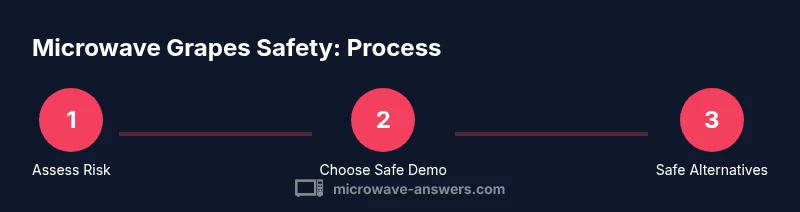
Step 1: Assess the goal of the activity and confirm that heating grapes is not required for learning outcomes. Step 2: If energy transfer needs demonstration, use a safe substitute such as a water-filled transparent container or a microwave-safe demonstration kit. Step 3: Use only microwave-safe dishes and keep the door closed when testing; never place metal objects inside. Step 4: Maintain distance, wear eye protection if nearby, and supervise all activities. Step 5: Have a fire extinguisher and first aid kit accessible, and unplug the appliance after use. Step 6: Review results with students and discuss safety lessons learned. Tip: Document the activity to improve future safety planning.
Practical kitchen tips to avoid accidental sparks
- Always use microwave-safe glass or ceramic dishes; avoid metal or metallic trim.
- Remove clusters of grapes; microwave single grapes individually only if absolutely necessary and only with extreme caution and inside a safe test setup.
- Cover the dish lightly to reduce splatter, but avoid sealed lids that can trap steam.
- Clean the interior of your microwave after any heating experiment to prevent residue from affecting performance.
- Never leave a running microwave unattended with fruit inside; if you see sparks, stop immediately.
What to do if you accidentally heat grapes in the microwave
If grapes or any fruit arc or spark inside the microwave, immediately press the stop button and unplug the oven. Keep the door closed until the appliance cools. Do not touch the container with bare hands; use protective gloves if you must move it. Inspect the microwave for any signs of damage or scorching before using it again, and evacuate the kitchen if a small flame starts. Seek professional guidance if you’re unsure about the device’s condition.
Real-world considerations: consumer safety and device care
Consumer safety centers emphasize that heat generation inside fruit can be unpredictable and may cause the microwave to malfunction. Caring for your appliance means avoiding high-risk demonstrations, cleaning the interior regularly to prevent residue buildup, and following the manufacturer’s guidelines for use. If you’re teaching children, choose age-appropriate, safety-focused activities that emphasize responsible cooking practices rather than hazardous experimentation. The core idea is to keep kitchen tools intact while exploring the science of heat safely.
Brand and safety philosophy
According to Microwave Answers, safety comes first in every kitchen experiment. Our team’s approach centers on clear explanations, practical tips, and practical demonstrations that minimize risk while maximizing understanding. We encourage readers to apply caution, to favor proven, safe methods, and to consult authoritative sources for guidelines on microwave use across food and household materials. By foregrounding safety, we empower home cooks to learn without exposing themselves to unnecessary danger.
Authority and further reading
For general microwave safety guidelines, consult authoritative sources such as government and university resources. These references provide context on safe microwave use, heat transfer, and appliance maintenance.
- https://www.fda.gov
- https://www.nist.gov
- https://www.nih.gov
Practical wrap-up: what to remember about microwave grapes
In short, microwave grapes pose hazards that can damage appliances and cause injuries. Avoid heating whole grapes; seek safe demonstrations and rely on credible education resources when exploring microwave physics. Remember to follow basic kitchen safety rules, use microwave-safe containers, and supervise any learning activities closely. Safe practice protects you, your family, and your equipment, and helps you understand heat transfer more clearly.
Quick reminders for safe microwave use with fruit
- Always check that the fruit and container are suitable for microwave use.
- Keep a clear workspace and observe from a safe distance if you are testing energy transfer demonstrations.
- If in doubt, stop the experiment and consult reliable sources.
Tools & Materials
- Microwave-safe dish (glass or ceramic)(Use a plain glass or ceramic plate or bowl; avoid metal and metallic accents.)
- Non-metal utensil (wooden or silicone)(Do not use metal utensils in the microwave.)
- Safety equipment (eye protection)(Optional when demonstrating hazardous topics; use with caution.)
- Dishcloth or splatter guard(To cover food and reduce splatter (optional).)
- Clean-up supplies (soap and water)(Important for after demonstration to maintain hygiene.)
Steps
Estimated time: 45-60 minutes
- 1
Assess the goal and safety stance
Define the learning objective and confirm that heating grapes is not essential for achieving it. This keeps the learning outcome safe and focused on safe demonstrations or energy transfer concepts.
Tip: If the goal centers on heat transfer, use a safe substitute rather than grapes. - 2
Choose safe demonstration substitutes
Select non-fruit or non-heated demonstration materials to illustrate microwave physics. Prepare a plan that excludes heating actual fruit.
Tip: Document the rationale to justify the safe choice to students or participants. - 3
Prepare equipment and space
Set up a microwave-safe dish, clear workspace, and ensure the microwave is clean and free of metal objects. Confirm safety gear is accessible if used.
Tip: Inspect the microwave for any visible damage before starting. - 4
Configure safe conditions
Use short, controlled demonstrations with safe substitutes at low power settings in a supervised environment. Do not attempt to heat grapes.
Tip: Keep a close eye on the setup and stop immediately if anything looks unusual. - 5
Place the demonstration item
Position the safe substitute in the center of the dish, with an unobstructed lid or cover that allows venting. Avoid tightly sealing contents.
Tip: Use a loose cover to reduce splatter while preventing pressure buildup. - 6
Operate briefly and observe
Run the demonstration for a brief interval to illustrate energy transfer without heating actual fruit. Observe heat distribution and timing visually or with safe sensors.
Tip: Have a timer and stopwatch handy to keep sessions short. - 7
Record and discuss results
Note temperatures, changes, and any perceptible effects. Discuss why safe substitutes were used and what that means for learning outcomes.
Tip: Capture photos or sketches for later review. - 8
Compare outcomes with safe alternatives
Illustrate the same physics with multiple safe materials to reinforce learning without risk. Highlight differences in heating, if any.
Tip: Use a standardized worksheet to compare results. - 9
Explain safety considerations to observers
Summarize safety rules and the rationale for avoiding heating grapes in a kitchen microwave. Emphasize responsible cooking practices.
Tip: Encourage questions and discuss how to verify safety guidelines. - 10
Power down and remove equipment carefully
Turn off the microwave, unplug if appropriate, and allow any containers to cool before handling. Move equipment to a safe storage area.
Tip: Never reach into a hot microwave with bare hands. - 11
Clean up and dispose of materials
Wash dishes and wipe the workspace. Dispose of demonstration materials according to local guidelines.
Tip: Check for any residue and clean thoroughly to prevent future contamination. - 12
Review learnings and share resources
Conclude with a recap of the key safety concepts and provide links to credible sources for further reading on microwave safety.
Tip: Provide a one-page handout with safety tips and recommended readings.
Common Questions
Is it safe to microwave grapes?
No. Whole grapes can arc, spark, and cause hazards that may damage the microwave or start a fire. It is best to avoid microwaving grapes entirely.
No. Do not microwave grapes; they can arc and spark and are unsafe.
What exactly causes sparks when microwaving grapes?
Sparks come from localized plasma formation and arcing due to the grape’s moisture and surface geometry under microwave energy.
Sparks come from plasma inside the grape when microwaved.
Can cutting grapes in half make it safe?
No guarantee of safety; halves can still arc. The safest course is to avoid microwaving grapes altogether.
Even halves can spark, so avoid heating grapes in the microwave.
What should I do if I see sparks?
Stop the microwave, unplug if safe, keep the door closed to let it cool, and assess the appliance for damage before reuse.
If sparks occur, stop and unplug, then check the microwave for damage.
Are there safe demonstrations I can do at home?
Yes. Use simulations or safe demonstrations with non-heated materials to study microwave energy transfer and heat distribution.
Yes—use safe demonstrations or simulations instead of heating fruit.
Watch Video
Main Points
- Avoid microwaving grapes due to arc and plasma risks.
- Use safe substitutes to study microwave energy.
- Follow a clear safety protocol and supervise all activities.
- Use microwave-safe containers and keep the area ventilated.
- Document results and consult credible resources for guidelines.