How to Tell If Microwave Popcorn Is Bad: A Practical Guide
Learn practical signs of spoilage, safe testing steps, and storage tips to prevent waste and keep your kitchen safe when dealing with microwave popcorn.


To tell if microwave popcorn is bad, start with a quick check of odor, appearance, and bag condition before microwaving. This is part of how to tell if microwave popcorn is bad, and it saves you from wasted kernels and potential safety hazards. Look for sour or rancid smells, mold, discoloration, or a swollen bag. If anything seems off, discard and do not microwave. This fast check protects you from spoiled kernels and potential safety hazards.
How to tell if microwave popcorn is bad: pre-microwaving checks
If you’re unsure about the popcorn, start with a quick assessment of the bag and its contents. This is part of how to tell if microwave popcorn is bad, and it saves you from wasted kernels and potential safety hazards. Look for signs you can verify in seconds: swelling, unusual odors, discoloration, or an already opened bag that smells off. According to Microwave Answers, storage history and packaging integrity strongly influence spoilage risk, so begin with the basics: check the sell-by date, inspect the bag for punctures, and confirm the popcorn hasn’t been left in heat or sunlight. A quick pre-check helps you decide whether to proceed with microwave heating or trash the package to stay safe.
Smell as a primary indicator: what to sniff for when testing popcorn
Odor is often the first sign something is wrong. Fresh microwave popcorn typically has a mild, buttered or popcorn-specific aroma. If you detect a sour, rancid, stale, or chemical-like smell, it is a strong signal that the product may be spoiled. Do not rely solely on appearance; odors can reveal microbial activity or chemical changes that aren’t visible. If the kernel or bag smells off, discard the contents and avoid cooking.
Visual cues: what the package and kernels can tell you
Look for visible signs of trouble: discoloration, mold growth on the kernels, dampness inside the bag, or powdery residues around the seal. Any ink or packaging damage that could expose the contents to air or moisture is a warning sign. If the popcorn looks pale or unusually dark compared with its normal appearance, it should be discarded. Always compare the product to the expected color and texture described on the package, and trust your eyes when in doubt.
How bag swelling relates to safety
A swollen or bloated popcorn bag is a red flag. Gas buildup inside the sealed package can indicate fermentation or microbial growth, which may produce unsafe conditions once heated. Do not attempt to pop a swollen bag; discard it promptly. Even if the contents look normal, swelling alone is enough reason to treat the product as potentially unsafe and dispose of it.
What to do if you suspect spoilage
If spoilage signs appear, do not microwave the product. Place the bag in a trash container promptly to minimize odors or contamination in the kitchen. If you opened the bag and noticed off smells or visible mold, seal the contents in a bag and dispose of it. Clean the area where the bag was stored to remove any residue and odors. Remember, safety comes first, and when in doubt, discard.
Safe disposal and cleanup
Dispose of spoiled popcorn in a sealed trash bag to minimize odor spread. Wipe down the microwave interior and surrounding surfaces with a mild sanitizer if there was any leakage. Wash hands thoroughly after handling spoiled food. Do not recycle or reuse a compromised bag, as contaminated packaging may pose ongoing risks.
Storage tips to prolong freshness and prevent spoilage
Store popcorn in a cool, dry place away from direct sunlight and heat sources. Keep unopened bags in their original sealed state until ready to use, and transfer opened portions to airtight containers if you plan to consume within a few days. Always check the sell-by date before purchasing and opening a new bag. Proper storage reduces the chance of moisture exposure and bacterial growth that can lead to spoilage.
Authoritative sources and practical guidance
For additional safety guidelines, refer to reputable sources:
Authoritative sources
- FDA: Food Safety and Inspection Service on general food safety and spoilage signs: https://www.fda.gov/food/buy-store-prepare-food/food-safety-what-you-should-know
- USDA FSIS: FoodSafety.gov and consumer guidance for safe storage and spoilage indicators: https://www.fsis.usda.gov/wps/portal/fsis/topics/food-safety-information
- CDC: Food safety basics and handling to prevent illness: https://www.cdc.gov/foodsafety/index.html
Quick-start checklist to verify quality in under 5 minutes
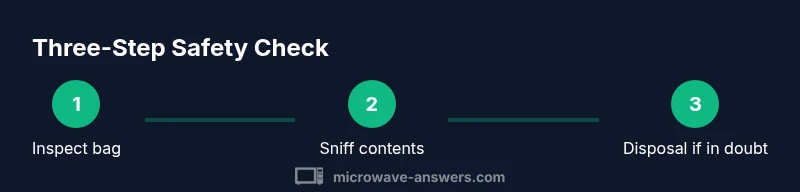
- Inspect bag for swelling or damage; discard if swollen or punctured
- Sniff the unopened bag; discard if sour or off odors
- Open and inspect a few kernels; discard if discolored or moldy
- Check sell-by date and storage history; replace if unclear or past date
- If in doubt, discard and choose a fresh bag
Tools & Materials
- null(No special tools required; use your senses and basic disposal routine. If you include a trash bag, that's optional.)
Steps
Estimated time: 10-15 minutes
- 1
Inspect bag for swelling
Hold the unopened bag and look for puffiness or bloating. Swelling can indicate gas buildup from spoilage, so discard without opening if the bag is inflated. This step helps prevent unsafe heating and potential contamination.
Tip: Swollen bags should be treated as unsafe; do not attempt to pop or taste contents. - 2
Smell through the bag
Carefully sniff the bag or contents if you can do so without opening fully. A sour, rancid, or chemical odor is a clear spoilage signal. If odors are off, discard the product and clean the area.
Tip: Avoid inhaling strong chemical smells; if the odor is strong, dispose immediately. - 3
Check for visible signs of spoilage
Inspect for mold, discoloration, or dampness on the kernels or packaging. Any unusual appearance warrants discarding the entire bag and not microwaving it.
Tip: If kernels look damp or unusually dark, throw them away. - 4
Open only if clearly safe
If the bag passes odor and visual checks, gently open to inspect a few kernels. Do not taste; dispose of any portion that shows anything suspicious.
Tip: If you notice off flavors or texture, stop and discard. - 5
Decide on disposal or use
If all checks are clean, you may proceed to microwave following standard instructions. If at any point a sign of spoilage appeared, discard the entire bag.
Tip: When in doubt, err on the side of safety and replace. - 6
Clean up and store properly
After disposal, wipe the area and wash your hands. Store remaining popcorn in a cool, dry place; keep unopened bags sealed until use.
Tip: Label dates on opened containers to track freshness.
Common Questions
What are the most reliable signs that microwave popcorn has gone bad?
Reliable signs include swelling of the bag, sour or rancid odors, visible mold, or discoloration. If you notice any of these, discard the product and avoid microwaving. When in doubt, replace with a fresh bag.
Common signs are a swollen bag, sour smell, or visible mold. If you see any of these, throw it away and don’t microwave it.
Can I salvage kernels if the bag is swollen but smells ok?
No. A swollen bag signals possible spoilage inside and potential safety risks. Do not attempt to pop or salvage; discard the bag to stay safe.
If the bag is swollen, discard it—don’t try to salvage the kernels.
Is it safe to microwave popcorn that is past its sell-by date?
Past sell-by dates can mean reduced quality and increased spoilage risk. If there is any doubt about freshness, it’s safer to replace with a fresh bag rather than risk spoilage.
If it’s past the sell-by date, it’s safer to use a fresh bag instead of risking spoilage.
Does an off odor always mean spoilage?
An off odor is a strong spoilage indicator, but it should be considered along with visual cues. If odors seem unusual or sour, discard the product.
If it smells off, discard it. Odor is a strong spoilage signal.
What should I do with opened popcorn that I didn’t finish?
Store opened popcorn in an airtight container and use promptly. If it smells off or looks unusual, discard.
Keep opened popcorn in an airtight container and use soon; discard if it seems off.
Watch Video
Main Points
- Check for swelling before microwaving
- Trust odor and visual cues as spoilage signs
- Discard if there are any doubts about safety
- Store popcorn properly to extend freshness
- Refer to trusted sources for safety guidelines