Can You Microwave a Mason Jar? Safety Guide
Discover whether you can safely microwave a mason jar, why metal lids pose hazards, and practical reheating alternatives. Microwave Answers explains safety risks and when to transfer to microwave-safe containers.


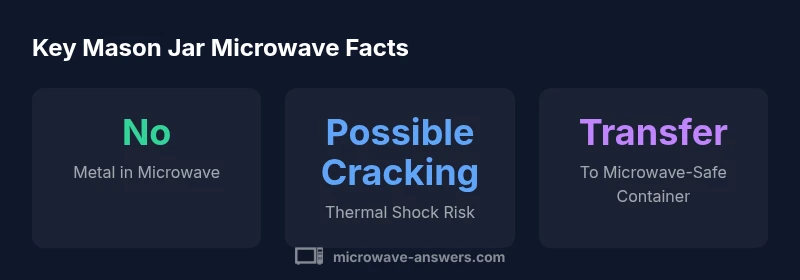
According to Microwave Answers, the short answer is no: mason jars are not microwave-safe in most situations. Most jars include metal bands or lids that can arc and heat unevenly, and the glass itself can crack or explode when heated too quickly or from trapped steam. If you need to warm food, transfer the contents to a microwave-safe container and heat gradually. This keeps your leftovers safe while reducing the risk of burns or mess.
Can you put a mason jar in the microwave? A practical starting point for home cooks
For many home cooks, the first question that comes to mind when reheating leftovers is can you put a mason jar in the microwave. In practice, the answer is usually no, especially if the jar still has its metal lid or band. Mason jars are designed for storage, not heating, and the combination of a metal component with glass can create hazards in most microwaves. According to Microwave Answers, metal in the microwave can cause arcing, which damages the appliance and can ignite food splatter. Even when the metal is removed, the glass itself can fail under rapid heating, particularly if the jar is filled with liquid that heats unevenly. The safer approach is to transfer the contents to a microwave-safe container and heat gradually. This keeps your leftovers safe while reducing the risk of burns or mess. This article will walk you through why jars are risky, how to assess your glassware, and practical alternatives.
What Happens When a Mason Jar Goes in the Microwave
When you place a mason jar in the microwave, several physics issues can arise. The first is arcing caused by metal components—lids, rings, or closures—inside the microwave cavity. Arcing can damage the magnetron and create hot spots that burn the food and the jar. Glass jars, especially those without tempered or borosilicate grade, can crack from thermal shock as the outer layer heats more quickly than the center. If the jar contains liquid, steam builds pressure inside the sealed cap or if the lid is loosely tightened but not vented, potentially leading to an explosion of hot liquid. These hazards are why most manufacturers and safety guides advise against heating mason jars in microwaves. The takeaway is simple: heat should occur in a container designed for microwave use, not in a standard canning jar. By following this guidance, you reduce risk and protect both your microwave and your kitchen.
Glass Quality and Variants: Are Some Mason Jars Microwave-Safe?
The short answer is that most mason jars are not explicitly rated microwave-safe. Many jars are made from soda-lime glass, which can tolerate some heat but is not designed for rapid, uneven heating. Some premium or lab-grade glass is borosilicate and can be microwave-friendly, but even then the presence of metal lids and rings negates safety. Look for a microwave-safe label on the container; if none exists, err on the side of caution. The absence of a clear microwave rating does not guarantee safety; the best practice is to avoid heating in classic canning jars and use containers that are clearly labeled microwave-safe.
Safe Alternatives and Realistic Scenarios
Real-world reheating often requires transferring contents from a mason jar to a microwave-safe dish. Choose glass or ceramic containers that are labeled microwave-safe, and remove any metal components entirely. If you only need to warm a small portion, portion it into a microwave-safe mug or bowl rather than heating the whole jar. For those table-ready jars filled with jams, sauces, or pickles, popping contents into a microwave-safe container minimizes risk and ensures more even heating. If preserving food in jars is essential for storage, finish heating by using conventional methods like a stovetop or oven after transferring to a safe container.
Step-by-Step Safe Reheating If You Must Use Glass Containers
Steps to follow: 1) Inspect the jar for chips or cracks; 2) Remove the metal lid completely; 3) Transfer contents to a microwave-safe dish; 4) Heat in short bursts at low to medium power (50-70%), stirring halfway; 5) Use a food thermometer to ensure even warmth above 165°F (74°C); 6) Let the container cool before touching; 7) Do not reseal and store hot.
Practical Tips to Avoid Accidents
- Use microwave-safe containers only.
- Never microwave a jar with metal components.
- Do not microwave an empty jar.
- Vent lids and avoid sealing during heating.
- Inspect jars for chips or cracks before reuse.
- When in doubt, reheat on the stovetop or transfer to a microwave-safe container.
Myth Busting: Common Beliefs vs Reality
Many home cooks claim mason jars are a universal reheating solution. In reality, metal lids, potential glass cracking, and uneven heating make the practice unsafe in most cases. The safest approach is to transfer contents to a clearly labeled microwave-safe container and heat gradually. This clears up common myths and keeps your kitchen safer.
Quick Safety Checklist Before Heating
Before you heat anything stored in a mason jar, run through this quick checklist: (a) confirm there is no metal in the jar, (b) remove all metal lids, (c) transfer contents to a microwave-safe dish if possible, (d) vent the container, (e) heat in short increments on lower power, (f) check internal temperature with a thermometer, (g) avoid resealing the jar while hot.
Microwave safety guidelines for mason jars
| Situation | Lid Status | Recommended Action |
|---|---|---|
| Jar with metal lid on | Unsafe: metal in microwave | Do not microwave; transfer contents to microwave-safe container; remove lid completely. |
| Jar with lid removed, jar empty | Still unsafe due to glass strain | Avoid heating empty jars; use microwave-safe container instead. |
| Jar with glass only, no lid | Limited safety depending on glass grade | Check jar label for microwave-safe rating; if uncertain, avoid heating. |
Common Questions
Can you microwave a mason jar with the lid on?
No. Metal lids can cause arcing and heat unevenly, which can damage the microwave and explode hot contents. Always remove the lid and transfer to a microwave-safe container.
Avoid microwaving jars with lids. Remove the metal part and use a microwave-safe container.
Is it safe to microwave a jar with the lid loose but not fully removed?
Even a loose lid can trap steam and heat the rim unevenly. It’s best to take the lid off completely and transfer the contents to a microwave-safe dish.
Fully remove the lid to vent steam before heating.
What should I do if a mason jar cracks in the microwave?
Stop heating immediately, unplug the microwave if needed, and carefully remove the jar. Do not reuse cracked glass for heating, and discard it.
If it cracks, stop heating and discard the jar.
Are there mason jars labeled microwave-safe?
Some jars may carry a microwave-safe label, but the presence of metal lids still makes heating risky. Always transfer contents to a labeled microwave-safe container and remove metal parts.
Check for a microwave-safe label, but still avoid heating in jars with metal parts.
Can I use a mason jar to reheat sauces or jams on the stove instead?
Yes. If you need to reheat jars, transferring to a stovetop pot is safer and allows controlled heating without microwave risk.
Stovetop reheating is often safer than microwaving jars.
What’s the best practice for reheating leftovers stored in jars?
Transfer the leftovers to a microwave-safe dish, heat in short bursts, stir to distribute heat, and use a thermometer to ensure safe temperatures.
Transfer to a safe dish, heat gently, and check temperature.
“When in doubt, choose proven microwave-safe containers. Mason jars are often not designed for microwave heating, and safety depends on glass type and venting.”
Main Points
- Avoid metal lids in microwaves; transfer to safe containers.
- Heat in short bursts on lower power for even warming.
- Always check for cracks or chips before heating.
- Prefer microwave-safe glass or ceramic containers.