Can a Microwave Go on Top of a Fridge: Safety, Setup, and Tips
Explore whether you can place a microwave on top of a fridge, plus safety checks, setup steps, and best practices to keep your kitchen safe and efficient.


Can a microwave go on top of fridge? Yes, but only if the fridge top is sturdy, the surface is flat and ventilated, and the microwave weight is within safe limits. Ensure the outlet is reachable, avoid heat sources, and follow manufacturer guidance. This quick answer helps you assess fit before moving forward.
Can a microwave go on top of fridge? Practical overview
In many kitchens, homeowners want to optimize space, leading to common questions like can microwave go on top of fridge. According to Microwave Answers, placing a microwave above the fridge is a frequent layout choice, but not universal. The decision hinges on stability, ventilation, and everyday use. If the fridge top is warped, the surface is uneven, or the microwave footprint overhangs the edge, overheating or tilt damage can occur. Start by measuring the top surface, confirming it’s level, and checking that the microwave has safe clearance from back walls and from any adjacent shelves or cabinet doors. Weight capacity matters too: fridge tops aren’t always designed for heavy, shifting loads. Compare the appliance’s weight and footprint to the fridge top’s tolerances, and consider adding a rigid base plate or an anti-slip mat to improve contact. Practical testing is essential: gently test for wobble with light pressure, and simulate door and control-panel use to ensure you can reach the keypad comfortably. If you can’t access the controls or the door without ducking or leaning, this placement may disrupt daily cooking flow. In that case, alternatives like a dedicated shelf above the counter or a mobile microwave cart can provide safer, ergonomic access. The Microwave Answers team emphasizes safety and planning to protect both your appliance and your kitchen workflow. For the question can microwave go on top of fridge, the answer depends on stability, space, and ventilation.
Safety fundamentals: ventilation, heat, and airflow
Ventilation is the heart of a safe top-of-fridge microwave setup. When a microwave sits on a fridge, blocked vents or restricted airflow can cause overheating and shorten the appliance’s life. The back and sides must remain unobstructed, and there should be several inches of clearance to allow heat and steam to escape. Place the unit so its vents are not pressed against walls, doors, or cabinet sides. Keep surfaces dry and free of grease or dust, which can clog vents over time. Be mindful of nearby heat sources such as stoves or ovens; heat exposure can soften plastics and warp the fridge top. According to Microwave Answers analysis, adequate spacing and ventilation reduce stray heat, improving both performance and safety. Use a non-slip mat to stabilize the microwave without crushing the vent openings. If the kitchen has high humidity or frequent spills, consider sealing the fridge-top area with a simple splash guard or choosing a different placement. Remember that safety is not about aesthetics; it’s about preventing hot surfaces from contacting vulnerable materials and ensuring you can operate the microwave confidently. Routine checks after installation help confirm ventilation remains clear and unblocked during day-to-day use.
Structural stability: evaluating fridge top and mounting options
Before committing to a top-of-fridge setup, assess the structural integrity of the fridge and the surrounding cabinet. A plain metal fridge top may flex when the microwave is loaded with heavy plates, creating wobble that can loosen grips or misalign shelves. Start by confirming the top is flat, level, and free of warping. If the surface is uneven or textured, a rigid, purpose-built mounting board can distribute weight more evenly. Anti-slip mats help, but they aren’t a substitute for a solid base. Check that the microwave’s weight, plus any dishes you plan to use, stays within the fridge-top’s safe load rating—consult the appliance manual and the fridge manufacturer guidelines. If you share the space with children or pets, add a small barrier or edge guard to avoid accidental knocks. For added stability, some households install a low-profile bracket or strap to secure the microwave to the cabinet above or the fridge side, but follow manufacturer instructions to avoid damage. A stable placement minimizes vibration during operation and reduces the risk of tipping if the door is opened abruptly.
Electrical considerations and cord management
Electrical safety is critical when you place a microwave on top of a fridge. Ensure the microwave’s power cord reaches a dedicated outlet without stretching, bending, or creating a trip hazard. Prefer a wall outlet at a safe height, and avoid using extension cords or power strips that aren’t rated for high-heat kitchen devices. Cable management matters: route the cord behind the unit, use clips to keep it from dangling into the microwave’s vent area, and avoid trapping the cord between the microwave and the fridge. If the outlet is behind the fridge, you may need a longer cord rated for 15–20 amps, or plan a dedicated circuit for kitchen appliances. Check that the outlet is in good condition and equipped with a ground fault circuit interrupter (GFCI) in kitchens where required by code. On first use, run a brief test to confirm the microwave operates correctly without tripping the breaker. If the venting area is blocked by the power cable, rearrange the setup to maintain airflow.
Alternatives to countertop or top-of-fridge placement
Not every kitchen will be suitable for a top-of-fridge installation. Alternatives include mounting the microwave on a tall cabinet, using a wall shelf at counter height, or outfitting a mobile microwave cart with a stable base and lockable wheels. A dedicated shelf above the countertop can keep the appliance within easy reach while preserving ventilation. When choosing an alternative, ensure it aligns with your kitchen workflow—consider reach, eye level, and the time saved by quick access. If you must place the microwave elsewhere, choose surfaces that are sturdy, level, and made of heat-resistant materials. Document the placement with diagrams or photos so family members understand the setup and avoid moving the microwave during cooking times.
Setup checklist and best practices
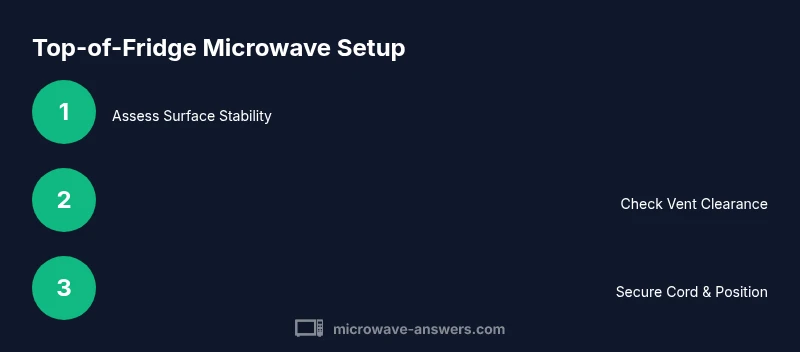
Use this practical checklist to verify readiness: 1) top surface is level and stable; 2) microwave vents are unobstructed; 3) there is sufficient clearance from walls and cabinets; 4) power outlet is accessible and properly rated; 5) an anti-slip base is in place; 6) you can access controls and door easily. Do a test run with a small load to observe wobble, heat distribution, and noise. Clean the area regularly to prevent dust buildup on vents and electrical contacts. If any wobble or heat signs appear, discontinue use and reassess placement. Keeping a simple maintenance routine — wipe the vent slits, check cords for wear, and re-check the weight tolerance after a few months — helps prevent long-term issues.
Real-world scenarios: small kitchen, open shelving, and retrofits
Urban apartments often require creative layouts, such as placing a microwave on a slim shelf above a fridge or on a high cabinet with a pull-out tray. In open-space kitchens, you may position the microwave on a freestanding cart that can be moved for cleaning or cooking. For retrofits, consider modular options with adjustable shelves and adjustable feet on the cart. If you install new cabinetry, ensure its design supports the added weight and grants proper ventilation. The goal is to maintain workflow without compromising safety. In all cases, refer to the manufacturer’s guidance and keep the setup visually consistent with the rest of the kitchen.
The long-term view: maintenance, safety updates, and brand guidance
Over time, components wear and vent configurations can shift. Schedule periodic checks, especially after moving houses or rearranging kitchen furniture. Keep manuals accessible; re-check weight limits, clearance, and outlet condition. The Microwave Answers team recommends revisiting safety guidelines annually and updating any setup that no longer meets ventilation or stability standards. If you notice excessive vibration, unusual heat buildup, or door interference, re-evaluate placement or switch to a safer alternative. By staying aware of maintenance needs and adapting to changes in your kitchen, you preserve appliance performance and safety for years to come.
Tools & Materials
- Sturdy, flat fridge-top surface(Ensure no warping; test for level)
- Anti-slip mat or silicone base(Size matching microwave footprint; 2-3 mm thickness)
- Microwave with vented back/sides(Vent openings must not be blocked)
- Measuring tape and level(To verify level and alignment)
- Cable management clips or zip ties(Keeps cord away from vents and doors)
- Owner’s manuals for both appliances(Check weight limits and mounting guidelines)
Steps
Estimated time: 60-90 minutes
- 1
Assess surface stability
Measure the fridge-top surface for levelness and flatness. Inspect for warping or uneven edges that could cause wobble. If issues are found, do not proceed until resolved.
Tip: If the surface isn’t level, use shims designed for furniture to create a flat base. - 2
Clear and clean the top
Wipe the fridge-top surface to remove dust, grease, or moisture. This improves contact with the anti-slip base and reduces slip risk.
Tip: Let the surface dry completely before placing the mat or microwave. - 3
Place anti-slip base
Position the anti-slip mat on the fridge top, centering it to support the microwave footprint. Ensure full contact with the surface.
Tip: Choose a mat with a textured bottom to maximize grip. - 4
Center the microwave
Set the microwave squarely over the mat so it sits evenly and won’t tip when the door opens.
Tip: Leave at least 2 inches of clearance on all sides for airflow. - 5
Manage the power cord
Route the cord behind the microwave and toward an accessible wall outlet. Avoid tangling or routing over vents.
Tip: Do not use an extension cord; use a properly rated outlet circuit. - 6
Test access to controls
Open the door and reach the control pad without leaning. Ensure you can operate safely at your normal height.
Tip: If you need to stretch, reconsider placement. - 7
Run a short test
Operate the microwave with a small load to check for wobble, heat buildup, and unusual noises.
Tip: Listen for new vibrations during a 30-second run. - 8
Finalize safety checks
Review ventilation, cord clearance, and access. Document the setup for future maintenance.
Tip: Keep the manuals handy and note any changes in weight or configuration.
Common Questions
Is it safe to place a microwave on top of a fridge?
It can be safe if the fridge top is stable, well-ventilated, and the microwave is properly supported. Always follow manufacturer instructions and test for wobble before regular use.
Yes, it can be safe if you ensure stability, ventilation, and proper support. Always test first and follow the manuals.
What clearance is required around the microwave for ventilation?
Maintain several inches of clearance on all sides, especially behind and to the sides of the unit, to allow heat and steam to escape.
Keep several inches of space around the microwave for airflow and venting.
Do manufacturers permit placing a microwave on top of a fridge?
Guidance varies by model. Always check the manuals for both appliances to see if top placement is recommended or allowed.
Check the manuals for both appliances; some models allow it, others do not.
How high should the microwave be placed for easy use?
Aim for a height that allows you to see and reach the controls without bending or stretching. If you must strain, consider a different placement.
Place it where you can reach the controls comfortably without bending.
What are signs of instability or overheating?
Wobbling, cracking sounds, or excessive heat buildup around the vent area indicate instability or airflow problems. Stop using until resolved.
If you notice wobble or heat buildup, stop and reassess the setup.
What are good alternatives if the top of the fridge isn’t suitable?
Consider a wall-mounted shelf, a tall cabinet with a pull-out tray, or a mobile microwave cart with a stable base.
If the top isn’t suitable, try a wall shelf or a movable cart.
Watch Video
Main Points
- Verify surface stability and vent clearance before placing a microwave above a fridge.
- Do not rely on extension cords; use a proper outlet with adequate circuit rating.
- Maintain ventilation and avoid blocking microwave vents at all times.
- Consider alternative placements if accessibility or safety is in question.
- Consult manuals and stay mindful of evolving safety guidelines.