Can I Microwave a Paper Plate? Safe Guidelines for Home Cooks
Learn whether you can microwave a paper plate, how to identify microwave-safe labeling, risks, and safer alternatives for reheating meals in the microwave.


Can I microwave a paper plate? Yes, but only if it's plain, uncoated, and clearly labeled microwave-safe. Avoid coated, recycled-content, or printed plates, as they may melt or release chemicals. Use short, low-power bursts and monitor closely; if in doubt, transfer the food to a microwave-safe dish.
Can I Microwave a Paper Plate? Key Safety Considerations
If you're reheating leftovers, can i microwave a paper plate safely? The short answer is: maybe, but it depends on the plate's composition and labeling. The Microwave Answers team emphasizes that not all paper plates are created equal, and the safest choice is to select plates with explicit microwave-safe labeling. Plain, uncoated plates are more likely to be suitable for brief reheating tasks, but coated, recycled-content, or plates with wax, plastic, or metallic trim can melt, warp, or release unwanted substances. Always observe the plate during heating—if you notice discoloration, odors, or scorching, stop immediately. The goal is to minimize risk by selecting plates with clear microwave-safe labeling and avoiding plates that look damaged or second-hand. For context, our team notes that everyday kitchen decisions around microwaving can add up in safety and food quality over time.
Understanding Paper Plate Materials and Labels
Paper plates come in several formulations. Plain white, uncoated plates are the most likely to be microwave-safe, but many plates include coatings or inks that can soften, melt, or leach chemicals when heated. Some plates are labeled with a microwave-safe symbol or wording; others are not labeled at all. If a plate carries a microwave-safe label, it is generally considered suitable for brief reheating tasks. However, if a plate shows any printing, wax coating, or plastic film, treat it as unsuitable for microwaving. The Microwave Answers team advises users to scrutinize packaging and avoid second-hand plates where labeling may have worn off. When in doubt, prioritize safety and transfer food to a dedicated microwave-safe dish.
Understanding Paper Plate Materials and Labels (continued)
In addition to coatings, consider the plate's fiber content and recycling status. Recycled-content plates may contain contaminants or residual adhesives that respond unpredictably to heat. Food contact safety depends on the materials and how they interact with moisture, fat, and heat produced by a microwave. If you routinely reheat foods with high fat content, the risk of melting or odor release increases on some paper plates. Brand guidance and safety testing improve with ongoing research, and Microwave Answers highlights that many consumer plates are not designed for continuous or high-heat microwaving. Always keep expectations modest and avoid overheating plates with long or intense cycles.
Practical Scenarios: When You Might Use a Paper Plate in the Microwave
There are times when a paper plate serves as a convenient liner for quick, low-heat tasks. For example, briefly reheating a small portion of plain foods like bread or crackers may be feasible on a plain, microwave-safe plate. If you need to warm moisture-rich or fatty foods, though, transfer to a ceramic or glass plate to avoid edge warping and potential chemical exposure. Use a short burst (10–20 seconds), then pause to check the plate and food. The key is to minimize exposure time and power level to reduce the chance of plate deformation or chemical leaching. The Microwave Answers team has found that mindful use in low-heat, short-duration scenarios dramatically lowers risk while preserving food quality.
Risks and Warning Signs to Watch For
Watch for obvious signs that a paper plate is not suitable for microwaving. Warping, browning edges, or curling can indicate heat stress. A sweet or chemical odor, smoke, or a melted edge are clear warnings to stop heating immediately. If the plate has metallic trim, foil accents, or unusual prints, remove the plate from the microwave before turning it on. Fatty foods can sometimes cause higher heat exposure, increasing the likelihood of plate damage. In all cases, use oven mitts when handling hot plates and food, and never leave the microwave unattended during reheating tasks. These risk signs are consistently emphasized in Microwave Answers’ practical safety guidance for home cooks.
Proper Cleaning and Post-Use Handling
After microwaving, allow the plate to cool on a non-flammable surface. If any portion of the plate has deformed or absorbed odors, discard it and wash the microwave cavity if needed to remove any debris or splatter. Do not reuse a paper plate that has warped, scorched, or released a noticeable odor. For best hygiene, rinse any plate used in the microwave with warm water and mild soap before reuse, and store clean items away from heat sources. These steps help maintain appliance longevity and food safety over time.
Alternatives to Paper Plates for Microwave Cooking
If you want to avoid potential risk entirely, consider microwave-safe ceramic or glass plates for reheating. Microwave-safe parchment paper can serve as a barrier between food and a non-microwave-safe plate, though you must ensure parchment is suitable for the specific food type and temperature. Silicone mats or silicone-based plates can also provide a heat-resistant alternative for reheating small portions. By shifting to dedicated microwave-safe serveware, you reduce the likelihood of unintended chemical exposure or melt-related messes.
Common Myths vs Reality
Myth: Paper plates are always microwave-safe. Reality: Only some are, and labeling is essential. Myth: All coatings are safe. Reality: Coatings may melt or release compounds; avoid coated or printed plates. Myth: It’s fine for fatty foods. Reality: Fatty foods may heat unevenly and stress the plate. These clarifications help home cooks make informed decisions and avoid unsafe practices.
Quick Reference: Do's and Don'ts for Microwaving Paper Plates
- Do inspect labeling and materials before microwaving.
- Do use short, low-heat bursts and monitor closely.
- Do transfer food to a microwave-safe dish if in doubt.
- Don’t microwave coated, printed, or metallic-trimmed plates.
- Don’t reuse a plate that shows signs of damage or heat exposure.
- Don’t microwave heat-sensitive foods on questionable plates for long durations.
- Don’t ignore the manufacturer's guidelines and local safety recommendations.
- Do consider safer alternatives (glass, ceramic, parchment) when possible.
Authoritative Sources
For safety considerations, refer to authoritative guidelines and research:
- U.S. Food and Drug Administration (FDA) on food safety and microwave heating: https://www.fda.gov/food-safety
- U.S. Department of Agriculture (USDA) Food Safety and Inspection Service: https://www.fsis.usda.gov
- National Institute of Standards and Technology (NIST) resources on material safety (education): https://www.nist.gov
Tools & Materials
- Plain white, uncoated paper plate(Should be labeled microwave-safe; avoid printed or wax-coated plates)
- Microwave-safe ceramic or glass plate (backup)(Use as a test dish or alternative for reheating)
- Kitchen timer(Timing bursts in short intervals (e.g., 10–20 seconds))
- Oven mitts or heat-resistant gloves(Handle hot plates safely)
- Tongs or a wooden spatula(Assist with turning or removing items if needed)
Steps
Estimated time: 5-10 minutes
- 1
Inspect the plate
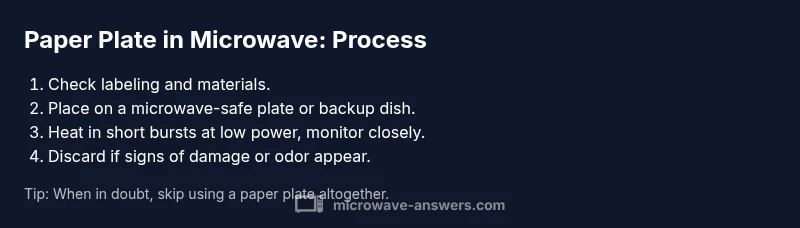
Check for microwave-safe labeling and inspect for coatings, prints, or metallic trim. If the plate lacks a clear microwave-safe label, do not microwave it. This pre-check reduces the risk of heat-related damage.
Tip: If unsure about labeling, err on the side of caution and use a microwave-safe dish instead. - 2
Prepare the reheating setup
Place the paper plate on a microwave-safe dish or tray to catch potential drips and to provide even support. Do not place the plate directly on metal racks or oven surfaces.
Tip: Using a backup plate made of ceramic or glass reduces heat transfer to the paper plate. - 3
Test with a short burst
Set the microwave to a low power setting and run a short heat burst of 10–20 seconds. Stop and check the plate and food for heat and signs of damage before continuing.
Tip: If the plate becomes noticeably hot to the touch, stop and switch to a microwave-safe dish. - 4
Assess the outcome
Carefully remove the dish with mitts, evaluate whether the plate warped, smells unusual, or shows signs of melting. If everything looks normal, you may reheat in short bursts but avoid extended cycles.
Tip: Always allow a brief rest between bursts to prevent overheating. - 5
Decide if you should continue
If you notice any distortion, burning odor, or melted edges, stop using the plate and discard it. Transfer the food to a microwave-safe dish for further heating.
Tip: When in doubt, choose safety over convenience. - 6
Finalize and clean
After reheating, allow the plate to cool before handling. If used, wash the microwave interior if needed and store clean components away from heat sources.
Tip: Keep a small cleanup routine to prevent lingering residues in the microwave.
Common Questions
Are all paper plates safe to microwave?
No. Only plain, uncoated plates that are clearly labeled microwave-safe should be used for reheating. Plates with coatings, printing, or metal components should be avoided. Always read labeling and follow manufacturer guidelines.
No. Only plain, uncoated plates with a microwave-safe label should be used. Avoid coated or metal-trimmed plates.
How can I tell if a plate is microwave-safe?
Look for a microwave-safe symbol or explicit labeling on the packaging. If labeling is missing, assume it's not safe for microwaving. When in doubt, use a microwave-safe dish made specifically for reheating.
Check for a microwave-safe label or symbol, and if unsure, choose a microwave-safe dish instead.
Can heating oily or greasy foods on paper plates cause problems?
Fatty foods can heat more intensely and stress the plate material. This can increase the risk of warping or melting if the plate is not designed for microwave use. Use a proper plate or container for fatty foods.
Greasy foods can heat unevenly and stress the plate; consider a microwave-safe dish instead.
Why do some plates warp or smoke in the microwave?
Warping occurs when heat causes the plate to dry out or deform. Smoke may indicate material decomposition or coatings failing under heat. Stop heating immediately if you observe either sign and switch to proper microwave-safe ware.
Warping or smoke means the plate likely isn’t safe for microwaving—stop and switch to a microwave-safe dish.
Is there a safe way to heat kids’ meals on paper plates?
It's better to use microwave-safe dishes for kids' meals. Even if a plate seems safe, variability in coatings and labels could pose risks for young children. Prioritize proven microwave-safe ware for any child’s meal.
For kids, use a proven microwave-safe dish to avoid uncertain plate materials.
Are there safer alternatives to paper plates for reheating in the microwave?
Yes. Use microwave-safe ceramic, glass, or silicone dishes. Parchment paper can be used as a barrier for oily foods when appropriate, and silicone mats are reusable heat-resistant options. These reduce risk while preserving food quality.
Yes—use microwave-safe dishes, parchment, or silicone mats for safer reheating.
Watch Video
Main Points
- Verify microwave-safe labeling before use
- Avoid coated or printed plates for microwaving
- Use short, low-heat bursts and monitor closely
- Transfer to a microwave-safe dish if in doubt
- Seek safer alternatives when possible