Microwave Nut Brittle Recipe: Quick, Easy Steps & Tips
Discover a microwave nut brittle recipe that delivers crisp, caramelized candy in minutes. Learn ingredient swaps, safety tips, and storage ideas for delicious, shareable treats using simple pantry staples.


With this microwave nut brittle recipe, you’ll reach a crisp, caramelized nut candy in minutes using pantry staples. No candy thermometer needed, and cleanup is quick. You’ll learn precise timing, flavor variations, and how to store the brittle for best texture. We'll cover ingredient options, safety tips for handling hot sugar, and 2-3 flavor twists you can try this weekend.
Why microwave nut brittle is a smart choice
For home cooks looking for a fast, reliable candy project, a microwave nut brittle recipe offers a practical path to flavor and texture without the long stove-top caramelization. The Microwave Answers team notes that microwave methods reduce the risk of scorching sugar because you control heat in short bursts and monitor the color closely. This approach also minimizes cleanup—you melt and mix in one bowl and spread the finished candy on parchment. With minimal equipment and ingredients you likely have on hand, you can enjoy a snack that’s both nostalgic and adaptable for gifts or party platters. The technique works with many nut varieties, from almonds to walnuts or pecans, and you can tweak sweetness and salt to your taste. If you’re new to candy-making, starting in the microwave lowers the barrier to experimentation while teaching you core caramelization concepts, like how sugar concentration, fat, and moisture influence texture. As you learn, you’ll understand the balance between soft chewy centers and crisp outer edges.
Ingredient decisions and safety
Choosing the right ingredients is the first step toward consistent results. Use roasted nuts for deeper flavor or raw for a milder profile, and toast them briefly if you’re unsure about their intensity. For the candy base, standard granulated sugar pairs well with a small amount of butter and light corn syrup to prevent crystallization. Salt is essential to balance sweetness, and a splash of vanilla extract enhances the aroma without overpowering the nut flavor. Safety matters with hot sugar: always use a microwave-safe bowl, avoid metal, and handle the container with oven mitts after heating. If you notice sugar crystals forming during mixing, give the mixture another gentle heat in short bursts and stir thoroughly. Keep your workspace clear, and line your surface with parchment for easy transfer and clean-up.
Flavor variations and substitutions
Experiment with flavor without increasing complexity. Try adding a whisper of cinnamon for warmth, a tiny drizzle of maple syrup for a woodland note, or a pinch of chili powder for a surprising kick. You can swap nuts to suit preferences or dietary needs—hazelnuts for roasted depth, or pecans for a butterier bite. If you need a dairy-free option, substitute coconut oil for butter and adjust timing slightly to prevent burning. For sweeter profiles, increase the sugar by a small amount or use brown sugar to introduce molasses-like notes. Always taste-test a small portion after it sets to fine-tune future batches.
Microwave science: sugar caramelization and texture
Caramelization in the microwave occurs as sugar melts and interacts with fats and moisture. The goal is a glossy, amber-colored liquid that hardens into a crackly, crisp candy once cooled. Timing is key; heating too long can push the mixture toward bitterness or burnt notes, while under-heating may yield a soft, chewy result. Fat from butter helps create a smoother texture and prevents crystallization, while a touch of corn syrup resists sugar crystals formation. Spreading the hot mixture thinly on parchment accelerates cooling and promotes even texture. Finally, the cooling phase is when the brittle truly sets; patience here makes a big difference in final snap and bite.
Troubleshooting common issues
If your brittle stays sticky, it likely needs a longer initial heating or a thinner spread on parchment. Uneven edges can result from uneven heating—rotate the plate or use a flatter surface for even color. If the color darkens too quickly, pause and stir, then continue in shorter bursts to control caramelization. A grainy texture often means crystallization; in future batches, ensure the sugar is thoroughly melted before adding nuts, and consider a tiny splash of corn syrup to stabilize crystallization. In all cases, use parchment to prevent sticking and to facilitate clean removal once cooled.
Scaling and storage
This recipe scales well for larger trays by maintaining a thin, even layer of the hot mixture on parchment. Allow the brittle to cool completely before breaking into pieces; store in an airtight container away from humidity to keep it crisp. If you live in a humid climate, keep portions small and consume within a reasonable timeframe for best texture. Avoid refrigeration, which can introduce moisture and soften the candy; instead, keep it at room temperature in a cool, dry place. When serving, break into irregular chunks for a rustic look that showcases the nuts and caramelized surface.
Tools & Materials
- Microwave-safe mixing bowl(Glass or ceramic; avoid metal.)
- Silicone spatula(For scraping and stirring.)
- Measuring cups and spoons(Accurate small quantities help with texture.)
- Parchment paper or silicone baking mat(Non-stick surface for easy release.)
- Assorted nuts (pecans, almonds, or walnuts)(Chopped to even pieces.)
- Granulated sugar(Primary candy sweetener.)
- Butter(Adds rich flavor and shine.)
- Light corn syrup(Helps prevent crystallization.)
- Vanilla extract (optional)(Aromatics to enhance depth.)
- Pinch of salt(Balances sweetness.)
Steps
Estimated time: Estimated total time: 20-30 minutes active plus cooling time
- 1
Measure and prepare ingredients
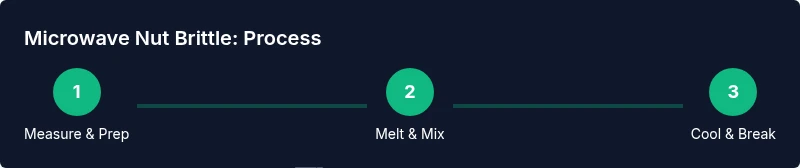
Gather all ingredients and measure them precisely. Chop nuts to uniform pieces for even toasting and dipping. Line a baking sheet with parchment to prepare the cooling surface.
Tip: Pre-measure everything before you start heating to keep the process smooth. - 2
Melt sugar and butter in microwave
Combine sugar, butter, and corn syrup in the microwave-safe bowl. Heat in 30-second bursts, stirring between intervals until the mixture is smooth and fully blended with no granules remaining.
Tip: Use short bursts to prevent scorching; color change toward light amber signals nearing readiness. - 3
Stir in nuts and flavorings
Fold in the chopped nuts, salt, and optional vanilla. Stir briskly to coat the nuts evenly with the syrupy caramel.
Tip: If the mixture thickens, rewarm in short intervals and stir again to regain flow. - 4
Spread onto parchment and flatten
Pour the caramel-nut mixture onto the prepared parchment. Use a silicone spatula to spread it into a thin, even layer about 1/8 inch thick for optimal crunch.
Tip: A lightly oiled spatula helps achieve a smooth, uniform surface. - 5
Cool completely and break
Allow the brittle to cool at room temperature until hard. Break into large, irregular pieces for a rustic look and easy sharing.
Tip: Avoid moving the tray before it fully sets to prevent cracking or bending. - 6
Store and serve
Transfer brittle pieces to an airtight container in a cool, dry place. Keep away from humidity to preserve crispness.
Tip: Add a silica gel packet if you’re in a very humid area, but ensure it’s food safe and not inside contact with the candy.
Common Questions
Can I use other nuts besides pecans?
Absolutely. Almonds, walnuts, cashews, or mixed nuts all work well. Each choice brings a different flavor and texture, so feel free to experiment.
Yes, you can swap nuts; just watch the color and timing for best results.
Is it safe to microwave candy with hot sugar?
Yes, as long as you use a microwave-safe container, handle the hot bowl with care, and keep kids away during heating. Follow short heating intervals and stir regularly.
Safe, as long as you handle the hot bowl carefully and follow the timings.
How should I store leftovers?
Keep brittle in an airtight container in a cool, dry place. Avoid moisture and humidity, which can soften the candy and reduce snap.
Store in an airtight container in a cool, dry place.
Can I make a sugar-free version?
You can try sugar substitutes, but results vary because sugar crystallization and moisture balance affect texture. Start with a tested sugar-free recipe and adjust to taste.
A sugar-free version is possible, but texture may differ; start with a tested approach.
Can I add chocolate or coating after cooling?
Yes. You can drizzle melted chocolate over cooled brittle or dip pieces for a candy-coated finish. Let the chocolate set completely before stacking.
You can add chocolate after it cools for a dessert twist.
Why is my brittle sticky or soft?
Likely under-heated or not spread thin enough. Reheat briefly, re-spread into a thinner layer, and let it cool fully to re-crisp the texture.
If it’s sticky, reheat briefly and re-spread to thin for crisper texture.
Watch Video
Main Points
- Master quick caramelization in a microwave-safe setup.
- Control texture by spreading thin and allowing complete cooling.
- Customize flavor with nuts, spices, or sweeteners.
- Store properly to maintain crispness and avoid moisture.
- Safety first: hot sugar requires careful handling.