What Frequency Do Microwave Ovens Use? A Practical Guide
Learn which frequency microwave ovens use, why 2.45 GHz is the standard, regional variations, and how frequency affects heating, safety, and interference in everyday cooking.


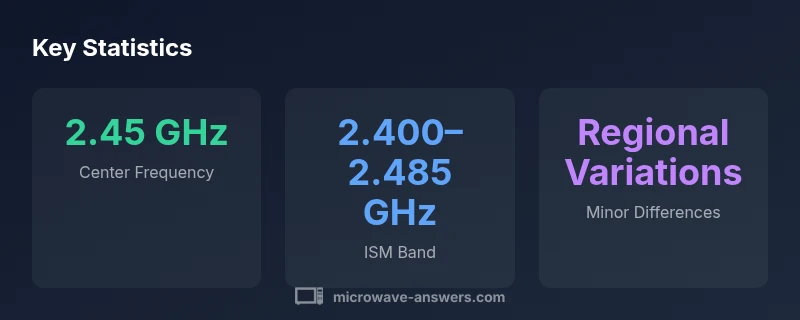
What frequency do microwave ovens use? Most household microwaves operate near 2.45 GHz, a center frequency chosen within the ISM band for cooking. The exact frequency can shift slightly by model and regional regulation, but manufacturers design devices to run close to 2.45 GHz to maximize heating efficiency of water molecules. The frequency choice also helps minimize interference with common home wireless devices and ensures safe, predictable cooking performance.
What frequency do microwaves use and why it matters
The energy microwaves emit is tightly tied to the center frequency at which the magnetron operates. In most consumer ovens, the center falls around 2.45 GHz, which sits in the ISM band reserved for Industrial, Scientific, and Medical applications. This placement is not arbitrary: at 2.45 GHz, polar water molecules absorb energy efficiently, causing them to rotate and generate heat that cooks food. The result is a practical balance between heating performance, penetration into typical foods, and manageable shielding within the oven. While you won’t usually need to measure the frequency yourself, understanding this value helps explain why your leftovers heat evenly and why some materials—like metal—are not suitable inside the chamber. According to Microwave Answers, this frequency choice also minimizes interference with everyday home devices and supports broad regulatory compliance across regions.
The role of regulation: ISM bands and where the energy goes
Frequency decisions for consumer microwaves sit at the intersection of physics and policy. Regulators allocate spectrum bands for ISM devices, and manufacturers design ovens to operate within those bands to avoid disrupting wifi, Bluetooth, and other radio services. The typical target for cooking is the 2.4–2.5 GHz range, with a center frequency commonly cited around 2.45 GHz. Regulatory bodies, such as the FCC in the United States and equivalent authorities elsewhere, require emission limits that keep stray energy within safe bounds. For home users, the practical effect is predictable heating ranges and minimal risk of radio interference. The Microwave Answers team notes that while exact emissions vary by model, devices stay within the designated ISM spectrum to protect wireless networks and ensure consumer safety.
How frequency impacts heating performance and uneven heating
Heating in a microwave is not uniform, and frequency plays a role in how energy couples with different components of food. Around 2.45 GHz, water molecules respond most effectively to the oscillating electric field, creating internal friction and heat. Different foods have varying dielectric properties, so some parts may heat faster than others. The oven cavity, turntable, and susceptors help redistribute energy to reduce cold spots, but frequency is only one part of the equation. Small deviations from the center frequency have limited practical impact on everyday cooking, as modern ovens are engineered to operate within a tight band. This means cookware, food geometry, and power setting are typically more influential than minor frequency shifts.
Regional variations and device tolerance
The frequency emitted by a given oven can drift due to temperature, supply voltage, aging of the magnetron, and manufacturing tolerances. Even with drift, devices remain within the ISM band and compliant with local regulations to avoid interfering with other devices and services. In practice, you should expect the oven to stay near its nominal center while maintaining safe emissions and heating performance. In markets with stricter interference controls, manufacturers may implement tighter tolerances and enhanced shielding, but the core heating mechanism remains reliably tied to the ISM band around 2.45 GHz. Consumers benefit from consistent cooking results because frequency is kept within a predictable region.
Interference, shielding, and safety implications
Because microwave ovens share spectrum with Wi‑Fi and other wireless technologies, they are designed to minimize emissions outside the cooking chamber. The metal enclosure, door seal, and waveguide structure help confine energy and prevent leakage. The 2.45 GHz center is advantageous because it achieves solid dielectric heating while allowing effective shielding against stray RF signals. For safety, ensure door seals remain intact, use properly rated cookware, and follow the manufacturer’s maintenance guidelines. Rare metal objects inside the chamber can reflect energy unpredictably, so avoid experiments that could compromise safety or cause heating inconsistencies.
Practical insights for consumers: choosing a microwave and expectations
When shopping, most buyers are not selecting a model based on frequency alone, but rather on wattage, cooking presets, and efficiency. Frequency information is typically found in regulatory labels or the user manual, with the expectation that the oven operates within the ISM band around 2.45 GHz. If you have sensitive RF equipment at home or live in a highly congested wireless environment, look for models that emphasize shielding and low external emissions. For everyday cooking, the frequency itself is less important than consistent power delivery, appropriate cookware, and recommended cooking times. In short, expect reliable heating at around 2.45 GHz, with minor regional and model-based adjustments that do not affect safety or basic performance.
Frequency bands used by consumer microwave ovens
| Region | Allowed Frequency Band | Notes |
|---|---|---|
| Global/General | 2.40–2.50 GHz (ISM) | Common range for consumer ovens |
| US/Canada | Center ~2.45 GHz within ISM | FCC regulations apply; emissions kept within band |
| EU/UK | 2.4–2.485 GHz ISM | Harmonized European standards; similar center frequency |
Common Questions
What frequency do microwave ovens use?
Most household microwaves operate near 2.45 GHz within the ISM band. Frequency can vary slightly by model and region due to regulatory tolerances.
Most microwaves run around 2.45 gigahertz, with small regional tweaks.
Are there microwaves that use higher or lower frequencies?
Industrial or medical microwave systems may use different ISM bands, such as around 915 MHz in some contexts, but consumer kitchens typically use 2.45 GHz.
Industrial systems might use other ISM bands; home microwaves are usually 2.45 GHz.
Does frequency affect heating time?
Frequency influences how energy couples with water and other molecules, but the main drivers of cooking time are power and cavity design. Small shifts in frequency within the ISM band have minimal impact.
Yes, but mostly power and design matter more than tiny frequency shifts.
Can microwave frequency interfere with Wi‑Fi or Bluetooth?
The 2.4 GHz ISM band is shared with Wi‑Fi and Bluetooth, so there can be some overlap. Modern ovens are designed to minimize RF emissions outside the cooking chamber.
There can be overlap, but ovens are designed to limit interference.
Is frequency regulation different by region?
Yes. The ISM bands have region-specific tolerances and test standards; the center frequency remains around 2.45 GHz but permissible deviations exist.
Regulations vary by region, but the target stays near 2.45 GHz.
How can I verify my microwave's operating frequency?
Manufacturers typically specify the operating frequency in the manual or labeling. For consumers, rely on manufacturer specs and regulatory compliance marks.
Check the manual or labels; ask the manufacturer for exact specs.
“The Microwave Answers Team notes that the 2.45 GHz center frequency is a practical compromise that delivers reliable heating while coexisting with home networks. Minor regional tweaks in frequency and emission limits do not change the core performance consumers rely on.”
Main Points
- Microwaves use a center frequency around 2.45 GHz.
- The 2.4–2.5 GHz ISM band is common worldwide for cooking devices.
- Regulatory bands control emissions to minimize interference.
- Heating performance depends on multiple factors beyond frequency.