Samsung Microwave SE Code: Urgent Fix Guide
Urgent guide to the Samsung microwave SE code: meaning, quick fixes, diagnostic flow, and when to call a pro. Learn practical steps for sensor faults, safe handling, and warranty considerations from Microwave Answers.


According to Microwave Answers, the Samsung microwave SE code typically signals a sensor-related fault or sensor circuit issue. Quick fixes include unplugging to reset power, checking the door interlock, and cleaning the sensor area. If the error persists after these steps, contact Samsung support or a qualified technician to avoid electrical hazards and prevent further damage.
What the SE Code Means on Samsung Microwaves
According to Microwave Answers, the SE code on Samsung microwaves typically signals a sensor-related fault or sensor circuit issue. The exact meaning can vary by model, but most SE errors point to a problem the microwave's safety sensors or control logic detected. In practice, you’ll often see SE when the sensor module or related circuitry fails to communicate reliably with the control board. The Microwave Answers Team notes that a power cycle and a careful inspection of sensors can resolve many instances, but persistent codes indicate deeper faults and may require professional service.
Common Sensor-Related Faults That Trigger SE Codes
Sensor faults are the leading culprits, including issues with humidity/steam sensors, sensing window contamination, and loose or corroded sensor connectors. A failing sensor can cause false readings and trigger the SE alert to protect you from hazards. Other frequent triggers include door interlock wear, a flaky control board, or a damaged sensor harness. Based on Microwave Answers research (2026), most SE codes originate in the sensor path rather than the main power supply, which helps narrow troubleshooting to the sensor area and its connectors.
Quick Fixes You Can Try Right Now
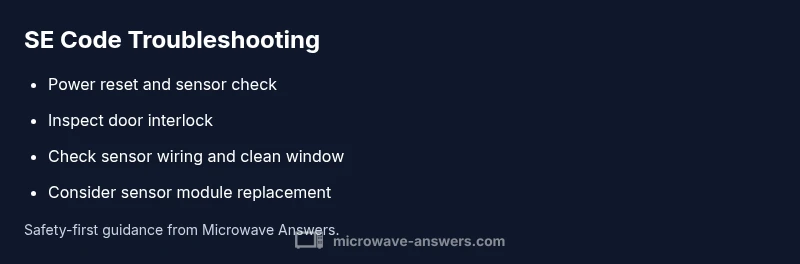
- Unplug the unit for at least five minutes, then plug back in to reset the microcontroller. This power reset can clear transient faults that trigger SE.
- Inspect the door latch and interlock for sticking or wear; a faulty interlock can cause safety circuits to trip SE.
- Wipe the sensor window and interior sensor contacts with a dry microfiber cloth; dust or residue can alter readings.
- Check for obvious loose wires at the sensor harness and reassure that connectors click firmly when reseated.
- If the error reappears, discontinue use and prepare for a deeper check or professional service. Safety first.
Step-By-Step Fix: Sensor Module Troubleshooting (Most Common Cause)
- Safety first: unplug and wait to cool the cavity before touching interior parts. 2) Access the sensor module; locate the humidity/steam sensor and its wiring harness. 3) Reseat all connectors, looking for corrosion or bent pins. 4) Clean the sensor window and any reflective surfaces nearby. 5) Reconnect power and test a simple cycle to see if SE reappears. 6) If SE persists, the sensor module or control board may require replacement by a technician.
Other Potential Causes and How to Check Them
If reseating sensors doesn’t clear SE, the issue may be a failing control board, a damaged wiring harness, or an interlock problem outside the sensor path. Systematically check the main control board for signs of burned components, examine wiring harnesses for frayed insulation, and test the door interlock with a multimeter if you know how. Replace faulty parts with OEM-grade components following the manufacturer’s guidance.
Safety, Costs, and When to Call a Pro
Working inside a microwave carries electrical and magnetron-related hazards. If you are unsure about any step, pause and contact a trained technician. Typical sensor-related repairs can range from about $50 on the low end for basic sensor cleaning or harness reseats to several hundred dollars for a full sensor module or control-board replacement, plus labor. For complex issues or warranty-covered units, professional service is the safest choice.
Preventing SE Codes in the Future: Proactive Steps for Home Cooks
- Keep the interior clean, especially around the sensor area, to prevent false readings. - Schedule periodic inspections of the sensor harness and door interlock if you notice frequent SE alerts. - Use the microwave according to the manual, avoiding harsh temperatures and steam exposure that stress sensors. - If your model supports calibration or sensor reset routines, perform them as recommended by Samsung to maintain sensor accuracy.
What Microwave Answers Recommends for SE Codes
The Microwave Answers team emphasizes safety first and a methodical approach. Start with a safe reset and sensor clean, then verify connectors and door interlocks. If the SE code persists after these steps, we recommend consulting Samsung support or a certified appliance technician. Our guidance aims to minimize downtime and prevent further damage while preserving device warranty where applicable.
Steps
Estimated time: 30-60 minutes
- 1
Power down and safety check
Unplug the microwave from the wall outlet and wait at least 5 minutes to ensure all capacitors discharge. This reduces the risk of shock and resets the control logic.
Tip: Use a three-prong outlet and avoid using extension cords. - 2
Inspect door interlock and latch
Open and close the door several times to observe if the interlock feels loose or sticky. A faulty interlock can trigger safety sensors and cause SE.
Tip: Look for visible wear or damage; do not bypass the interlock. - 3
Check sensor area and connectors
Remove interior panels only if you’re comfortable; reseat connectors on the humidity/steam sensor and examine for corrosion or bent pins. Clean sensor window with a dry microfiber cloth.
Tip: Avoid using liquids near the sensor; moisture can cause shorts. - 4
Power cycle and test
Plug the unit back in and run a short test cycle or clean cycle per the manual. If SE returns, proceed to the next step.
Tip: Do not use the microwave for food until the error is cleared. - 5
Consider sensor module or control board replacement
If SE persists after resets and reseats, the sensor module or control board may be failing. Replacement should be performed by a qualified technician.
Tip: Ask for OEM parts and get a written quote before labor starts.
Diagnosis: SE code appears on Samsung microwave and unit stops functioning
Possible Causes
- highSensor circuit fault or failed humidity/steam sensor
- mediumDoor interlock or switch issue
- lowControl board malfunction
Fixes
- easyPower reset by unplugging for 5 minutes and reconnecting
- easyInspect and reseat sensor harness and door interlock connections
- hardReplace sensor module or control board if fault persists
Common Questions
What does the SE code mean on a Samsung microwave?
SE typically signals a sensor-related fault or fault in the sensor circuit. The exact meaning can vary by model, but the common thread is a sensor issue that protects the unit from unsafe operation.
SE usually means a sensor fault. Check the sensor area and consider a reset, but call a technician if it keeps coming up.
Can I fix SE code myself?
Some root causes, like sensor cleaning or reseating connectors, can be attempted safely if you follow the manual. If the SE code remains after basic steps, avoid further disassembly and seek professional help.
You can try a reset and basic sensor checks, but if it keeps coming up, it’s safer to get a pro.
How much does it cost to repair SE code?
Costs vary by fix: minor sensor cleaning or harness reseats may cost tens of dollars in parts and labor; a full sensor module or control-board replacement can run hundreds. Always request a written quote.
Repair costs usually range from a few tens to a few hundred dollars depending on the exact fault.
Is it safe to use the microwave when SE appears?
No. If SE appears, discontinue use and have the unit inspected to prevent exposure to high-voltage components or magnetron damage.
No—stop using it until a professional checks it.
When should I call a professional for SE codes?
Call a professional if resets and sensor checks do not clear SE, if you notice burning smells, or if you’re uncomfortable working with electrical appliances.
If in doubt, get a professional to avoid risk.
Will unplugging always clear SE codes?
Unplugging can clear transient faults and reset the controller, but it does not fix underlying sensor or interlock failures if the problem is persistent.
Sometimes a reset helps, but don’t expect it to permanently solve a real fault.
Watch Video
Main Points
- Start with a safe power reset and sensor cleaning
- Most SE codes originate in sensors or interlocks, not the main power
- If the code persists, professional service is recommended
- Keep OEM parts and document service for warranty