Microwave Shelf Wall Mount: Step-by-Step Guide
Learn how to securely install a microwave shelf wall mount with proper hardware, measurements, and safety checks. This practical Microwave Answers guide covers planning, mounting, and maintenance for a safe, tidy kitchen.


Mount and secure a microwave shelf wall mount using studs or appropriate anchors, following a precise template. This concise guide covers tool prep, measurement, and hardware selection. Click through for the full step-by-step setup.
Why a Microwave Shelf Wall Mount Makes Sense
Mounting a microwave shelf wall mount can transform your kitchen by freeing precious countertop space and reducing spill risk around the appliance. When done correctly, a wall-mounted setup positions the microwave at an ergonomic height, minimizes cord clutter, and makes cleaning easier. According to Microwave Answers, adopting a wall-mounted microwave shelf is a practical solution for small kitchens and busy homes where every inch matters. By choosing robust brackets and a properly rated shelf, you create a stable, long-lasting installation that stands up to daily use. This approach also helps with heat management by keeping the unit clear of obstructions and away from cabinets that could trap heat. Home cooks and homeowners will appreciate the improved workflow and cleaner surfaces that come with a thoughtful mounting strategy. While a wall mount isn’t a one-size-fits-all answer, it is a smart option for many kitchens that lack counter space and need safer, neater appliance placement.
Planning Your Install: Height, Clearance, and Wall Type
Before you pick brackets, measure carefully. The goal is to align the microwave so that the door opens comfortably without hitting upper cabinets or the wall. Leave at least 6-8 inches of clearance above the microwave for ventilation and to avoid heat buildup. Consider the wall type—wood studs provide the strongest anchor points, while masonry or drywall with anchors requires different hardware. If you’re mounting over a countertop or island, ensure you maintain a dedicated circuit and avoid obstructions that could hamper cords or ventilation. Accurate planning reduces the risk of misdrilling or mounting in a compromised wall surface and helps you select the correct load-rated hardware. Your measurements should account for the microwave’s height, door clearance, and any shelving around it. A clean template, transferred to the wall, will guide drilling and bracket placement so the final installation looks professional and performs reliably.
Selecting Hardware and Shelf: Brackets, Weight, and Materials
Choosing the right wall brackets is critical. Look for mounting hardware rated for at least the microwave’s weight plus a safety factor for dynamic loads when the door opens and closes. Brackets made from solid metal with corrosion-resistant finishes are preferable, and the shelf itself should be level and sturdy. If you have a wooden wall with exposed studs, use long screws that bite deeply into the stud. For drywall or masonry, pair brackets with appropriate anchors that can support heavy loads. The shelf surface should be wide enough to accommodate the microwave’s base and vents, with a lip or edge to prevent sliding. Compare load ratings, warranty coverage, and installation ease across brands, and opt for kits that include a mounting plate or template for precise alignment.
Layout and Template: Marking Holes and Ensuring Alignment
Accurate layout is the difference between a rock-solid mount and a wobbling appliance. Create a template using a paper or cardboard cutout of the mount pattern and tape it to the wall at the chosen height. Mark the drill points through the template, then double-check symmetry with a level and square. When you transfer measurements from the template to the wall, take into account stud spacing and wall type. Drill pilot holes before driving screws, and verify that the holes align with studs or anchors. If you’re drilling into masonry, use a hammer drill and appropriate masonry bits. Re-check the level after each minor adjustment to keep the microwave perfectly square and evenly balanced once mounted.
Electrical Safety, Ventilation, and Power Considerations
Electrical safety is essential. Ensure the outlet is rated for the microwave’s current draw and located at a safe distance from heat and moisture. If you’re relocating outlets or adding a dedicated circuit, consult a licensed electrician. Ventilation around the microwave must remain unobstructed; do not mount it in a tight recess where heat can accumulate. Keep cords tidy to avoid tripping, and use cord organizers or clips to prevent strain on the outlet. Periodic checks after installation help confirm bracket tightness and cable integrity, especially after moving or cleaning nearby areas.
Maintenance, Safe Use, and Troubleshooting
Once mounted, inspect brackets and screws every 6-12 months for any loosening due to vibration or temperature changes. Wipe down surfaces to prevent dust buildup in vents, and verify that the microwave is still level after heavy use. If you notice unusual noises, vibration, or shifting, pause use and re-check the mounting hardware. In case of any signs of wall damage or anchor failure, reassess the installation and replace worn components with rated equivalents.
Final Recommendations and Next Steps
If you’re unsure about wall integrity or electrical safety, consult a professional before proceeding. A correctly installed microwave shelf wall mount enhances kitchen ergonomics and safety, especially in busy households. Keep a record of the mounting hardware specifications, including load ratings and wall type, so you can replace components if needed.
Tools & Materials
- Stud finder(Locate wall studs for bracket attachment; aim for center points between sheets.)
- Drill with bits and driver(Use a masonry bit for masonry walls or wood bit for studs.)
- Level(Ensure horizontal alignment across all attachment points.)
- Measuring tape(Accurately mark height and bracket spacing.)
- Pencil/marking tool(Transfer measurements cleanly to wall.)
- Wall brackets rated for microwave weight(Select hardware that exceeds the appliance weight by a safety margin.)
- Microwave shelf or mounting surface(Choose a shelf wide enough to support base and venting clearance.)
- Screws and wall anchors appropriate for wall type(Match anchor type to wall material (studs, drywall, or masonry).)
- Safety goggles(Protect eyes when drilling into walls.)
- Template for hole placement(If provided, use the mounting template to locate holes accurately.)
Steps
Estimated time: 60-90 minutes
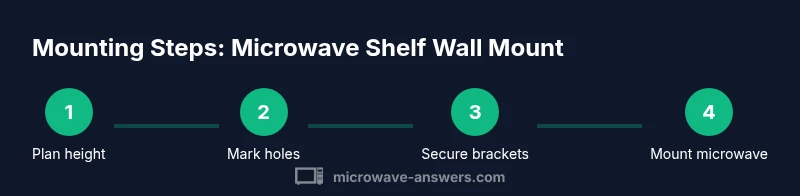
- 1
Prepare the installation area
Clear the workspace and identify the mounting height. Ensure the area around the wall is free of cables or obstructions. Gather all tools and hardware before starting to avoid delays.
Tip: Work with a partner to handle the microwave safely during mounting. - 2
Locate studs and plan bracket placement
Use a stud finder to locate studs and center lines where brackets will attach. Mark the exact locations with a pencil, then verify level and symmetry with a spirit level.
Tip: If no studs align with your plan, switch to heavy-duty anchors rated for the wall type. - 3
Mark drill holes using the template
Place the mounting template or bracket pattern on the wall. Double-check height, width, and vertical alignment before marking drill points. Transfer the marks clearly for precise drilling.
Tip: Use a small piece of tape to hold the template in place while marking. - 4
Drill pilot holes and install anchors/brackets
Drill pilot holes at the marked points. If drilling into studs, use wood screws; otherwise insert appropriate wall anchors. Attach brackets securely and check for wobble.
Tip: Tap anchors gently to ensure they seat fully and resist movement. - 5
Attach shelf and microwave mounting plate
Secure the shelf to the brackets, then mount the microwave onto the shelf using its mounting plate or the approved interface. Ensure the microwave sits level and square.
Tip: Keep the power cord clear of the bracket joints to avoid pinching. - 6
Perform safety check and test load
Verify all screws are tight and the unit sits firmly. Test with a gentle push and a light load to confirm stability before full use.
Tip: Do not power the microwave until you’re confident in the mounting integrity.
Common Questions
Do I need to hire a professional to mount a microwave shelf wall mount?
If you’re unsure about electrical safety, structural integrity, or complex wall types, hiring a professional is wise. A trained installer can verify load ratings and ensure the mounting complies with local codes.
If you’re unsure about electrical safety or wall structure, consider hiring a professional to ensure a safe, code-compliant install.
Can I mount on drywall alone?
Drywall without studs or appropriate anchors is not suitable for a microwave mount. Use studs or heavy-duty anchors rated for the appliance weight to prevent failure.
Drywall alone isn’t enough; use studs or heavy-duty anchors rated for the weight.
What height should the microwave be mounted at?
A common guideline is to position the bottom of the microwave 15 to 20 inches above the counter, adjusting for user height and cabinet clearance.
Aim for the bottom about 15 to 20 inches above the counter, adjusting for your height.
Will mounting affect my cabinet warranty?
Drilling into cabinets can affect warranties in some cases. Check the manufacturer’s guidelines and keep documentation of the mounting method.
Check your cabinet warranty; drilling can affect it in some cases.
Can I reuse existing outlets or require new wiring?
Ensure the outlet is properly rated and not overloaded. If you need a new circuit or relocation, consult a licensed electrician.
Usually you should avoid overloading; call an electrician if adding a dedicated circuit.
What tools are essential for this job?
A stud finder, level, drill, proper screws, and a sturdy shelf are essential for a secure installation.
The basics are a stud finder, level, drill, and proper screws.
Watch Video
Main Points
- Measure accurately before drilling
- Choose proper anchors for your wall type
- Secure brackets tightly and check alignment
- Test load safely after mounting
- Maintain proper ventilation and cord management