How to Microwave 2 Baked Potatoes
Learn to microwave two baked potatoes at once with a practical, safety-focused method. This step-by-step guide covers prep, pacing, resting, toppings, and troubleshooting for reliable, fluffy interiors.


You will learn how to safely microwave two baked potatoes at once, with prep, venting, and cooking steps that ensure fluffy interiors and skin that’s still pleasant to bite. This guide covers wattage considerations, rest time, and toppings, so you’ll have dinner-ready potatoes in a fraction of traditional oven time.
Why microwave 2 baked potatoes is a practical choice
According to Microwave Answers, microwaving two baked potatoes at once saves time and simplifies weeknight meals. The Microwave Answers team found that cooking two potatoes in parallel reduces total hands-on time and makes it easier to plan toppings and sides. In this guide, you’ll learn how to select potatoes, prepare them for microwave cooking, and use a reliable workflow to achieve fluffy interiors with flavorful skins. The approach is designed for home cooks and homeowners who want fast, dependable results without sacrificing texture or safety. By cooking two potatoes together, you can coordinate a quick side dish and keep dinner moving during busy evenings. Remember, your microwave’s wattage and potato size influence results, so start with the guidelines below and adjust as needed. Microwave Answers emphasizes safety: always vent steam during cooking, and never leave the microwave unattended while potatoes are cooking.
Why two potatoes cook faster than you might expect
Cooking two potatoes at once leverages the microwave’s ability to heat multiple items simultaneously. When potatoes are sized similarly and arranged with space between them, heat distributes more evenly and you avoid scorching one potato while another remains underdone. This approach also reduces the number of batches you must run, which saves energy and keeps your kitchen cooler than running a conventional oven. If you routinely batch-cook, this method scales well for family dinners and meal-prep days. For best results, select potatoes that are close in size and shape, so their cores finish at roughly the same time. A little rest after they come out helps the flesh reabsorb moisture and finish cooking evenly.
Potatoes to use and how to size them for even cooking
Russet potatoes are the traditional choice for baked potatoes thanks to thick skins and starchy interiors, which bake up fluffy. When you plan to cook two at once, aim for potatoes that are similar in diameter and length; this helps ensure even heat distribution. If your collection includes a mix of sizes, you can place the larger potato toward the outside edge of the plate and rotate halfway through cooking to encourage uniform doneness. For best texture, avoid very small new potatoes for this method, as their skins and centers will overcook or dry out if not monitored carefully. Washing and scrubbing the skins clean is essential, since the skin becomes part of the eating experience.
Prep and safety basics to avoid undercooked centers
Prep starts with a clean workspace and well-scrubbed potatoes. Rinse under cool running water, then dry thoroughly with a clean towel; moisture on the skin can steam-tenderize rather than crisp, which is fine for a baked potato, but consistent dryness helps heat transfer. Prick each potato several times with a fork to vent steam; this prevents pressure buildup that could cause bursting. If you prefer a more flavorful skin, rub a small amount of oil over each potato and sprinkle with salt. For safety, always use a microwave-safe plate and avoid any metal or foil that can arc in the microwave.
The microwave method for two potatoes: a reliable workflow
A successful two-potato microwave run hinges on even layout and a sensible cooking cadence. Place both potatoes on a microwave-safe plate with several inches of space between them. If your microwave has a turntable, leave the plate on it so heat can circulate from all angles; if not, rotate the plate manually halfway through cooking. Start with a high-power setting and check for doneness at the earliest reasonable point; if one potato finishes earlier, give it a brief rest while the other continues cooking. They should be tender when pierced with a fork, and the skins should be dry and slightly taut. If your microwave runs hotter on one side, rotate the plate to counterbalance uneven heating.
Finishing touches and serving ideas
Allow the potatoes to rest for a couple of minutes after microwaving; this helps the starches settle and makes the center easier to fluff with a fork. Slice a cross- opening on the top, gently squeeze the ends to fluff the flesh, and add your favorite toppings: butter, sour cream, shredded cheese, chives, or chili. If you crave a crisper skin, you can finish the potatoes under a preheated broiler for 1–2 minutes per side, though this adds time. For meal-prep, bake a batch of two potatoes at once and store portions in the fridge; reheat in the microwave in 1–2 minutes per portion, wrapping in a damp paper towel to retain moisture. Always recheck internal temperature before serving and discard any potatoes that show off smells or slimy textures.
Troubleshooting common issues and quick fixes
If the centers remain firm after the initial cook, return the potatoes to the microwave in 1–2 minute bursts, testing for tenderness after each interval. Uneven cooking is common when sizes vary, so next time try to select two potatoes of similar size or rotate their positions midway through cooking. If the skins are too soft or soggy, pat the surfaces dry with a towel and consider a brief finish under the broiler for crispness. For very large potatoes, you may need to extend cooking time slightly; always test with a fork to confirm doneness. Remember to use the correct dish and handle hot items with oven mitts, as steam can cause burns.
Quick reference timing guidelines and wattage considerations
Wattage affects timing, so treat all times as starting points to be adjusted. A higher-wattage microwave will finish faster, while a lower-wattage unit requires longer heat exposure. If you’re unsure, begin with a longer initial cook and test for doneness, then add small increments until the potatoes are fork-tender. This approach minimizes the risk of a cold center and ensures you don’t overcook the outer skins.
Safety reminders and best practices for microwave two-potato meals
Always vent steam safely, avoid metal, and use microwave-safe containers. Do not wrap potatoes tightly in plastic wrap that could trap steam excessively; instead, leave a small vent to let steam escape. Never leave the microwave unattended while cooking, and check periodically to prevent overheating or scorching. If you’re reheating leftovers, ensure they are heated to a safe temperature throughout and discard any potato that was previously left at room temperature for more than two hours.
Authority references and safety reminders
This guide aligns with established food-safety practices. For further reading on safe cooking and reheating temperatures, consult authoritative sources such as the USDA’s Food Safety and Inspection Service and the U.S. FDA for general microwave safety guidelines. These references provide foundational safety concepts that support the practical steps outlined here.
Tools & Materials
- Microwave-safe plate or dish(Large enough for two potatoes with space around each potato)
- Kitchen towel or paper towels(Dry surfaces before cooking; pat potatoes dry)
- Fork or skewer(Pierce potatoes 6-8 times to vent steam)
- Oil (optional)(A light coat can help skin crisp slightly; sea salt optional)
- Salt (optional)(Sprinkle for flavor if desired)
Steps
Estimated time: varies by wattage and potato size
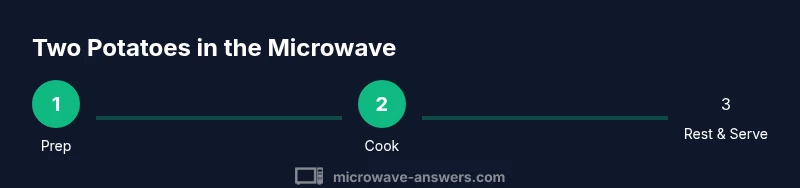
- 1
Prepare and wash the potatoes
Rinse both potatoes under cool water and scrub the skins clean. Pat dry with a towel to remove surface moisture, which helps heat transfer. Why: clean, dry skins vent properly and reduce the chance of soggy textures.
Tip: Use russet potatoes for best texture; similar sizes cook more evenly. - 2
Vent and optional oil
Prick each potato several times with a fork to vent steam. If you like a crisper skin, rub a small amount of oil and a pinch of salt on the skins.
Tip: Evenly coat the skin to promote a better texture after microwaving. - 3
Arrange for even cooking
Place the potatoes on a microwave-safe plate with space between them. If your microwave lacks a turntable, rotate the plate halfway through cooking to distribute heat more evenly.
Tip: Avoid stacking or crowding; heat needs to circulate. - 4
Cook and test for doneness
Cook on high power, then test doneness with a fork. If the center resists, continue in 1–2 minute bursts until tender. For two potatoes, plan for the longer of the two cooking times.
Tip: Test from the center outward to ensure even texture. - 5
Rest, finish, and serve
Let the potatoes rest for a couple of minutes, then fluff the interior with a fork and add toppings. If you want extra texture, finish under a broiler for 1–2 minutes.
Tip: Handle with care; steam inside can burn on contact.
Common Questions
Can I cook two baked potatoes at once in the microwave?
Yes. Place two similarly sized potatoes on a microwave-safe plate, vent, and cook on high power. Check tenderness, rotate if needed, and adjust time based on wattage.
Yes—place two similar potatoes on a microwave-safe plate, vent, and cook on high power; check tenderness and rotate if needed.
Will the skin be crispy after microwave cooking?
The skin will be tender after microwaving. For crisper skin, finish under a broiler or toaster oven for a minute or two.
Crispy skin isn't guaranteed with microwaving alone; finish under a broiler if you want a crispier texture.
How do I avoid undercooked centers when cooking two potatoes?
Use similar sizes, avoid overcrowding, and rotate halfway through. If one potato is larger, give it slightly more time and test with a fork in the center.
To avoid undercooked centers, pick similar sizes and rotate; test the center with a fork and adjust time as needed.
Can I add toppings before microwaving?
Yes, but keep toppings light; avoid heavy fillings that could steam the potato unevenly. Plain or lightly salted surfaces are best before cooking.
You can add light toppings before cooking, but avoid heavy fillings that might unevenly heat.
What wattage affects cooking time?
Higher wattage cooks faster; lower wattage requires longer times. Start with a longer initial cook and adjust in small increments.
Wattage changes the time—start longer and add more time in small increments as needed.
Is it safe to reheat microwaved potatoes?
Yes, reheat to an internal temperature that’s hot all the way through. If previously left out, discard any potato showing signs of spoilage.
Yes—reheat until hot all the way through and discard anything that looks off.
Watch Video
Main Points
- Choose russet potatoes of similar size for even results
- Vent and optionally oil skins to improve texture
- Arrange potatoes with space and rotate for even heating
- Test tenderness with a fork and rest before serving
- Finish with a quick broil if a crisper skin is desired