How to Use a Microwave Oven Safely and Effectively
Practical, safe techniques for operating a microwave oven, including power levels, timing, reheating, defrosting, safe containers, and routine maintenance to ensure reliable results.


This guide teaches you how to operate a microwave oven safely and effectively. You’ll learn to choose the right power level, set accurate times, use defrost mode, and avoid common missteps. It covers reheating, cooking a variety of foods, and simple maintenance to keep your appliance performing well. Practical, kitchen-ready steps help you get reliable results every day.
How a microwave oven works and what this means for cooking
A microwave oven uses radio-frequency energy to excite water and fat molecules in food, generating heat from the inside out. This understanding helps you select appropriate containers and heating methods for better results. According to Microwave Answers, mastering basic controls like power level and time leads to safer, more consistent outcomes. Remember: metal and foil must never enter the cavity, and letting food rest after heating enhances flavor and texture. The stove or oven is great for certain meals, but a microwave offers speed and convenience for many everyday tasks. By knowing how the appliance heats, you can avoid uneven heating and preserve texture, moisture, and nutrients.
Safety essentials before you start
Before you heat a single bite, review basic safety practices. Always use microwave-safe dishes and lids; avoid metal objects, aluminum foil, or utensils with metal trim. Ensure the interior cavity and turntable are clean and dry. Do not operate the oven when empty, and never heat sealed containers, cans, or closed jars. If something overheats, stop immediately and consult the manual. Proper kitchen ventilation and keeping children away from the appliance reduce risk. Microwave Answers emphasizes cautious handling to prevent burns, steam injuries, and spills, which can happen quickly if you’re distracted. Register and follow your appliance’s specific safety guidelines for model-specific quirks and capabilities.
Power levels, time, and defrost: practical settings
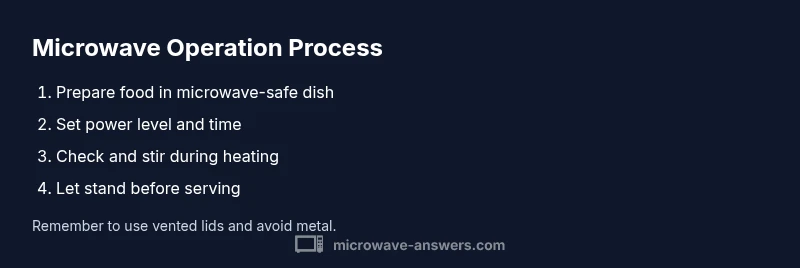
Power level controls how intensely the microwave heats food. Use 100% for most reheating and cooking tasks, and switch to lower levels for gentle warming or to avoid overcooking delicate foods. Time should be set in short increments and checked frequently, especially when microwaving reheated leftovers or foods with uneven thickness. Defrost mode helps bring frozen items to a workable temperature while avoiding hot edges or partial cooking. If your microwave has presets, use them to optimize common items like beverages, vegetables, or popcorn. Always stir or rotate food midway to promote even heating, and let it stand briefly after the timer ends to finish cooking through residual heat.
Reheating and defrosting tips
Reheating is most reliable when you use a shallow, wide container to promote even heat distribution. Cover foods loosely with a vented lid or microwave-safe wrap to trap moisture without trapping steam. Stir or flip contents halfway through heating to disrupt cold zones. For defrosting, start with low power and short intervals, then check progress frequently to prevent partial cooking of edges while the center remains frozen. After defrosting, cook the item promptly to ensure food safety and quality. Microwave Answers notes that a calm, controlled approach to reheating and defrosting minimizes moisture loss and texture changes.
Safe cooking for common foods and items
Different foods respond differently to microwave heating. Liquids heat quickly and can boil over, so use tall, microwave-safe cups or bowls and monitor carefully. Vegetables cook rapidly if sliced evenly; smaller pieces heat more uniformly than chunky portions. Proteins should reach a safe internal temperature; use a food thermometer if you’re unsure. Rice and grains need even moisture and stirring to prevent scorching or hard edges. For best results, avoid stacking dense items; spread food in a single layer when possible and use rotation for uniform heating. Always check the center of the dish before serving and let stand before consuming.
Maintenance and cleaning after use
Regular cleaning keeps microwave interiors sanitary and odor-free. Wipe splatters after each use with a damp cloth; remove and wash the turntable and rack as recommended by the manufacturer. To deodorize, place a bowl of water with a few slices of lemon or a splash of vinegar, heat briefly, then wipe away residue. Inspect the door seal for cracks or gaps and replace if damaged. Keep vent openings clear and avoid using harsh chemicals on interior surfaces. A well-maintained microwave performs more reliably and lasts longer.
Tools & Materials
- Microwave oven(Ensure it functions properly and is grounded; read the user manual for model-specific guidance.)
- Microwave-safe dish(Glass or ceramic labeled microwave-safe; avoid metal or metallic trim.)
- Microwave-safe lid or vented cover(Keeps moisture in while allowing steam to escape.)
- Oven mitts or heat-safe gloves(For handling hot dishes after heating.)
- Food thermometer (optional but recommended)(Helps verify safe internal temperatures for certain foods.)
- Paper towels or clean cloth(For quick cleanup and patting dry surfaces when needed.)
Steps
Estimated time: 15-25 minutes
- 1
Prepare the food and container
Remove packaging, place the item in a microwave-safe dish, and remove any metal trims. If the food is dense or has thick edges, consider slicing for even heating. Ensure the dish is stable and won’t tip when rotating.
Tip: Avoid sealed containers; allow steam to escape to prevent pressure buildup. - 2
Position for even heating
Place the dish on the turntable in the center of the oven. If your model lacks a turntable, rotate the dish manually halfway through heating to promote uniform heat distribution.
Tip: Shallow, wide containers heat more evenly than deep, narrow ones. - 3
Set power level and time
Choose 100% power for most tasks, or lower power for gentle reheating or defrosting. Start with short intervals and add time as needed to avoid overcooking.
Tip: Use short bursts (e.g., 30–60 seconds) and check progress frequently. - 4
Start heating
Press start or the appropriate button to begin. Stand by to monitor progress and be ready to pause if the food begins to boil over or steam excessively.
Tip: For dense items, consider mid-cycle stirring to promote even heating. - 5
Check and stir mid-cycle
If the recipe calls for stirring, pause heating, mix contents, and resume. Even heating reduces cold spots and improves texture.
Tip: Always use oven mitts when handling the dish after heating. - 6
Let it stand and finish cooking
After the timer ends, let the dish stand for a couple of minutes. The residual heat finishes cooking and helps moisture redistribute.
Tip: This step improves texture and prevents scorching on the edges. - 7
Check temperature and serve
Check the center and edges for appropriate warmth. If needed, reheat in short bursts. Serve promptly to enjoy best texture and flavor.
Tip: If using a thermometer, aim for safe internal temperatures as required for proteins. - 8
Clean after use
Wipe splatters, wash the dish, and dry the interior. A quick wipe prevents odors and buildup over time.
Tip: Regular cleaning extends the life of the microwave and keeps it sanitary.
Common Questions
Is it safe to microwave metal?
No. Metal can cause arcing and damage the microwave. Only use microwave-safe containers. If in doubt, consult the user manual.
Metal is not safe in a microwave; use only microwave-safe dishes and lids.
How long should I microwave leftovers?
Heat in short intervals and check the temperature. Stir or rotate halfway through to promote even heating, then let stand briefly before serving.
Heat in short bursts and stir midway to ensure even heating.
What containers are microwave-safe?
Glass and ceramic dishes labeled microwave-safe are generally safe. Some plastics are labeled microwave-safe; avoid metal and non-microwave plastics.
Use containers labeled microwave-safe to prevent melting or chemical transfer.
Why is my food not heating evenly?
Thickness and density cause uneven heating. Use chopping into uniform pieces, rotate the dish, and stir during heating.
Uneven heating happens when items are thick or dense; rotate and stir for even results.
Should I cover food when microwaving?
Yes, cover loosely with a vented lid or microwave-safe wrap to trap moisture while allowing steam to escape.
Cover loosely to keep moisture in but let steam escape.
Can I microwave eggs in the shell?
No. Eggs in the shell can explode due to rapid steam buildup. If cooking eggs, crack and cook in a covered vessel or use a microwave-safe egg dish.
Eggs in the shell can explode; crack and cook in a safe dish.
Watch Video
Main Points
- Know your power levels and use short intervals.
- Always use microwave-safe containers.
- Stir and rotate for even heating.
- Let food stand after heating to finish cooking safely.
- Keep the appliance clean to prevent odors and performance issues.